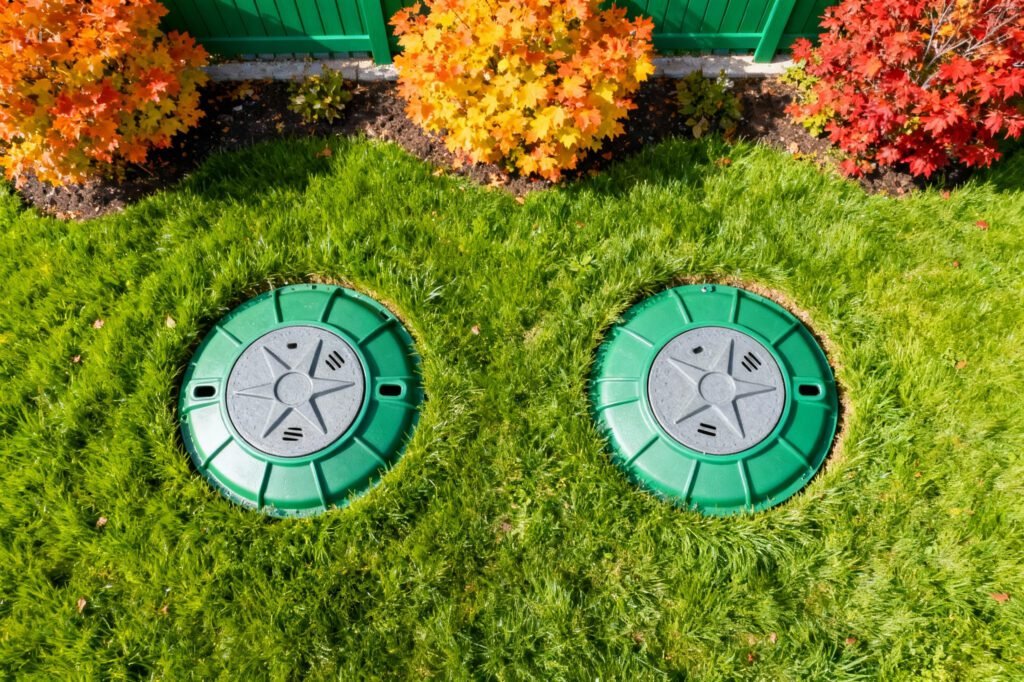
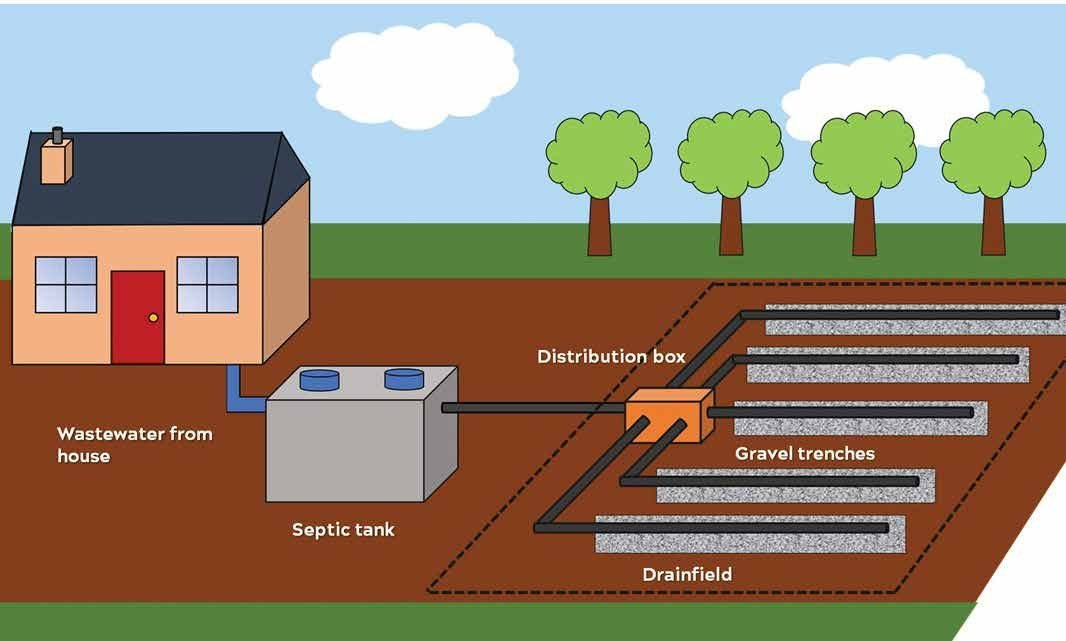
The leach field (or drain field) is the final filtration component of a septic system. It consists of underground trenches with perforated pipes or chambers that disperse liquid effluent from the septic tank into the soil, where natural biological and physical processes purify it before it reaches groundwater. Failure signs include: soggy grass or standing water over the field, sewage odors outdoors, and slow drains in the house. A failing drain field often requires expensive repair or replacement.
Key Points:
- Primary Function: Final treatment and dispersal of wastewater through soil filtration and bacterial digestion in the biomat.
- Critical Dependency: A healthy drain field relies on a regularly pumped septic tank to prevent solid waste from clogging it.
- Major Failure Causes: Hydraulic overload (too much water), physical damage (compaction, tree roots), and biomat clogging from improper maintenance.
- Preventive Action: Conserve water, avoid driving/parking on the field, and pump the septic tank every 3-5 years.
Table of Contents
The Essential, Invisible Wastewater Treatment Engine
The leach field is the indispensable, final stage of your septic system, where treated wastewater undergoes natural purification before safely rejoining the groundwater. According to the U.S. Environmental Protection Agency (EPA), drain field failure is the leading cause of septic system replacement, a repair costing homeowners $5,000 to $25,000+. This guide provides a comprehensive breakdown of leach field design, the science behind its function, and the critical early warning signs of failure. You will learn how this underground ecosystem works, how to protect it, and the immediate actions to take if problems arise, empowering you to safeguard your property’s health and avoid catastrophic expense.
Prerequisites & Skill Level: This guide is for homeowners, prospective buyers, and property managers. No technical expertise is needed. Understanding your leach field is a fundamental aspect of responsible property ownership.
Time & Cost Context: A properly designed and maintained leach field can function for 20-40 years. Failure can occur in under 10 years with neglect. The investment in regular pumping ($300-$500 every 3-5 years) and mindful water use is minuscule compared to replacement costs.
What is a Leach Field and How Does it Work?
A leach field (or drain field) is a subsurface, engineered system of trenches, pipes, and soil that provides final treatment and dispersal of septic tank effluent through filtration and microbial digestion. It’s not just a disposal area; it’s a living bioreactor. The heart of the process is the biomat—a gelatinous layer of anaerobic bacteria that forms at the soil interface, which is responsible for destroying pathogens and breaking down nutrients.
The 4-Stage Treatment Process:
- Dispersion: Effluent from the septic tank flows into a distribution box, which evenly distributes it to the network of perforated pipes in the trenches.
- Storage & Infiltration: The effluent slowly seeps out of the pipes into the surrounding gravel or chamber cavity, then into the underlying soil.
- Biological Treatment: As effluent passes through the biomat, bacteria digest organic matter, trap viruses, and process nitrogen.
- Soil Filtration & Renewal: Cleaned water continues to percolate through the soil, undergoing further purification before recharging the groundwater.
Bottom line: The leach field is a passive, natural treatment plant. Its effectiveness depends entirely on maintaining the balance of water flow, bacterial health, and soil integrity.
Leach Field Design: Types, Components, and Selection Table
This table compares common leach field designs, helping you understand what might be installed on your property or what options exist for replacement.
| Design Type | Key Components & How It Works | Best For / Advantages | Limitations & Considerations |
|---|---|---|---|
| Conventional Gravel Trench | Perforated pipes laid in trenches filled with gravel. Covered with geotextile fabric and soil. | Deep, permeable soils. Proven, low-tech, cost-effective. | Requires significant gravel. Can clog over decades. Requires suitable soil depth. |
| Chamber System | Arch-shaped plastic chambers (e.g., Infiltrator®) placed in trenches. No gravel needed. | Most soil types; high water tables. Greater storage volume, lighter, less excavation. | Plastic can be damaged during installation/backfill. May have higher material cost. |
| Mound System | An above-ground, constructed sand mound with a drain field embedded in it. A pump chamber is required. | Shallow soil, high bedrock, or poor permeability. Solves difficult site conditions. | High cost, uses electricity (pump), requires significant space and specific soils for mound construction. |
| Drip Irrigation System | Effluent is treated (often in an ATU) and then slowly dispersed via shallow, small-diameter drip tubing. | Sloping sites, sensitive environments, poor soils. Very even dispersal, excellent treatment. | Very high complexity and cost. Requires advanced pretreatment, pumps, filters, and extensive maintenance. |
Top 5 Signs of Leach Field Failure & Diagnostic Steps
Research suggests that early intervention can sometimes save a failing drain field, but delay almost always leads to total replacement. Recognize these red flags.
1. Surface Symptoms (In the Yard)
- Soggy, Spongy Soil or Standing Water: Over or near the drain field, especially when it hasn’t rained.
- Unusually Lush, Green Grass: A “strip” of greener, faster-growing grass directly over the trenches, indicating a nutrient-rich sewage leak.
- Foul Odors: The smell of sewage or rotten eggs emanating from the yard.
2. Plumbing Symptoms (In the House)
- Slow Drains: Toilets, showers, and sinks drain slowly throughout the house, not just one fixture.
- Gurgling Sounds: Bubbling or gurgling noises from drains when flushing toilets or using sinks.
- Sewage Backups: Wastewater backs up into household drains.
Step-by-Step Diagnostic Action Plan:
- Rule Out a Full Tank: The first step is always to check if the septic tank is full. A simple pumping may solve the problem. Call a pumper for an inspection.
- Conduct a Visual Yard Survey: Walk the suspected drain field area. Look for the surface symptoms listed above.
- Perform a “Flood Load” Test: (Caution: Can worsen failure). Run a significant amount of water (e.g., a long shower) and immediately check for surfacing water in the yard.
- Call a Licensed Professional: If symptoms persist after pumping, contact a septic system professional immediately. They will perform a hydraulic load test or use a camera to diagnose the issue definitively.
Common Sizing Mistake: Homeowners often misdiagnose a clogged main household line as drain field failure. A key differentiator is that drain field failure typically affects all plumbing, while a house line clog usually affects only downstream fixtures.
Causes of Failure, Repair Options, and Cost Estimates
Understanding why drain fields fail informs both prevention and the choice of repair.
| Failure Cause | How It Happens | Potential Repair Options | Estimated Cost Range |
|---|---|---|---|
| Biomat Clogging / Hydraulic Failure | Solids from an unpumped tank clog pipes/biomat. Excess water (leaks, overuse) saturates soil. | High-pressure jetting of pipes, biomat remediation chemicals. Temporary fix. | $500 – $2,000 |
| Physical Damage | Vehicles or structures compact soil/crush pipes. Tree roots infiltrate and block pipes. | Excavation & spot repair of damaged trench section. Root removal. | $2,000 – $5,000+ |
| System Age / Total Failure | Natural end of lifespan (20-40 yrs). Chronic neglect leading to irreversible soil clogging. | Complete drain field replacement in a new location. May require an alternative system (mound, etc.). | $10,000 – $25,000+ |
| Design / Installation Flaw | Undersized for household, poor soil evaluation, incorrect installation slope. | Requires redesign and re-installation by a licensed engineer/contractor. | $10,000 – $20,000+ |
Current Consensus: Biomat remediation is controversial and often a short-term (1-3 year) solution at best. Most experts agree that once a field is hydraulically failed (water won’t percolate), replacement is the only permanent fix.
Common Questions Answered
Q: What is the difference between a leach field and a drain field?
A: There is no difference. The terms are used interchangeably. “Leach field” emphasizes the percolation (leaching) of water into the soil. “Drain field” emphasizes the drainage function. Both refer to the same component.
Q: How long does a septic drain field last?
A: A properly designed and maintained drain field can last 20 to 40 years. Neglect (no pumping, water overload) can cause failure in under 10 years. The biomat naturally thickens over decades, eventually slowing percolation to the point of failure, which is the typical end-of-life scenario.
Q: Can a failing drain field be repaired, or does it need replacement?
A: It depends on the failure mode. Clogged pipes can sometimes be jetted. A localized collapse can be spot-repaired. However, a complete hydraulic failure due to a fully clogged biomat and soil matrix almost always requires a full replacement. A professional diagnosis is essential.
Q: What should you never put over a drain field?
A: Never drive, park, or build structures (sheds, patios) on the drain field. Avoid planting trees or deep-rooted shrubs within 20-30 feet. Only grass or shallow-rooted ground cover should be planted over it to prevent root intrusion and soil compaction.
Q: How do I find my drain field?
A: Look for your home’s “as-built” septic system diagram, often filed with your local health department or provided at home sale. Visually, look for lines of greener grass, depressions or mounds in the yard, or inspection ports (often white PVC pipes with caps) sticking a few inches out of the ground.
Proactive Maintenance Guide & Prevention Strategies
Efficiency Hacks from Septic Professionals (Based on 20+ Years Experience)
- The “Pumping is Prevention” Rule: Schedule pumping based on sludge/scum levels, not just time. An inspection may reveal you need to pump more or less often than the 3-5 year guideline.
- The “Water Budget” Hack: Know your tank size (e.g., 1,000 gallons) and avoid using more than that volume in a single day. Space out laundry and dishwasher loads.
- The “Downspout Divert” Hack: Ensure all roof gutter downspouts extend at least 20 feet away from the drain field area. This one action can prevent hydraulic overload.
Essential Tools & Monitoring
- Tank Riser Kits: Install risers with sealed lids to grade for easy, low-cost inspection and pumping access.
- Effluent Filter: A must-have on your septic tank outlet. It catches solids and is the single best upgrade to protect your drain field. (e.g., [MENTION A REPUTABLE FILTER BRAND]).
- Water Meter: Monitor household usage to stay within your system’s design capacity.
When to Call a Professional: A Decision Tree
- Call for Inspection: If you notice any surface symptoms (soggy yard, odors) or house-wide slow drains.
- Call for Emergency Pumping: If you have sewage backing up into the house.
- Call for Design/Repair: For any new installation, major landscape changes near the field, or if a professional diagnoses failure.
Protect Your Property’s Silent Guardian
In summary, the leach field is a vital, living part of your property’s infrastructure that demands understanding and respect. Its failure is costly and disruptive, but largely preventable. By adhering to a strict pumping schedule, practicing vigilant water conservation, and protecting the field from physical damage, you can maximize its lifespan and ensure the safe, effective treatment of your home’s wastewater.
Final Synthesis: Expert opinion and regulatory guidance uniformly stress that preventive maintenance is exponentially cheaper than corrective repair. The drain field represents the largest financial risk in a septic system, making informed, proactive care one of the highest-ROI actions a homeowner can take.
Suspect a problem? Don’t wait. Use our Find a Local Licensed Septic Pro Directory to get a professional assessment before a minor issue becomes a major disaster.
Your Next Steps:
- Locate & Map: How to Find Your Septic Tank & Drain Field.
- Plan Maintenance: Download Our Free Septic System Maintenance Calendar.
- Explore Options: If replacement is needed, read Drain Field Replacement: Options, Costs & Process.

Leave a Reply