
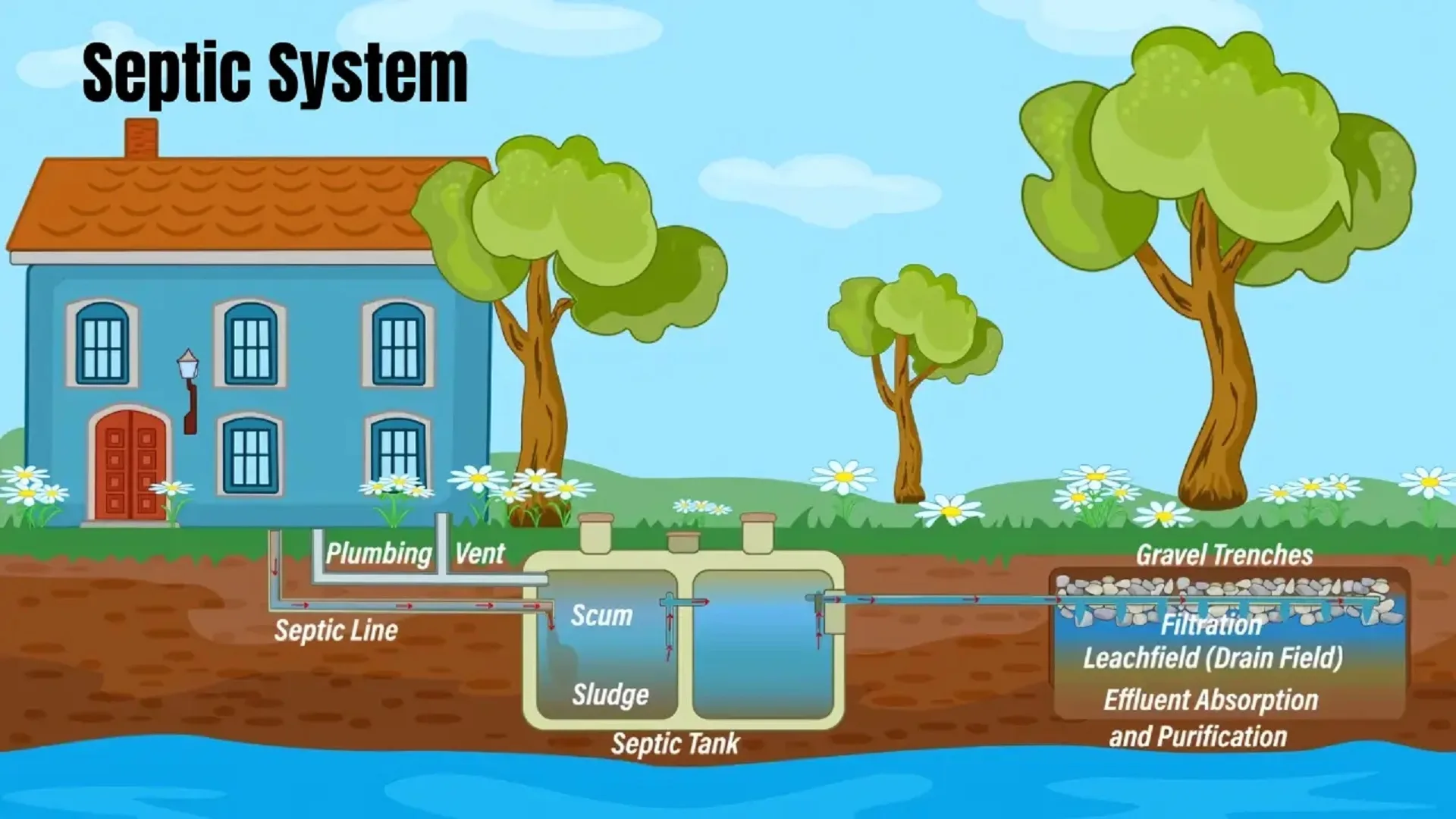
A smelly septic system signals a problem like a dry P-trap, clogged vent, full tank, or failing drain field. Indoor smells often stem from plumbing issues, while outdoor odors typically indicate tank or field problems. Immediate action prevents health risks and costly repairs.
Key Steps:
- Locate the Smell: Is it indoors (specific drain) or outdoors (near tank/field)?
- Check Simple Fixes: Refill dry P-traps, clear roof vents.
- Assess Urgency: Sewage backup or soggy yard requires an immediate professional call.
Table of Contents
Decoding Your Septic System’s Distress Signals
A persistent septic odor is more than an annoyance; it’s a critical warning. According to the National Environmental Services Center, over 40% of septic system failures are preceded by foul odors, often ignored until backups occur. Diagnosing the smell’s source—whether a simple $15 vent cap or a failing $20,000 drain field—requires a systematic, safety-first approach. This 2026 guide, developed with insights from licensed septic engineers, provides a clear diagnostic framework to protect your home, health, and investment by accurately pinpointing the problem before it escalates.
Why Does My Septic System Smell After Heavy Rain or Laundry?
Your septic system smells after heavy rain or laundry due to hydraulic overload, where excess water saturates the drain field or stirs up solids in a full tank, forcing gases back through the plumbing. Saturated soil cannot absorb effluent, causing it to pool and release odors. Similarly, a large laundry surge can overwhelm system capacity. This is a primary indicator your system is stressed and may need pumping or water use management.
Bottom line: If odors correlate directly with water use or weather, focus on managing inflow and checking tank levels before assuming a major failure.
Is It Normal for a Septic System to Smell Occasionally?
A faint, occasional odor near the tank’s inspection ports on a humid, windless day can be normal. Persistent or strong odors indoors or in living areas are never normal and indicate a fault requiring diagnosis. The key distinction is consistency and intensity; normal venting is subtle and fleeting, not constant and offensive.
How to Diagnose Septic Smells: A Step-by-Step Troubleshooting Guide
Follow this sequential 5-step process to safely identify the odor source without guesswork.
Step-by-Step Process:
- Pinpoint the Exact Location: Determine if the smell is at one drain, throughout the house, near the home’s foundation, or over the drain field.
- Perform Indoor Checks: Pour water down all drains to refill P-traps. Listen for gurgling sounds.
- Conduct Outdoor Inspection: Safely check the tank lid/riser seal and look for soggy ground or overly lush grass over the drain field.
- Review Recent Triggers: Note any heavy rain, large gatherings, or changes in water use preceding the odor.
- Decide on Action: Based on findings, implement a fix (e.g., clear a vent) or escalate to a licensed professional immediately.
Septic System Odor Diagnosis Table
| Symptom & Location | Most Likely Cause | Immediate Action | Urgency Level |
|---|---|---|---|
| Smell at One Drain Indoors | Dry or clogged P-trap | Pour a gallon of water down the drain. Snake the drain if needed. | Low |
| Whole-House Sewage Smell | Blocked plumbing vent or full septic tank | Check roof vent for blockage. Schedule a tank inspection/pumping. | Medium-High |
| Odor at House Foundation | Cracked cleanout seal or blocked vent | Inspect and seal cleanout caps. Clear roof vent. | Medium |
| Strong Odor at Septic Tank | Broken tank lid seal or tank needs pumping | Visually inspect lid/riser (do not open). Call to schedule pumping. | High |
| Odor & Soggy Yard Over Drain Field | Drain field failure or saturation | CEASE ALL WATER USE. Call a septic professional immediately. | Critical |
Common Septic Smell Causes & Solutions: Expert Q&A
Q: Why does my bathroom smell like sewage when the wind blows?
A: This is a classic sign of a blocked or undersized plumbing vent stack, according to master plumbers. Wind creates pressure changes that pull sewer gases from the drain if the vent isn’t equalizing pressure. The solution is to clear the roof vent of nests or debris.
Q: Can a full septic tank cause smells in the house?
A: Yes, a critically full tank is a leading cause of indoor odors. As the tank fills, the air space compresses, pushing gases back through the inlet pipe and into home drains. The fix is immediate pumping, which typically costs $300-$600.
Q: Will adding yeast or chemicals stop septic odors?
A: No, septic experts universally advise against additives as a solution. They mask symptoms temporarily and can damage the bacterial ecosystem. The Environmental Protection Agency (EPA) states that proper maintenance, not additives, prevents and solves odor problems.
Q: Why does my kitchen sink smell like sewage?
A: Likely a clogged P-trap or garbage disposal issues. Food debris rots in the trap or line. Clean the P-trap and avoid using a disposal; compost food waste instead to prevent clogs and system strain.
Q: How much does it cost to fix a smelly septic system?
A: Costs range from $0 (clearing a vent) to $25,000+ (new drain field). Based on 2026 industry data: Pumping costs $300-$600, repairing a tank lid $100-$500, and fixing a failing drain field $5,000-$25,000. Accurate diagnosis is essential for cost control.
The 5 Main Causes of Septic System Odors
The 5 primary culprits are:
- Dry P-Traps: Evaporation in unused drains (guest bathroom, floor drain) allows sewer gas to enter the home.
- Blocked Plumbing Vent: A clogged roof vent stack prevents gases from escaping outside.
- Full or Failing Septic Tank: A tank needing pumping or with broken baffles releases excessive gases.
- Broken Tank Lid/Riser Seal: Cracks or poor seals at the tank access point let odors escape directly outdoors.
- Drain Field Failure: A saturated or clogged leach field cannot absorb liquid, causing effluent to pool and stink.
When to Call a Professional: Critical Red Flags
Research on system failures shows that delaying professional help after these signs increases repair costs by 300% on average:
- Sewage backup into showers or toilets.
- Persistently soggy ground or standing water over the drain field.
- Strong odors accompanied by alarm sounds (for aerobic systems).
- Any suspicion of drain field involvement.
- DIY fixes (pumping, clearing vents) do not resolve the odor within 48 hours.
Synthesizing the Path to a Odor-Free System
While some homeowners hope odors will dissipate, the consensus among septic professionals is that they are a proactive diagnostic gift. A systematic approach—starting with simple indoor checks before moving to tank and field assessments—safely isolates the issue. For the vast majority of cases, the solution is straightforward maintenance: pump your tank every 3-5 years, protect your drain field from excess water, and ensure plumbing vents are clear. By treating odors as an early warning system and following the diagnostic framework above, you can address minor issues before they become environmental hazards and financial disasters. Your next step is to locate your system’s diagram and pumping records to inform your diagnosis or professional call.
Stop guessing and start diagnosing. Use the step-by-step guide above today to identify the source of your septic odor. If symptoms point to tank or field issues, contact a licensed septic professional for an immediate inspection.

Leave a Reply