What is the Best Septic System Type?
Quick Answer: The best septic system depends entirely on your soil, site conditions, and local regulations. For deep, permeable soil, a Conventional Gravity System is the most reliable and cost-effective. For poor soil or high water tables, a Mound System or Aerobic Treatment Unit (ATU) are the leading solutions. Always start with a professional soil and site evaluation.
Key Types & Their Best Use:
- Conventional: Best for good soil, low cost, simple maintenance.
- Aerobic (ATU): Best for poor soil, small lots, high effluent quality.
- Mound: Best for high water tables, shallow bedrock.
- Sand Filter: Best for very poor soil, limited space.
- Drip Irrigation: Best for sloping, uneven, or landscaped sites.
Table of Contents
How to Choose Your Septic System in 2026
According to environmental engineers and health regulators, selecting a residential wastewater treatment system is a site-specific decision with long-term consequences. A mismatch between system and soil is the leading cause of costly failure. This definitive 2026 guide analyzes all major septic system types—from traditional conventional systems to advanced aerobic units and engineered mounds—providing the data-driven comparison you need to make an informed choice with your installer and local health department.
Septic System Comparison: Types, Costs & Best Uses (2026)
This master table provides an at-a-glance comparison of the primary systems based on treatment effectiveness, site adaptability, and cost.
| System Type | Key Strength | Key Weakness | Best For This Site Condition | Avg. Installed Cost (3-Bedroom) |
|---|---|---|---|---|
| Conventional Gravity | Low cost, minimal maintenance, highly reliable. | Needs deep, permeable soil. Fails with high water table. | Deep, well-draining soil. Suitable perc test. | $3,500 – $7,500 |
| Chamber System | Lightweight, less excavation, good drainage. | Still requires suitable soil. Plastic can be damaged. | Good soil where reducing gravel/stone is beneficial. | $4,500 – $9,000 |
| Aerobic (ATU) | Superior treatment. Works in poor soils/small lots. | High cost. Requires power & active maintenance. | Poor soil, small lots, near water. Need for high-quality effluent. | $11,000 – $20,000+ |
| Mound | Solves high water table/shallow soil issues. Predictable. | High visual impact. Large footprint. Higher cost. | High groundwater, shallow bedrock. Where soil depth is inadequate. | $13,000 – $28,000 |
| Sand Filter | Excellent effluent quality. Smaller footprint than mound. | Clogging risk. Requires media replacement. | Very poor soil, space-limited difficult sites. | $16,000 – $32,000 |
| Drip Irrigation | Even distribution, good for slopes/landscaping. | Most complex & expensive. Many components. | Sloping, irregular, or landscaped lots. Precise dispersal needed. | $16,000 – $38,000 |
Bottom Line: Your soil perc test and site evaluation will immediately narrow your options. Costs are highly variable by region and site specifics; get 3+ local quotes.
How Do Conventional Septic Systems Work?
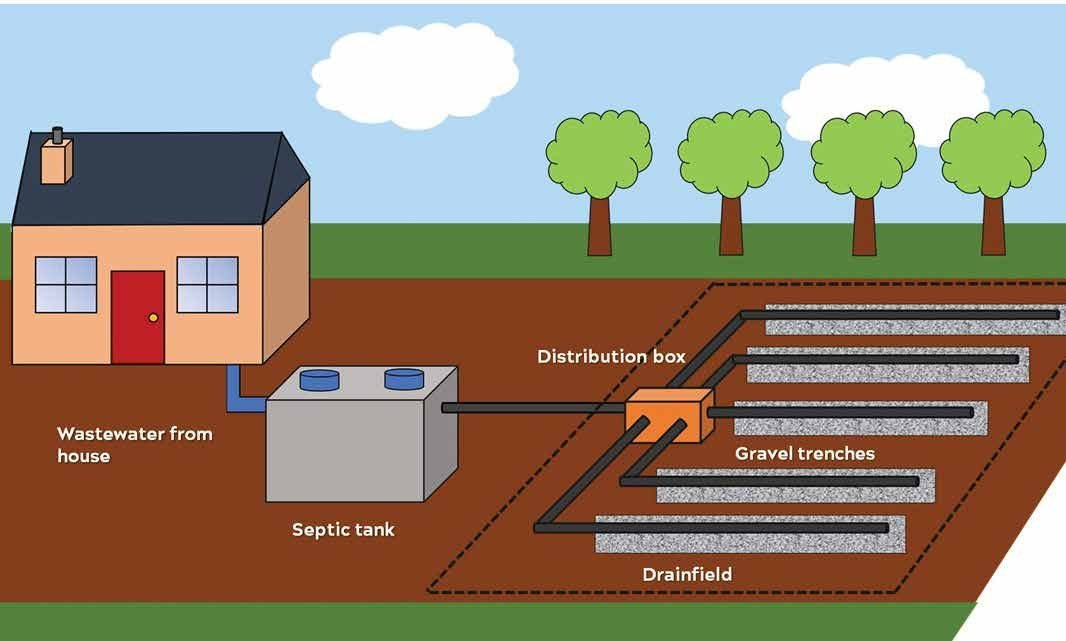
Conventional septic systems are passive, anaerobic systems. They are the standard choice where conditions allow.
Step-by-Step Process:
- Wastewater Enters Tank: Solids settle (sludge) and fats float (scum). Anaerobic bacteria begin breakdown.
- Liquid Effluent Flows Out: The clarified liquid flows by gravity into a distribution box.
- Drainfield Distribution: Effluent is evenly distributed via pipes into a gravel/stone trench (or chamber system).
- Soil Treatment: Effluent percolates through soil, where natural filtration and microbial action provide final treatment.
When to Choose Conventional:
- Your site has deep, permeable soil (passes perc test).
- The water table is deep (>3-4 feet below drainfield).
- You have sufficient space meeting setback requirements.
- You prioritize low lifetime cost and minimal maintenance.
Maintenance: Pump the tank every 3-5 years. Conserve water and avoid flushing chemicals/grease.
How Do Aerobic Septic Systems (ATUs) Work?
Aerobic Treatment Units (ATUs) are advanced, mechanical systems that use oxygen to break down waste more efficiently.
Step-by-Step Process:
- Aeration Chamber: An electric aerator pumps air into the wastewater, stimulating aerobic bacteria that digest waste 20-30x faster than anaerobic.
- Settling/Clarification: Treated water and solids separate.
- Disinfection (Optional): A chlorine or UV light chamber may further disinfect effluent.
- Dispersal: Treated effluent is pumped to a smaller drainfield, spray heads, or drip irrigation.
When to Choose an Aerobic System:
- Soil fails a perc test (clay, heavy soil).
- Lot size is small.
- High water table or shallow bedrock prevents a conventional drainfield.
- Regulations require higher treatment (e.g., near lakes, rivers).
- Mound system is not preferred due to space or aesthetics.
Maintenance: Requires quarterly or semi-annual professional servicing to check aerator, pumps, and alarms. Higher operational cost and complexity.
How Do Mound Septic Systems Work?
A mound septic system is an engineered drainfield raised above the natural soil surface, used when soil conditions are unsuitable below grade.
Step-by-Step Process:
- Dosing Chamber: Effluent from the septic tank is pumped in controlled doses.
- Distribution Network: Pressure-distribution pipes evenly spread effluent across the mound.
- Sand Mound: Effluent filters through a specified sand layer, receiving treatment.
- Natural Soil Integration: Treated water then percolates into the natural soil below.
When to Choose a Mound System:
- High water table (primary reason).
- Shallow soil over bedrock.
- Slow-percolating or impermeable soil (clay).
- A more uniform, predictable solution than some alternatives.
Maintenance: Pump tank regularly (2-3 years). Never drive or build on the mound. Plant only grass/shallow roots. Monitor pump and alarm.
Frequently Asked Questions (FAQs) on Septic System Types
Q: What is the most common type of septic system?
A: The conventional gravity-fed system is the most common where soil and site conditions allow, due to its simplicity, reliability, and lower cost.
Q: Which is better: aerobic or conventional septic?
A: “Better” is site-specific. Aerobic (ATU) is necessary for poor soil and provides higher treatment. Conventional is superior for good soil due to lower cost and maintenance. An ATU on a good site is overkill.
Q: How long does a mound septic system last?
A: A properly designed, installed, and maintained mound system can last 25 years or more. Failure is usually due to lack of tank pumping (causing clogging) or physical damage.
Q: What is the cheapest septic system to install?
A: The conventional gravity system is typically the least expensive to install, assuming your site has suitable soil. Costs rise significantly for engineered systems (mound, aerobic, sand filter).
Q: Can I install a septic system myself?
A: Almost never. Installation requires licensed professionals, permits, and engineered designs to protect public health and groundwater. DIY installation is illegal in most jurisdictions and will void warranties, leading to extreme liability and costly failures.
Q: What is an alternative to a mound system?
A: For sites with high water tables or poor soil, alternatives to a mound include: Aerobic (ATU) with spray/drip dispersal, Sand Filter System, or Peat Filter System. The best alternative depends on the specific site constraint and local code approval.
Q: How do I know what type of septic system I need?
A: You must start with a professional site and soil evaluation (including a perc test) by a licensed engineer or evaluator. This report will determine which systems your local health department will permit for your specific property.
Final Recommendations & How to Proceed
Expert Consensus: The optimal system is the simplest one that meets your site’s regulatory and environmental requirements. Over-engineering adds unnecessary cost and maintenance burden.
Your Decision Checklist:
- ✅ Get a Professional Site/Soil Evaluation. This is non-negotiable.
- ✅ Review Local Health Department Regulations. Understand permit requirements.
- ✅ Match System to Soil. Use the table above to see which types fit your site constraints.
- ✅ Get 3+ Detailed Quotes from licensed, insured, and reputable local installers.
- ✅ Factor in Lifetime Cost (installation + 20-year maintenance).
- ✅ Choose Installer Based on Reputation & Expertise with your chosen system type.
Bottom Line: Your septic system is a long-term investment in your property and the environment. Invest first in a proper site evaluation. Use this guide to understand the options, then partner with a qualified local professional to design and install the system that fits your land.

Leave a Reply