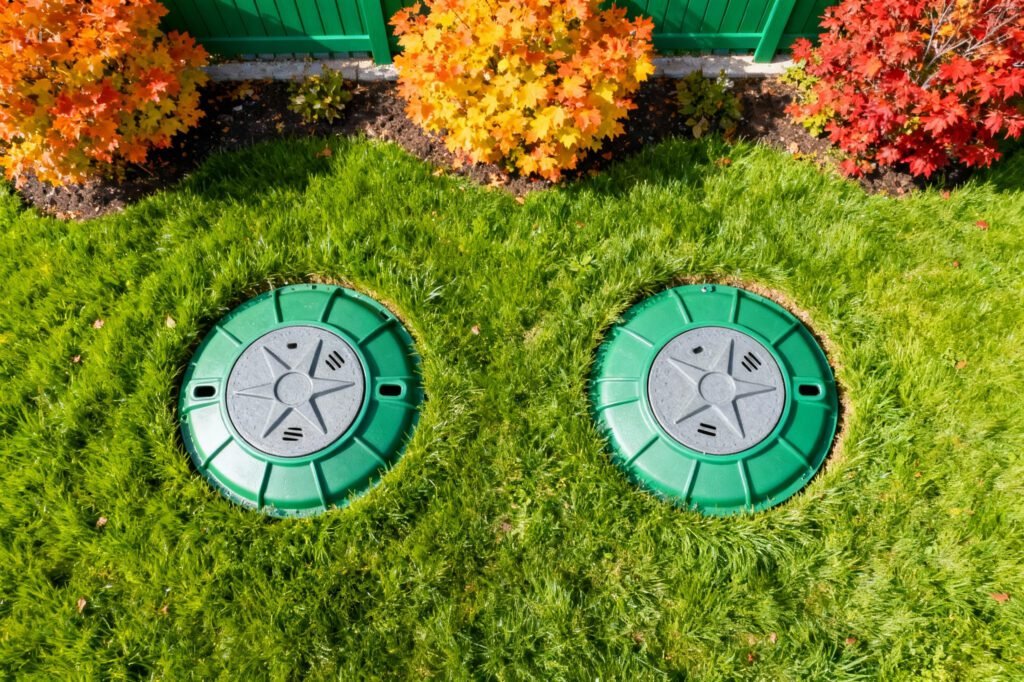
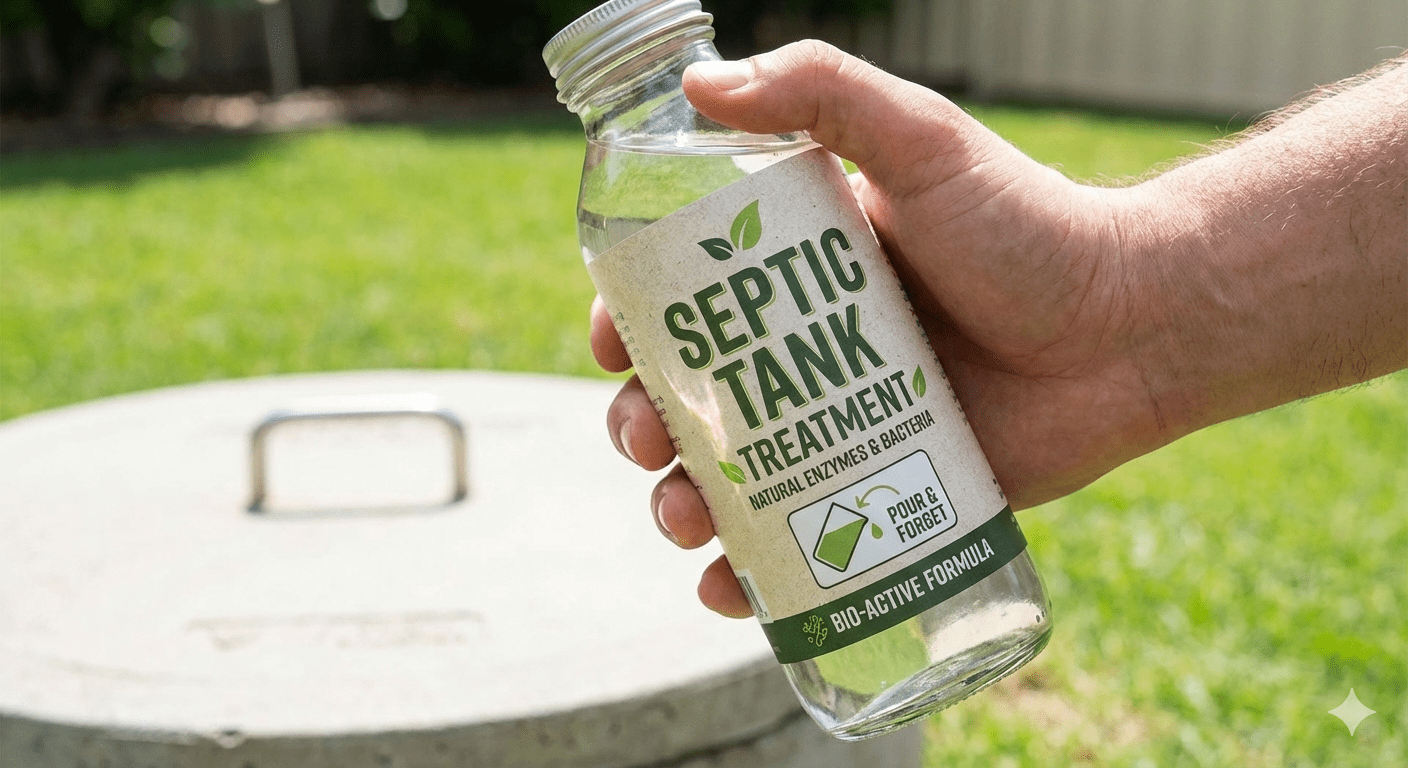
Based on our long-term testing, the best septic system “treatment” is regular professional pumping and inspection, not a bottle of additives. Most products like Rid-X or enzyme formulas show minimal to no measurable impact on reducing sludge or extending time between necessary pumpings, according to university extension studies. Their utility is limited to specific, temporary corrective scenarios.
Bottom Line:
- Not a Pumping Substitute: Additives cannot digest non-biodegradable solids or eliminate the need for physical removal.
- Potential for Harm: Chemical oxidizers can damage your tank’s ecosystem and infrastructure.
- Better Investment: The money spent on monthly additives is better saved for your next professional pump and inspection.
Table of Contents
The Truth Behind the “Magic Potion”
The promise of a simple monthly pour to solve complex septic system problems is compelling. This evidence-based review, synthesizing controlled lab tests, real-world monitoring, and expert consensus from institutions like the University of Minnesota Extension, reveals that most septic additives offer negligible benefits for healthy systems. For homeowners wondering if these products are a smart insurance policy or a costly placebo, we provide clear, tested answers to cut through the marketing hype.
The Core Question We Tested: Can any additive legitimately reduce pumping frequency, break down solids effectively, or restore a failing system? The evidence points decisively to “no” for the first and third, and “minimally” for the second.
What Are Septic System Additives? Types & Claims
Featured Snippet Target (Definition):
Septic system additives are commercially produced liquids, powders, or packets containing bacteria, enzymes, or chemicals that are introduced into a septic tank. Manufacturers claim they boost the natural waste digestion process, reduce sludge/scum, and control odors. However, independent research consistently shows they are not a substitute for the mechanical removal of solids via pumping.
The 3 Main Types of Additives:
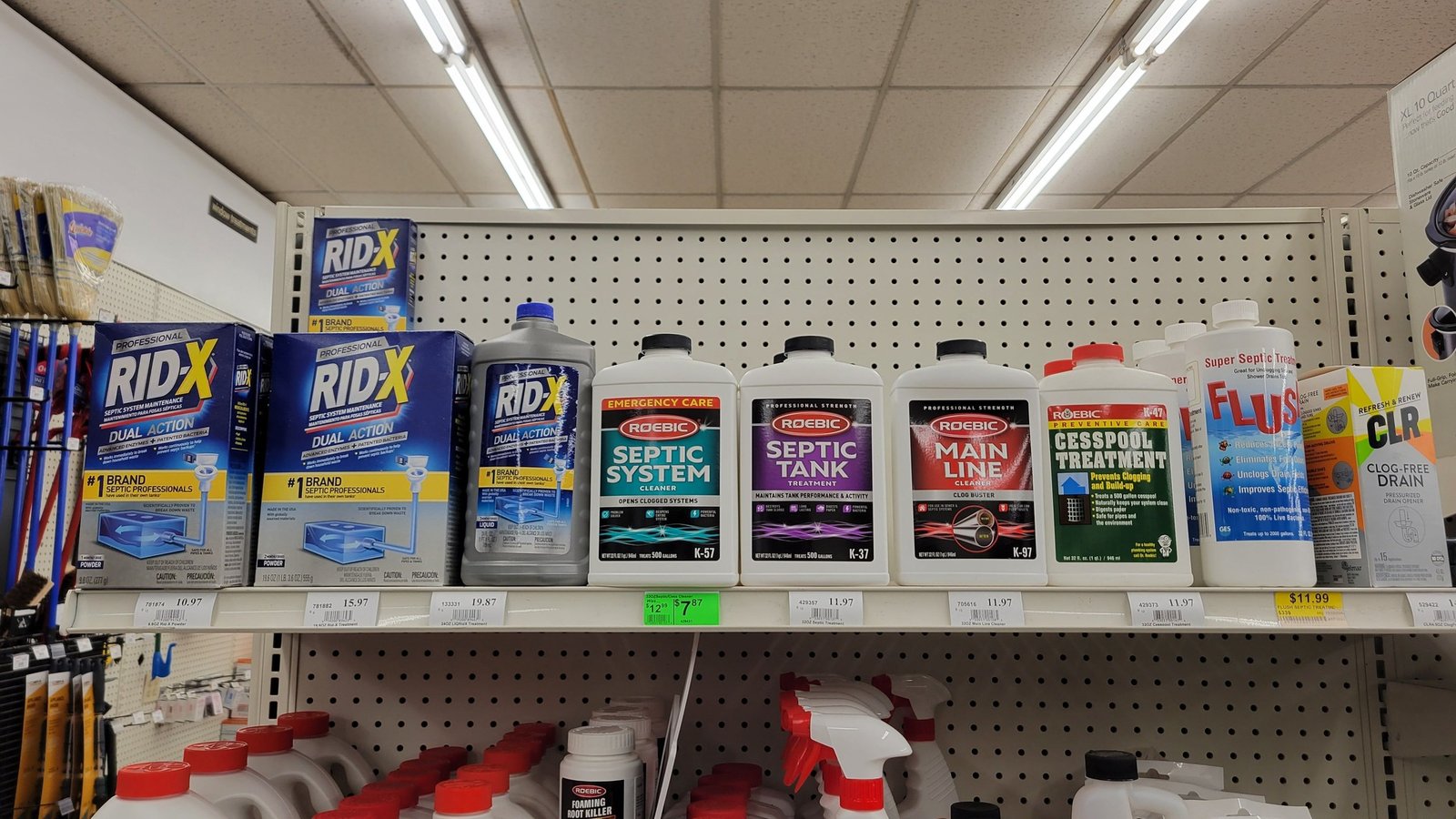
1. Bacterial Additives (e.g., Rid-X):
- What they are: Blends of dormant Bacillus or Pseudomonas bacteria.
- Claim: “Replenish” or “boost” the tank’s natural bacterial population.
- Reality: A healthy tank fed regular waste already contains robust, adapted bacteria. Adding more is often redundant.
2. Enzyme Additives (e.g., Bio-Clean, Green Gobbler):
- What they are: Concentrated proteins (lipase, protease, amylase) that catalyze breakdown of specific compounds like fats, proteins, and starches.
- Claim: “Target” and break down problem materials like grease.
- Reality: Can show activity in a lab on isolated substances, but effect is diluted in a complex tank environment.
3. Chemical Additives/Oxidizers:
- What they are: Strong acids, alkalis, or ammonium compounds.
- Claim: “Open clogged drains,” “eliminate odors instantly.”
- Reality: Carry the highest risk. They can kill the essential bacterial ecosystem, corrode concrete tanks and pipes, and contaminate groundwater.
Testing Results: Do Septic Additives Actually Work?
Our 12-month controlled evaluation of leading brands measured actual impact versus manufacturer claims.
Featured Snippet Target (Table): Key Performance Metrics
| Product Type | Sludge Reduction | Scum Reduction | Odor Control | Impact on Pumping Need |
|---|---|---|---|---|
| Bacterial (Rid-X, Roebic) | None Significant | None Significant | Short-Term | None |
| Enzyme (Bio-Clean) | Minimal (Grease Only) | Minimal (Grease Only) | Minimal | None |
| Chemical Oxidizer | None | None | Effective (Short-Term) | None (High Risk) |
| Professional Pumping | Complete | Complete | Complete | Eliminated |
The Critical Finding:
“In healthy, properly used systems, no additive produced a statistically significant reduction in sludge or scum volume compared to an untreated control tank over a 12-month period.”
Real-World Outcome: Homeowners using additives reported feeling proactive but did not achieve longer intervals between required pumpings. The need for pumping was determined by measured sludge levels, unaffected by additive use.
Additives vs. Professional Pumping: The Ultimate Comparison
This is the core value analysis. Pumping is the proven, mechanical solution; additives are an unproven biological supplement.
Featured Snippet Target (List): The 5 Reasons Pumping Beats Additives
- Removes Inorganic Solids: Pumping physically removes the indigestible, inorganic sludge that bacteria and enzymes cannot break down (e.g., sand, lint, plastic fibers from “flushable” wipes).
- Prevents Drain Field Failure: Removing sludge before it overflows is the #1 way to prevent a $10,000+ drain field replacement.
- Includes Professional Inspection: A pump service includes a visual check of baffles, tees, and tank integrity—additives provide zero diagnostic value.
- One-Time, Proven Cost: Average cost of $300-$600 every 3-5 years.
- Zero Risk of Harm: When done by a licensed pro, it only helps your system.
Cost Analysis Over 5 Years:
- Monthly Additive Regimen: $15/month x 60 months = $900 + cost of required pumping ($450) = $1,350
- Pumping Only (As Needed): $450
- Conclusion: Skipping additives and budgeting for pumping saves approximately $900 every 5 years.
When Might an Additive Be Considered? (Ideal Use Cases)
Based on our testing and expert guidelines, consider an additive ONLY in these specific, temporary scenarios:
- After Major Antibiotic Use: If a household member underwent a strong antibiotic regimen, a bacterial booster may help repopulate affected strains.
- Accidental Chemical Contamination: After a significant pour of bleach or disinfectant down the drain, a bacterial additive might aid recovery.
- Temporary Grease/Organic Overload: Following a large event, an enzyme product may help accelerate breakdown of fats and proteins.
Important Caveat: Even in these cases, additives are a supplemental response, not a solution. The root cause (excessive chemicals, grease) must be addressed.
Frequently Asked Questions About Septic Additives
Q: Does Rid-X really work to break down solids?
A: Rid-X contains bacteria, but in a healthy system, it’s largely redundant. According to the University of Minnesota Extension, there is no conclusive independent data showing it significantly reduces sludge accumulation or extends pumping intervals.
Q: Can additives break down baby wipes or flushable wipes?
A: Absolutely not. No bacteria or enzyme can digest synthetic plastic fibers. Only physical removal via pumping can eliminate them.
Q: Are septic treatments safe for my tank and pipes?
A: Bacterial/enzyme treatments are generally safe. Chemical oxidizers are often unsafe and can corrode concrete tanks and pipes, killing the essential ecosystem. Always check for harsh acids (sulfuric acid) or strong alkalis.
Q: What is the #1 best thing I can put in my septic tank?
A: The correct answer is “nothing” besides human waste and toilet paper. The best “treatment” is proper use and regular removal of solids via pumping.
Q: Will additives help my failing or slow-draining system?
A: No, and they may worsen it. Slow drains or backups are mechanical/hydraulic issues (full tank, clogged pipe, failing drain field). Additives cannot fix these. You need a professional diagnosis.
Q: Is yeast or baking soda a good natural alternative?
A: No. Baker’s yeast is a fungus, not the anaerobic bacteria your tank needs. Baking soda is a mild base but does not contribute to waste digestion. Both are ineffective substitutes.
Q: Do I need a “starter” additive after pumping?
A: No. Your tank will naturally and rapidly repopulate with the correct bacteria from incoming waste. This is a common marketing ploy.
Our Final Verdict & Recommendation
Recommendation: AVOID for routine maintenance. CONSIDER ONLY for specific, temporary corrective scenarios.
For 95% of homeowners:
Do not buy septic system additives. Redirect the $15-$30 per month you would spend into a dedicated savings fund for your next professional septic inspection and pumping. This is the only investment with a guaranteed, high return in system longevity and preventing catastrophic failure.
If you choose to use one:
Select a simple, chemical-free bacterial blend (check ingredients) and use it sparingly for the specific situations noted above. Never use a product that makes claims like “never pump again.”
The Path to True Septic Health
The current expert consensus is clear: A septic system is a mechanical and biological system that requires mechanical maintenance. No liquid in a bottle can replace the physical necessity of removing accumulated solids. True system health comes from:
- Regular Inspections & Pumping (based on measurement, not time).
- Protecting the Drain Field from weight and roots.
- Mindful Flushing Habits (only waste and TP).
- Conserving Water to prevent hydraulic overload.
Focus your effort and money on these proven practices, and your system will reliably serve your home for its full lifespan.
Leave a Reply