Quick Answer: Using a garbage disposal with a septic system is generally not recommended. Food waste from disposals increases solids and fats in your septic tank, accelerating sludge buildup, maintenance needs, and the risk of system failure. Moderate, careful use with increased pumping frequency and proper maintenance is essential if you must use one, but alternatives like composting are typically safer for your system and the environment.
- Garbage disposals add solids and fats to septic tanks, increasing maintenance needs.
- Frequent use can accelerate sludge buildup and risk drain field clogs.
- Septic bacteria cannot fully digest all types of food waste.
- Composting or trash disposal is usually recommended over using a disposal with septic.
- Always consult your septic professional before installing or using a disposal unit.
What is a Septic System and Garbage Disposal?
Core Concept Explained Simply
A septic system is an underground wastewater treatment solution used in homes without access to centralized sewer systems. It works by separating solids and liquids in household wastewater, with bacteria breaking down organic material. A garbage disposal is an under-sink appliance that grinds food scraps into small particles to be flushed down the drain. When used together, the increased amount and type of waste from a disposal can change how well the septic system treats household wastewater.
Key Terminology Breakdown
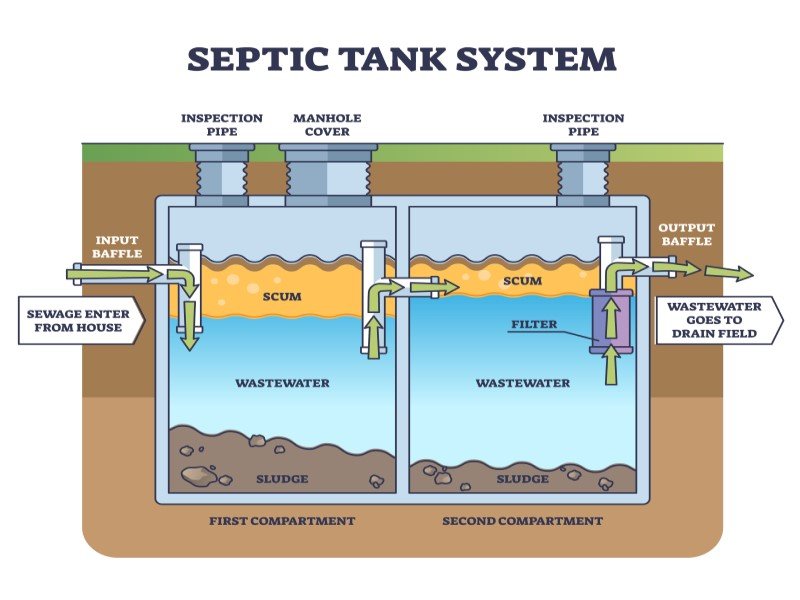
- Septic Tank: Underground container that separates and partially treats household sewage into sludge, scum, and effluent.
- Garbage Disposal Unit: A motorized device fitted beneath a kitchen sink to grind food scraps for disposal through plumbing.
- Septic System Bacteria: Beneficial microorganisms in the tank that decompose organic waste.
- Pump Frequency: How often accumulated solids must be pumped out of the septic tank.
- Effluent: Liquid wastewater leaving the septic tank, filtered before soil absorption.
Historical Development and Current Context [UPDATED: 2026]
Garbage disposals were invented in the 1920s and became common in American homes after World War II, offering a convenient method for food waste management. Meanwhile, septic systems have remained the primary wastewater treatment system for rural and many suburban properties. Current guidance—supported by the U.S. Environmental Protection Agency (EPA) and septic professionals—emphasizes caution when using garbage disposals with septic systems. Increasing solid and organic waste loads can compromise system performance, leading to more frequent pumping and greater risk of failure.
How the Septic System and Garbage Disposal Work Together: The Mechanism
Fundamental Principles
Septic tanks depend on anaerobic bacteria to break down and digest organic solids from household wastewater. When a garbage disposal is used, a higher load of food solids—including fats, oils, grease, and starchy materials—enters the septic tank. This stresses bacterial activity and accelerates the accumulation of sludge (settled solids) and scum (floating fats/oils), requiring more frequent maintenance.
Process Flow Visualization
Inputs, Processes, and Outputs
| Component | Inputs | Processes | Outputs |
|---|---|---|---|
| Garbage Disposal | Food waste, water | Mechanical grinding | Ground food particles in wastewater |
| Septic Tank | Household wastewater (with ground solids) | Solid-liquid separation, anaerobic bacterial digestion | Partially treated effluent, accumulated sludge/scum |
| Drain Field | Clarified effluent | Soil absorption and filtration | Treated water returns to groundwater |
Components and Variations
Main Parts and Their Functions
- Garbage Disposal Unit: Grinds food waste into fine particles for easier drainage.
- Septic Tank: Receives household wastewater and food particles, settling solids for bacterial digestion.
- Drain Field: Subsurface soil area that absorbs and filters clarified effluent.
Different Models and Configurations
- Garbage disposals range in horsepower and blade design; higher-power models grind finer but send more small solids into the septic tank.
- Septic tanks vary by size, capacity, compartmentalization, and construction material, all influencing how they handle added organic solid loads.
Industry-Specific Versions
Large-scale, commercial, or agricultural septic systems may handle higher organic loads, but nearly all residential systems are engineered for typical household wastewater—not routine food disposal. Aerobic septic systems can handle organic matter more efficiently but require increased maintenance and costs.
Benefits, Applications, and Impact
Primary Advantages and Value Proposition
- Reduces food waste sent to landfills, lowering overall trash volume.
- Provides kitchen convenience and helps manage daily food scraps (if used very moderately).
When managed carefully and in moderation, with regular system maintenance, some homeowners can use disposals safely. However, this practice is best suited for homes with modern, properly-sized systems and proactive pumping schedules.
Real-World Applications Across Industries
Homeowners in rural and suburban areas sometimes use disposals, but most municipalities and experts—including the EPA—recommend composting or municipal collection instead for optimal septic system longevity and environmental protection.
Who Benefits Most and Why
- Homeowners willing to increase septic tank pumping frequency and maintenance may enjoy some of a disposal’s convenience.
- Households with upgraded, higher-capacity, or specialized aerobic septic systems can sometimes better tolerate food waste—if assessed by a professional.
Limitations and Considerations
Potential Drawbacks and Constraints
- Added solids and fats from food waste speed up sludge buildup, potentially clogging pipes and the drain field.
- Maintenance and pumping become more frequent and expensive.
- Some food scraps—like fibrous peels, fats/oils, and starches—are especially hard on septic bacteria and pipes.
When Alternatives Are Better
In homes with small or aging septic tanks, limited maintenance access, or sensitive environments, compost bins or municipal waste collection are safer, lower-risk alternatives.
Common Misconceptions—Debunked
- Misconception: “Bacteria break down all food waste, so disposals don’t affect septic tanks.”
- Reality: Many food solids and especially fats and fibrous waste are not efficiently digested and accumulate quickly in the tank.
- Misconception: “Regularly flushing with water prevents issues.”
- Reality: Solids still settle and accumulate, demanding more frequent removal.
- Misconception: “Additives compensate for food waste load.”
- Reality: No additive can make up for excessive food solids repeatedly entering a septic tank.
Frequently Asked Questions
Does using a garbage disposal harm my septic system?
Yes, regular use increases solids and fats in your tank, speeding up sludge accumulation, requiring more frequent pumping, and raising the risk of clogs and system failure. The National Small Flows Clearinghouse and EPA both advise caution or avoidance.
How often should I pump my septic tank if I use a garbage disposal?
With a garbage disposal, most experts recommend pumping every 1–2 years, compared to every 3–5 years without one, depending on usage volume and tank size.
Can septic bacteria handle all types of food waste?
No, while bacteria break down many organics, they struggle with fats, oils, grease, and stringy or starchy foods. These materials often accumulate and disrupt system performance.
Are there food wastes I should never put in the garbage disposal with a septic system?
Yes. Avoid grease, oils, bones, fibrous peels (like corn husks), hard pits, coffee grounds, and large amounts of pasta or rice. These can clog or overload system components.
What are safer alternatives to using a garbage disposal with a septic system?
Compost food scraps or use municipal food waste collection programs. Both options protect your septic system and are encouraged by the EPA and industry experts.
Will adding septic system bacteria additives help when using a garbage disposal?
While some additives claim to boost bacterial breakdown, they are not a substitute for proper maintenance and cannot offset excess food solids from disposals.
Can I upgrade my septic system to better handle garbage disposal waste?
Advanced aerobic or larger-capacity systems may handle higher organic loads, but upgrades require a professional assessment and can be costly.
What are the signs my septic system is failing due to garbage disposal use?
Warning signs include slow drains, sewage backups, unpleasant odors, and soggy patches over the drain field. These require immediate professional attention.
Is it environmentally safe to use a garbage disposal with a septic system?
Limited, cautious use may be manageable for some systems, but excessive food waste risks groundwater contamination and drain field damage.
Does the type of garbage disposal affect septic system health?
Higher-power units create finer waste, potentially increasing the total solids entering your tank. Moderation and pump schedule adjustments are vital, no matter the model.
Bottom Line & Recommendations
If you choose to use a garbage disposal with your septic system, do so sparingly. Increase your septic pumping frequency and avoid putting fats, oils, or hard-to-break-down foods down the drain. For better system health and environmental responsibility, composting food scraps is usually the best practice. Always consult with a licensed septic system professional before deciding.
Helpful Resources
- U.S. EPA Septic Systems Guide
- National Sanitation Foundation: Garbage Disposal Standards
- Septic System Owner’s Manual – National Small Flows Clearinghouse
Ready to protect your septic system? Schedule regular septic inspections, consider eco-friendly alternatives like composting, and consult your local septic professionals for tailored maintenance advice.

Leave a Reply