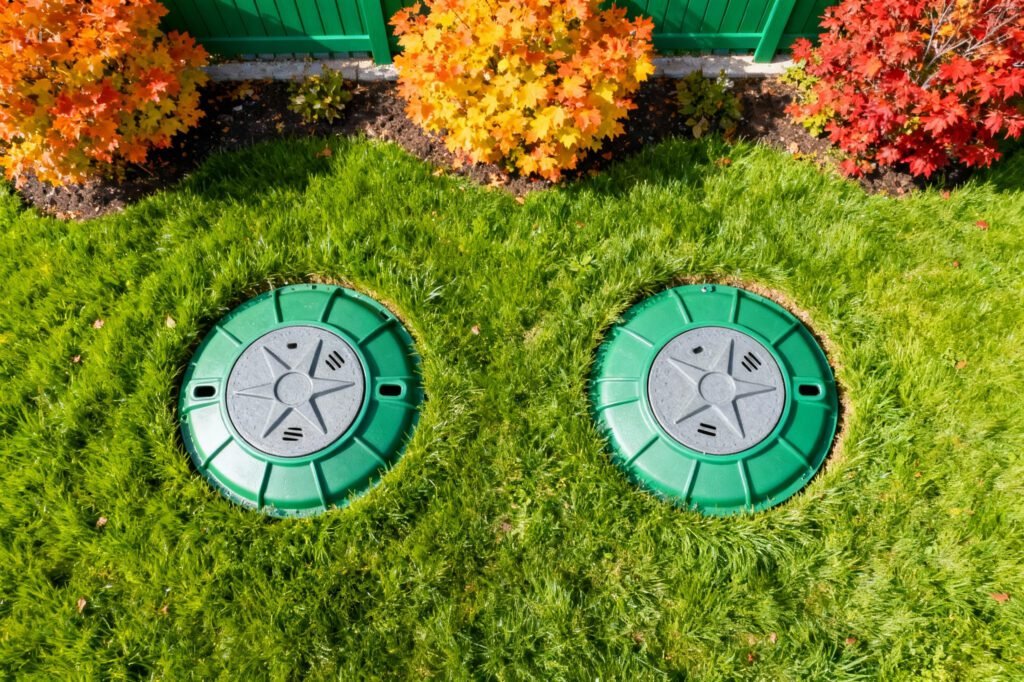
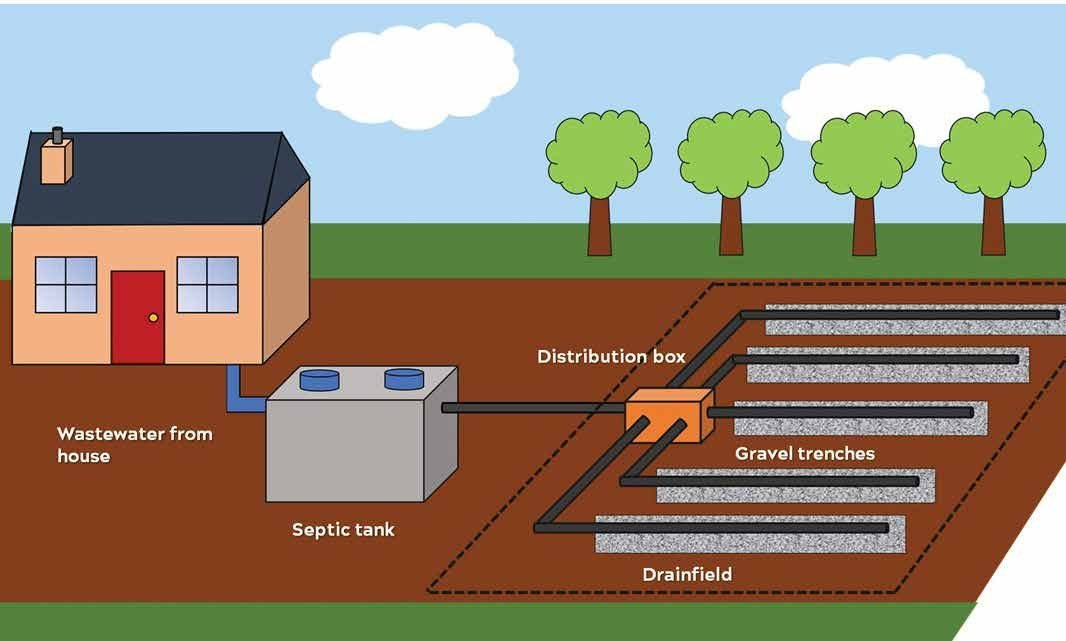
Quick Answer: A typical residential septic system consists of a buried watertight tank, a distribution box, and a network of drain field trenches with perforated pipes. Only select risers or lids may be slightly visible above ground. Cross-sectional diagrams and real-world photos—like those in this article—reveal how these parts are arranged and what to look for during inspection or maintenance.
- Septic systems are mostly underground, containing a tank, distribution box, and drain field pipes.
- Visual guidance helps homeowners identify, inspect, and maintain system components.
- Early recognition of system layout and problem signs prevents costly failures.
- Regular inspection, clear records, and referencing diagrams/photos are best practice.
Table of Contents
Introduction: The Critical Role of Visualizing What a Septic System Looks Like
Understanding what does a septic system look like is fundamental for homeowners managing onsite wastewater treatment. Septic systems are complex subterranean installations with multiple components working together. Without clear visual references, it can be difficult to identify parts, accurately diagnose problems, or communicate with service providers. This article connects to our comprehensive septic system pillar guide by focusing on layout clarity—using diagrams and real-world photos as critical tools to understand your system’s structure and function.
Deep Dive: Understanding What a Septic System Looks Like
Detailed Definition and Components
| Component | Description |
|---|---|
| Septic Tank | Watertight container (typically concrete, fiberglass, or plastic) where solids settle and break down anaerobically |
| Distribution Box | Directs effluent evenly from the tank to drain field pipes |
| Drain Field (Leach Field) | Trenched network of perforated pipes that discharge effluent into the soil for filtration |
| Risers and Access Ports | Surface-level entry points for inspecting and maintaining the tank and distribution box |
| Additional Components | Baffles, filters, and potentially pumps or control panels (for advanced systems) |
How It Functions Within the Larger System
Wastewater flows from household plumbing into the septic tank, where solids settle and break down. Liquid effluent moves from the tank into the distribution box, which sends the flow evenly into several drain field lines. Here, the soil’s natural biological processes further treat the water before it reenters the groundwater. Septic systems work independently from municipal sewer systems and require regular maintenance to prevent system failure.
Visual Breakdown
[Insert labeled cross-sectional septic system diagram displaying the septic tank, distribution box, risers, access ports, drain field trenches with pipes, and soil zones]
Practical Applications and Real-World Scenarios
Use Case 1: Identifying Septic Tank Location and Access in a Residential Yard
Homeowners may need to locate their septic tank for inspection or pumping. Surface risers or visible access ports, if present, make routine service easier and can prevent unnecessary excavation. Reference diagrams and real-world photos can help pinpoint likely locations in your yard.
Use Case 2: Assessing Drain Field Condition via Surface Indicators
Visual indicators—such as wet, spongy soil or unusually lush vegetation above the drain field—can signal saturation or failure. Understanding standard field layouts enables faster identification of warning signs and leads to prompt action.
Industry-Specific Applications
Professionals including home inspectors, septic service providers, and environmental consultants rely on accurate diagrams and real photos to assess septic system integrity, perform repairs, or design upgrades tailored to unique site conditions. Accurate site-based visuals minimize guesswork and bolster compliance with environmental guidelines, referencing authorities like the EPA and NOWRA.
Implementation Guide
Step-by-Step Process for Locating & Documenting Your System
- Consult property records and surface clues to locate septic components.
- Carefully expose risers and access ports using hand tools if necessary.
- Use a system diagram (from records or this article) to identify each part.
- Conduct a careful visual inspection of risers, tank lids, and distribution box covers.
- Assess the drain field surface for wet spots, odors, or abnormal vegetation.
- Take photos and create sketches of system layout for future reference.
- Plan and schedule professional maintenance as needed based on your findings.
Essential Tools and Resources
- Soil probe or metal detector for locating risers and tank lids
- Shovel or hand excavation tools
- Flashlight for interior inspection (through ports only)
- Septic system diagram (printed or digital)
- Camera or smartphone for documentation
Timeline and Milestones
| Task | Typical Duration |
|---|---|
| Initial system identification | 1–2 hours |
| Inspection & photo documentation | 1–2 hours |
| Schedule professional maintenance | Within 1 month of inspection |
| Annual review | Each year |
Integration and Optimization
Visuals and Maintenance Guidance
Being able to recognize septic system parts strengthens the routine care detailed in our Septic System Maintenance Guide. Diagrams and photos help you plan and carry out regular checks, empowering more accurate communication with service professionals.
Troubleshooting Linkages
Knowing the physical arrangement and appearance of your septic system components accelerates troubleshooting. Accurate visual references—like those in our Septic System Troubleshooting guide—allow you to pinpoint symptoms for faster solutions.
Optimization Tips for Homeowners
- Clearly label and keep access risers visible: Paint, flag, or map locations for future ease.
- Avoid driving or placing heavy loads over the drain field: Prevents soil compaction and system damage.
- Maintain yearly photo documentation: Helps spot changes or early deterioration over time.
Troubleshooting This Specific Aspect
Common Problems and Typical Symptoms
- Difficulty finding risers or tank lids due to grass, soil, or landscaping concealment
- Wet areas, strong odors, or patches of dense vegetation above drain field
- Cracked, displaced, or missing tank lids/risers, representing safety and contamination risks
Diagnostic Flowchart
[Insert easy-to-follow flowchart guiding users from first symptom (e.g., wet soil) to possible inspection steps and solution options]
Solutions for Each Issue
| Issue | Solution |
|---|---|
| Hidden access points | Use a soil probe, refer to local septic records, or seek professional help |
| Drain field saturation | Minimize household water use, divert surface run-off, and hire a professional for evaluation or remediation |
| Damaged components | Promptly replace cracked or missing lids/risers to restore safety and airtightness |
When to Call a Professional
If you cannot confidently or safely examine the system, or if you observe failure symptoms (e.g., sewage backup, persistent odors, or structural risks), contact a licensed septic service technician immediately. For health and safety, critical inspections and repairs should always be handled by trained professionals (CDC safety tips).
Maintenance Schedule and Best Practices
Daily and Weekly Homeowner Tasks
- Monitor and moderate household water usage
- Avoid disposing non-biodegradable materials into the system
Monthly and Quarterly Checks
- Visually inspect any above-ground risers or tank lids for damage
- Look for wet patches, odors, or lush growth above the drain field
Annual Review and System Updates
- Schedule septic tank pumping every 3–5 years (per EPA guidelines and local codes)
- Review and update your visual documentation—photos, layouts, and notes—after any professional service
Conclusion and Pathways Forward
Through diagrams and real-world photos, this guide has illustrated what a septic system looks like and the value of visual clarity for maintenance, troubleshooting, and collaboration with experts. Proactive visual familiarity is your best defense against system failure. To deepen your knowledge, see our full Septic System Maintenance Guide and Troubleshooting Septic Systems guides.
Frequently Asked Questions
What does a septic system look like underground?
A typical underground septic system comprises a large buried tank, a separate distribution box, and several trenches containing perforated pipes (drain field). The tank is rectangular, often concrete or plastic, and positioned several feet below the surface. Only risers or access lids may be visible at ground level.
How can I find my septic tank and its components?
Look for visible lids or risers slightly above the ground. Check your property’s septic records or home inspection documents. When not visible, carefully use a soil probe or a metal detector to locate underground components. Always proceed cautiously to avoid damaging the system.
What are the main parts shown in a septic system diagram?
Diagrams typically show the septic tank, tank baffles, distribution box, drain field trenches with perforated pipes, risers, and access ports—illustrating the system’s structure and connections for clear visualization.
How do drain field trenches look, and why are they important?
Drain field trenches look like shallow, elongated ditches fitted with gravel and perforated pipes (see diagram/photo above). They are essential for dispersing effluent underground, where natural filtration occurs. A sound drain field prevents contamination and system failure.
What does a failing septic system look like?
Failure signs include soggy soil patches, foul odors near the tank or field, lush growth above the drain field, slow indoor drains, or sewage backups. Recognizing these through regular visual inspection fosters timely repairs and system health.
Can I visually inspect my septic tank safely?
Yes, you can visually check above-ground risers and lids for condition and integrity. Never open the tank yourself—professional service is required, as methane and other gases pose safety risks, and tank interiors can collapse.
How often should septic system photos and diagrams be updated?
Update your system’s visual documentation after every major maintenance, repair, or any changes to component layout to ensure records are current and ready for troubleshooting or future inspections.

Leave a Reply