Quick Answer: A septic system leach field, or drain field, is an underground system of perforated pipes and gravel trenches that receives partially treated wastewater (effluent) from a septic tank and filters it through soil, removing contaminants before the water returns to the environment.
- The leach field is vital for final treatment of septic tank effluent.
- It relies on natural soil biology to remove pathogens and pollutants.
- Proper maintenance and protection extends system lifespan and safeguards groundwater.
Table of Contents
Core Concept Explained Simply
A septic system leach field, also called a drain field, is a critical component of small-scale wastewater treatment.
It’s an underground network of perforated pipes laid in trenches filled with gravel or similar media.
The field receives partially treated wastewater (effluent) from the septic tank and disperses it into the surrounding soil.
The soil acts as a biological filter, removing harmful pathogens, nutrients, and organic matter before the water eventually returns to groundwater or surface water resources, protecting public health and the environment.
Key Terminology Breakdown
| Term | Definition |
|---|---|
| Septic Tank | Underground watertight tank where solids settle and begin decomposition in household wastewater. |
| Leach Field/Drain Field | Area with subsurface perforated pipes dispersing and filtering effluent through soil. |
| Effluent | Liquid wastewater leaving the septic tank, containing dissolved/suspended contaminants. |
| Soil Absorption System | Combination of leach field and soil layers treating the effluent. |
| Perforated Pipes | Pipes with holes that evenly distribute effluent into the soil. |
Historical Development and Current Context
The use of leach fields began in the early 20th century, providing decentralized, effective sanitation in areas lacking public sewers.
Initially, basic trench-based systems prevailed.
Today’s leach fields benefit from advances in soil science, engineering, and regulatory oversight (e.g., guidance from the EPA), enabling designs that are more efficient, environmentally sound, and longer-lasting.
Recent innovations (as of 2026) include microbial enhancement methods and advanced materials that further reduce the risk of groundwater contamination and address increasing land use pressures.
How a Septic System Leach Field Actually Works: The Mechanism
Fundamental Principles
Leach fields are rooted in soil-based natural treatment processes. Effluent from the septic tank flows through perforated pipes, dispersing evenly into the soil. Key mechanisms include:
- Filtration: Soil particles trap suspended solids from the effluent.
- Microbial Decomposition: Beneficial soil bacteria break down organic matter and pathogens.
- Chemical Adsorption: Soil binds excess nutrients (such as nitrogen and phosphorus).
- Oxygen Exchange: Aerobic soil zones oxidize and neutralize remaining contaminants.
Process Flow Visualization
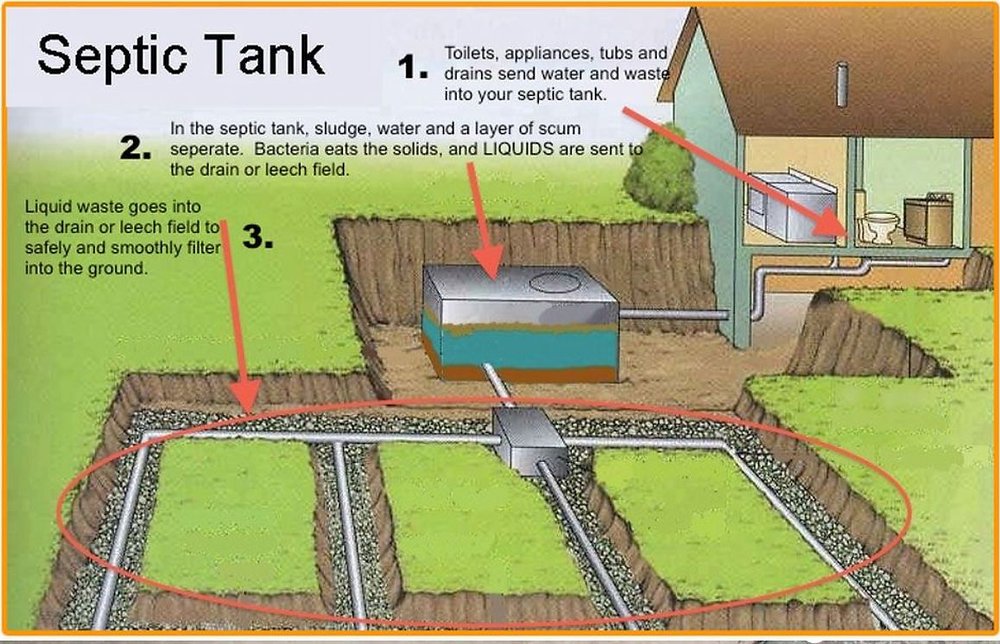
Visualization: Wastewater flows from household plumbing into the septic tank, where solids settle. Effluent exits to the distribution box, then moves into leach field pipes, dispersing into gravel-filled trenches and filtering through biologically active soil before finally rejoining groundwater.
Inputs, Processes, and Outputs Table
| Stage | Description | Role in Treatment |
|---|---|---|
| Input | Household wastewater (blackwater & greywater) enters septic tank | Initial collection and pre-treatment |
| Process |
| Primary and secondary biological/physical filtration |
| Output | Cleaned, filtered water percolates into the groundwater with reduced pathogens, nutrients, and pollutants | Final environmental release |
Components and Variations
Main Parts and Their Functions
- Septic Tank: Stores solids and allows settling and anaerobic digestion.
- Distribution Box: Distributes effluent equally into multiple field lines.
- Leach Field Trenches: Perforated pipes in gravel-filled trenches where effluent is dispersed and treated.
- Soil Layer: Natural filter that biologically and physically treats the effluent.
Different Models and Configurations
| System Type | Key Features | Best For |
|---|---|---|
| Conventional Trench | Linear trenches with gravel, suitable for most soils | Standard residential use |
| Gravel-less Systems | Plastic chambers/synthetic media reduce gravel needs, increase void space | Sites with delivery or installation constraints |
| Mound Systems | Above-ground sand/soil mounds for poor or shallow soils | High water tables, clay soils |
| Pressure-Dosed | Pumps distribute effluent under pressure for uniform spread | Uneven terrains; ensuring even distribution |
Industry-Specific Variations
- Residential Systems: Designed for individual homes or small clusters.
- Commercial Systems: Larger, often with pretreatment, for businesses or institutions.
- Remote/Rural Sites: Custom designs (mound, drip) for limited space or fragile ecosystems.
Benefits, Applications, and Impact
Primary Advantages and Value Proposition
- Effective Natural Treatment: Removes pathogens and lowers nutrient loads without chemicals.
- Groundwater Protection: Reduces risk of contamination of wells and aquifers (CDC).
- Low Operating Costs: No ongoing energy input needed after installation.
- Environmentally Friendly: Utilizes sustainable natural processes.
Real-World Applications Across Industries
- Residential Communities: Most homes outside city sewers rely on leach fields.
- Agricultural Settings: Wastewater or wash water treatment.
- Recreational Parks: Off-grid campsites and facilities use leach fields.
- Commercial Developments: Remote offices, lodges, inns, or stores without access to public sewers.
Who Benefits Most and Why
- Homeowners in rural, suburban, or sensitive environmental areas benefit from effective, low-maintenance waste treatment and groundwater protection.
- Municipalities reduce infrastructure costs and public health risks.
- Ecologically-minded landowners favor the sustainability aspect.
Limitations and Considerations
Potential Drawbacks and Constraints
- Soil Suitability: Poorly draining soils impede absorption and treatment.
- Space Requirements: Drain fields need adequate land, limiting development potential.
- System Saturation: Excessive water use or flooding causes failure.
- Maintenance Needs: Neglected maintenance leads to clogs and field damage.
Situations Where Alternatives Are Better
For properties with poor percolation, high water tables, or minimal space, explore alternatives such as mound systems, aerobic treatment units, or connecting to municipal sewers.
See our guide: Septic System Alternatives Comparison.
Common Misconceptions Debunked
- “Leach fields only disperse effluent.” They also treat wastewater via soil chemistry and biology.
- “It’s safe to plant anything above the leach field.” Only shallow-rooted grass or plants should be used; trees/shrubs can cause costly pipe damage.
- “Everyday cleaners won’t harm the septic.” Harsh chemicals can disrupt the microbial ecosystem, reducing treatment effectiveness.
Frequently Asked Questions
What is a septic system leach field used for?
A septic system leach field safely disperses and treats liquid effluent from a septic tank by filtering it through biologically active soil—removing contaminants before water enters the groundwater system.
How can I protect my septic system drain field?
Protect your drain field by:
- Avoiding excess water use
- Not driving, parking, or constructing over the field
- Using only shallow-root vegetation (Learn about safe plants here)
- Sticking to a regular maintenance and inspection schedule (Septic System Maintenance Best Practices)
How often should septic system maintenance be performed?
Experts, including the EPA, recommend pumping the septic tank every 3–5 years and conducting annual inspections of the field for optimal operation and longevity.
Can I plant grass or trees over my septic leach field?
Yes, but only grass or shallow-rooted plants are suitable.
Avoid deep-rooted trees or shrubs, as their roots can damage field pipes and impair system functions.
See: Which plants are safe for drain fields?
What signs indicate a failing leach field?
- Slow drains in home plumbing
- Standing water or soggy ground over field
- Unpleasant odors outdoors
- Unusually green and fast-growing grass, even without irrigation
- Surfacing sewage or persistent wet areas (see How to handle septic failures)
Why does soil type matter for drain fields?
Soil properties directly affect the rate at which effluent is absorbed and treated. Sandy soils may let water through too quickly (insufficient treatment), while clay soils may not drain at all (causing system failure). Proper soil evaluation is required for code-compliant installation.
How does the leach field treat wastewater naturally?
By combining physical filtration, microbial breakdown, and chemical adsorption, soil layers act as a natural bioreactor—neutralizing harmful substances before groundwater recharge.
Can household chemicals harm my septic system?
Yes, harsh chemicals—like bleach and solvents—kill the beneficial bacteria required for effective effluent breakdown and soil treatment.
What happens if a leach field fails?
Failure leads to untreated or partially treated wastewater surfacing, groundwater contamination, public health risks, and potentially high-cost repairs.
Are new technologies improving septic system leach fields?
Yes. Recent advancements include engineered bacteria for enhanced microbial breakdown, more durable pipe materials, and alternative effluent distribution methods for increased treatment efficiency and lifespan.
Authoritative Resources
United States Environmental Protection Agency (EPA) – Septic Systems Overview
National Onsite Wastewater Recycling Association (NOWRA) – Residential Septic Systems
Centers for Disease Control and Prevention (CDC) – Proper Wastewater Treatment
Your drain field is a living ecosystem. Protect it with maintenance and mindful use to ensure a healthy home and environment.
Ready to safeguard your septic investment?
Discover expert advice and maintenance tips in our Septic System Maintenance Best Practices guide, or explore septic alternatives if your current site is unsuitable.

Leave a Reply