Quick Answer: A percolation test (or “perc test”) determines how quickly soil can absorb water at a proposed septic drain field location. This rate informs whether a site is suitable for a septic system and is required for safe, regulatory-compliant wastewater treatment.
- Percolation tests are legally required before septic system installation to protect health and the environment.
- They measure the rate water drains through soil, directly impacting system design and placement.
- Modern protocols account for climate, soil variance, and longevity of onsite systems.
- Poor test results don’t always mean septic systems are impossible—alternatives exist.
- Rely only on up-to-date test results, especially when buying land.
Table of Contents
What is Percolation Test for Septic System? The Complete Definition
Core Concept Explained Simply
A percolation test for septic systems, often called a perc test, is an evaluation of how effectively the soil at a specific site can absorb and filter water. The test measures the rate at which water moves vertically through soil layers where a potential septic drain field would be located. This data is essential in designing a septic system that prevents effluent backups, surface water pooling, or contamination of groundwater and wells.
Key Terminology Breakdown
- Percolation Rate: The speed (in minutes per inch) that water moves through the soil, indicating absorption capacity.
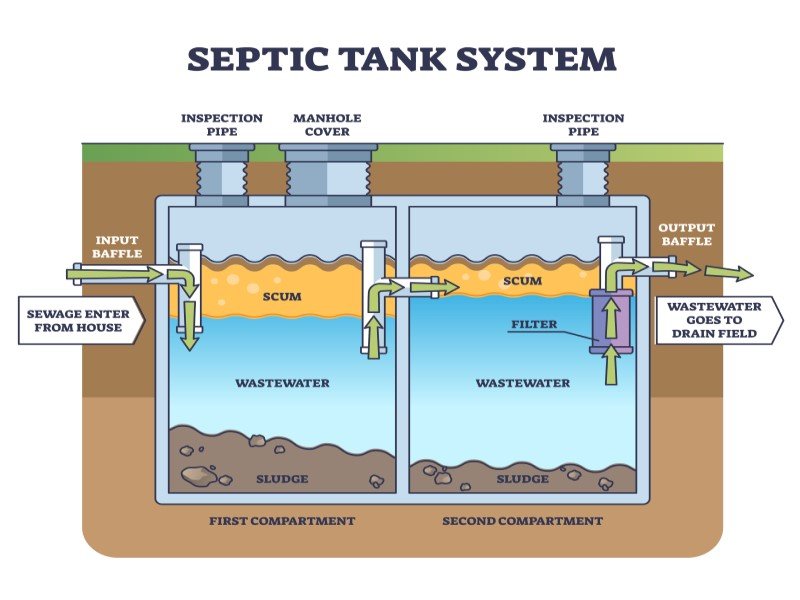
- Septic Drain Field: The underground area (sometimes called leach field) where treated effluent from a septic tank is released for further filtration.
- Effluent: The liquid waste discharged from a septic tank to the drain field.
- Soil Profile: The vertical section of soil showing distinct layers (topsoil, clay, sand, rock) that influence drainage.
- Septic System Design: An engineered layout using perc data to ensure reliable wastewater dispersal and treatment.
Historical Development and Current Context (2026)
First formalized in the 1930s to remedy unsafe wastewater practices in rural communities, percolation tests have since become a standard procedure enforced by regional health departments. Testing protocols have continually evolved—especially since the early 2000s—with scientific advances in soil analysis and strengthened environmental regulations from agencies such as the U.S. EPA. As of 2026, many states factor in climate variability and more granular soil data to improve system reliability and minimize environmental impact.
How Percolation Test for Septic System Actually Works: The Mechanism
Fundamental Principles
The efficacy of a septic system relies on soil that absorbs effluent at a controlled rate. If absorption is too rapid, untreated wastewater can reach groundwater and cause contamination; if it’s too slow, water can back up or pond at the surface. The percolation test quantifies this rate, supporting septic designs that balance filtration with dispersal.
Process Flow Visualization
- Site Preparation: Identify drain field area and excavate standardized test holes.
- Soil Saturation: Pre-soak holes with water to mimic worst-case (wet) field conditions.
- Measurement: Track how much the water level drops in the hole at timed intervals.
- Calculation: Determine percolation rate in minutes per inch (or cm).
- Interpretation: Use results to size and design the septic field appropriately.
| Step | Input | Process | Output |
|---|---|---|---|
| 1. Site Prep | Proposed drain field location | Excavation of test holes | Standardized holes for testing |
| 2. Saturation | Water | Pre-soak soil to full field capacity | Replicate real drainage |
| 3. Measurement | Timer + Ruler/Tape | Read water drop at intervals | Series of readings |
| 4. Calculation | Readings | Average rate computed | Percolation rate (min/inch) |
| 5. Analysis | Calculated rate | Compare with standards | Design recommendations |
Components and Variations
Main Parts and Their Functions
- Test Holes: Commonly 6–12 inches in diameter and 18–24 inches deep, representing drain field conditions.
- Water Supply: Needed to saturate the test holes before measurements begin, simulating realistic ground moisture.
- Measurement Tools: Rulers or weighted tapes for accurate depth readings during timed tests.
- Recording Sheets/Software: Used to log time, water drop, and other observations for analysis.
Different Models and Configurations
| Test Method | Use Case | Key Distinction |
|---|---|---|
| Standard Perc Test | Most residential soil | Single hole, classic method |
| Modified Perc Test | Rocky/high-clay soils | Adapted for difficult soils |
| Perc + Soil Profile | Layered or variable soils | Includes texture & compaction analysis |
See also: Alternative Wastewater Treatment Methods: When to Look Beyond Perc Tests.
Industry-Specific Versions
- Residential: Default standard perc test for homes.
- Commercial/Industrial: Often requires multiple, larger-scale tests to handle higher effluent loads.
- Clay Soil Regions: May involve soil engineering or advanced alternative designs for slow absorption.
Benefits, Applications, and Impact
Primary Advantages and Value Proposition
- Regulatory Compliance: Satisfy local health and environmental laws.
- System Longevity: Correct field sizing prevents overload and extends system life.
- Risk Reduction: Avoid costly site failures and pollution risks.
- Investment Guidance: Determine property usability before construction or purchase.
Real-World Applications Across Industries
- Real Estate: Land buyers and sellers confirm buildability.
- Construction: Builders design systems to code.
- Environmental Agencies: Protect aquifers and surface water resources.
- Agriculture: Farms manage onsite wastewater treatment for operations outside municipal sewer reach.
Who Benefits Most and Why
- Property Buyers: Avoiding unsuitable land investments is paramount.
- Builders: Ensuring system approval and longevity starts with proper testing.
- Health Departments: Mandate tests to maintain public safety.
- Environmental Scientists: Require accurate soil data to prevent system-sourced pollution.
Limitations and Considerations
Potential Drawbacks and Constraints
- Soil Heterogeneity: Patchy soils produce variable results—even within a single site.
- Weather Sensitivity: Recent wet or dry conditions can misrepresent typical performance.
- Low Permeability (Clay): May preclude traditional systems, requiring engineered solutions.
- Test Hole Disturbance: Improper preparation/compaction can skew readings.
Situations Where Alternatives Are Better
- Sites with layered soils or conflicting old test data may require professional soil analysis or seepage field tests.
- Regulatory bodies sometimes demand supplemental studies for sensitive locations.
Related: Alternative Wastewater Treatment Methods |
Soil Testing Methods for Property Development
Common Misconceptions Debunked
- “A perc test guarantees septic system success”: It only assesses soil absorption—not system installation, maintenance, or long-term function.
- “Faster percolation is always better”: Excessive rates risk contaminating groundwater. A moderate, steady rate is ideal per EPA guidance.
- “Failed test means no septic system possible”: Many sites support alternative or engineered septic solutions—failure isn’t the end of the road.
Frequently Asked Questions
- What is a percolation test for septic system?
A percolation test measures how quickly water drains through soil at a proposed septic field, helping design compliant, safe septic systems. - Why is a percolation test legally required before septic system installation?
It proves soil can safely absorb wastewater, minimizing pollution and protecting public health—requirements set by most local authorities. - How long does a percolation test take?
Depending on soil type and local regulations, a typical test may last from 30 minutes to several hours, including soak time and repeated measurements. - Can a percolation test be performed on any soil type?
Most soils are testable, but rocky or dense clays often require modified methods or different evaluation approaches. - What happens if the soil fails the percolation test?
Failure means soil drains too slowly or too quickly. Options include alternative system designs, engineered fields, or, sometimes, denying system permits on unsuitable sites. - How do seasonal changes affect percolation tests?
Soil moisture changes with recent rain or drought can affect outcomes. Authorities often require testing in average or controlled conditions. - Is the percolation rate the only factor in septic system design?
No; design must also consider soil depth, underlying rock, groundwater, slope, and all local codes. - How does clay soil impact septic system design?
Clay’s very slow drainage usually necessitates larger drain fields, enhanced treatment systems, or entirely different approaches. - Can I rely on a previous percolation test if I’m buying land?
Review only recent, officially recorded results, as local soil conditions may change over time due to erosion, landscaping, or seasonal moisture. - What are the risks of proceeding without a percolation test?
You risk septic failure, unexpected costs, possible pollution, and legal/code violations. Always confirm soil suitability before site investment.
Bottom Line
The percolation test is the foundation of every successful septic system installation. Never purchase land contingent on septic approval without verified, up-to-date perc test results. Sound testing protects both property value and environmental safety for the long run.
Helpful Resources & Further Reading
- U.S. Environmental Protection Agency (EPA) – Onsite Wastewater Treatment Systems
- National Onsite Wastewater Recycling Association – Perc Test Procedures
- American Society of Agronomy – Soil Permeability and Water Movement
Internal Links
- Understanding Septic System Installation: Step-by-Step Guide
- Septic System Design Considerations for Clay Soil
- Alternative Wastewater Treatment Methods: When to Look Beyond Perc Tests
- Soil Testing Methods for Property Development
- Local Regulations on Septic Systems: What You Need to Know
Ready to get started with your septic system project? Consult a licensed septic designer and order a professional percolation test before making any land or construction commitments. Your property’s safety and compliance depend on it.

Leave a Reply