
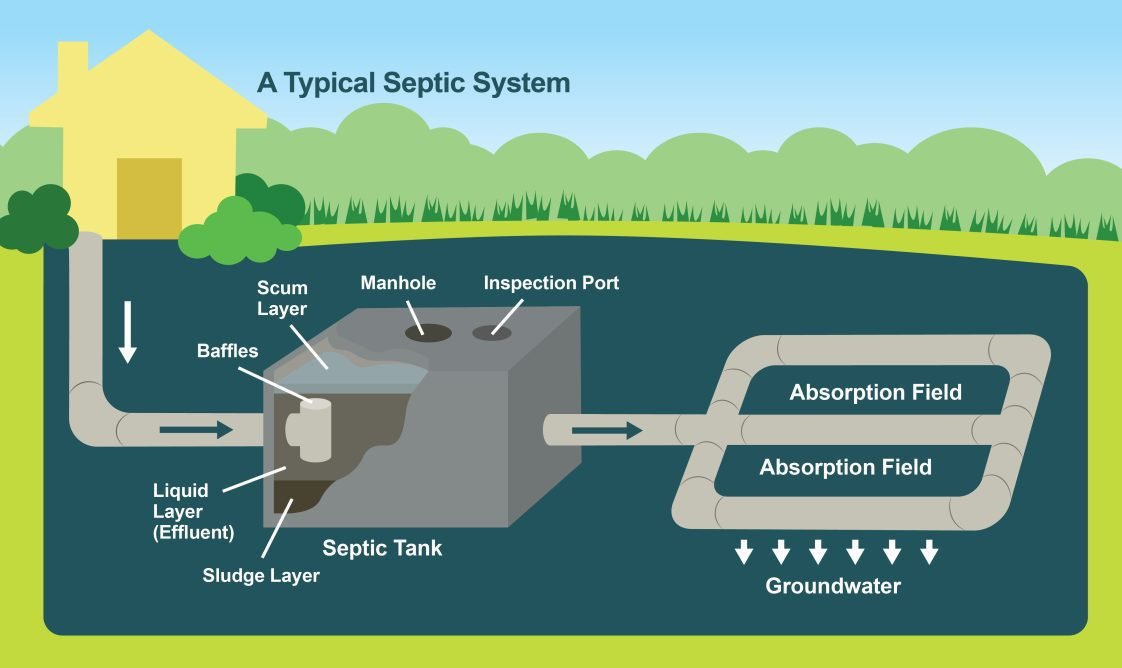
Quick Answer: In residential and commercial septic systems, a biomat is a thin, naturally forming biological slime layer at the boundary between the drain field soil and the effluent from the leach field pipes. This biofilm—composed of microbes, organic matter, and secreted substances—acts as a critical natural filter, removing pathogens and nutrients from wastewater before it enters the soil and groundwater. While a healthy biomat is essential for wastewater treatment, if it becomes too thick, it can clog the soil and cause septic system failure.
- The biomat is a vital, naturally forming microbial filter in septic drain fields.
- Balanced biomat function ensures effective pathogen and nutrient removal.
- Overgrowth of the biomat leads to hydraulic resistance and septic failure.
- Management includes water use practices, soil assessment, and regular monitoring.
- Design, climate, and maintenance all influence biomat health and performance.
Table of Contents
Foundational Overview: The Biomat in Septic System Drain Fields
The Core Definition and Scope
A septic system biomat is a naturally occurring microbial slime layer that forms at the interface between the drain field soil and the effluent discharged from septic leach field pipes. This gelatinous biofilm consists mainly of bacteria, fungi, extracellular polymeric substances, and organic detritus. The biomat acts as a biological filter in the crucial final treatment stage of onsite wastewater management, removing contaminants and pathogens before effluent percolates into groundwater. A well-managed biomat supports septic system function, while overgrowth directly contributes to system clogging and failure. Understanding biomat properties and its lifecycle is essential for a sustainable, long-lasting drain field.
Historical Context and Evolution
Since the mid-20th century, biomats have been recognized as both beneficial and problematic in onsite wastewater treatment. Earlier perspectives labeled the biomat as a clogging layer; however, research through 2026, with advances in molecular biology and soil science, highlights its dual role as a natural treatment barrier and potential risk if mismanaged. Emerging studies employing metagenomics and microscopic imaging have mapped the diversity and enzymatic function of biomat-forming microbes, revealing the biochemical and ecological interplay that governs system health. This ongoing research continues to inform better design and operational guidelines for septic systems worldwide.
The “Magic Triangle”: Principles Governing Biomat Success
The long-term success of a septic system biomat depends on a tightly interconnected set of factors, often described as the “Magic Triangle”:
- Biological Activity: The metabolic rates and diversity of microbial communities drive the breakdown of organic waste.
- Hydraulic Loading: The amount and timing of water entering the system regulate biomat thickness and health. Excessive flows accelerate overgrowth and clogging.
- Soil Permeability: The ability of native soil to absorb and filter effluent shapes biomat development and helps prevent rapid buildup.
An effective drain field design balances these principles; disturbance to any factor can quickly lead to uncontrolled biomat growth and rapid system failure.
The Complete Classification System
Primary Types and Models
Biomat formation varies by system design and site conditions. Main types include:
- Standard Gravity-Fed Systems: Even biomat development occurs along leach field trenches with passive effluent dispersal.
- Pressure-Dosed Systems: Controlled, intermittent dosing fosters more uniform, thinner biomats and reduces clogging risk.
- Mound Systems: Elevated media over challenging soils support specialized biomat communities, ideal for sites with high water tables.
- Constructed Wetlands: Integrated plant roots interact with the biomat, increasing biofilm complexity and purification potential.
Each approach results in distinct biomat characteristics, affecting treatment efficacy, maintenance requirements, and life expectancy.
Scale Variations: Residential vs. Commercial Applications
Residential systems are exposed to lower, more consistent flows, resulting in simpler biomat structures and easier management. Commercial or multi-dwelling fields face higher, fluctuating loads, which can accelerate biomat growth and complexity, often demanding engineered solutions such as effluent pre-treatment, larger or sectional fields, or periodic rest intervals to prevent clogging.
Regional and Climate-Based Adaptations
Biomat development also reflects regional conditions:
- Colder climates slow microbial growth and reduce hydraulic conductivity, leading to thinner but long-lived biomats.
- Arid climates produce drying-rewetting cycles, stressing biomat microbial communities and affecting resilience.
- Local soil mineralogy, texture, and pH affect filtration and biomat structure.
See regional adaptations to septic biomats for in-depth strategies tailored to your specific environment.
The End-to-End Lifecycle Framework
- Initiation and Planning:
Success begins at the planning phase with soil testing, determining hydraulic loads, and selecting optimal layout and media. Early modeling of biomat formation supports proper field sizing and risk minimization.
- Implementation and Execution:
Installation quality is crucial—correct trench depth, spacing, and gravel ensure uniform distribution and avoid compaction that impedes permeability and healthy biomat development.
- Operation and Maintenance:
Manage household water use and inspect regularly for surfacing effluent, soggy areas, or foul odors. Professional maintenance includes pumping, routine monitoring, and using resting intervals to allow biomat consolidation.
- Optimization and Scaling:
Adjusting flows (e.g., via water conservation or recirculation) maintains an optimum biomat thickness. Large installations may use multiple fields or sections to distribute loads and extend lifespan.
- Renewal or Replacement:
When a biomat reaches problematic thickness, interventions may include excavating trenches, replacing soils, or adding advanced pretreatment. Renewal is guided by careful assessment of soil and biomat conditions.
Key Stakeholders and Ecosystem Dynamics
Roles and Responsibilities Matrix
- Homeowners: Practice responsible water use and schedule inspections.
- Design Engineers: Specify system requirements and biomat parameters in planning.
- Installers: Construct fields to standards that promote healthy biomat initiation.
- Regulators: Monitor compliance and set environmental protection benchmarks.
- Maintenance Professionals: Perform technical inspections and manage corrective actions.
Clear communication and well-defined roles are essential for reliable biomat management and system longevity.
Communication Protocols and Documentation Standards
Maintain design documents, soil test data, inspection logs, and maintenance records. Establishing a communication channel (such as digital platforms or service logs) between homeowners and professionals enables proactive biomat health management.
Regulatory and Compliance Overview
Septic system and biomat management is regulated by national and state authorities to protect groundwater and public health. The EPA’s guidelines and local health codes provide up-to-date standards for design, operation, and monitoring. Staying compliant reduces risk of environmental harm and legal liability.
Tools, Technology, and Performance Management
Essential Tools and Software
- Soil permeability meters and moisture probes for field assessment
- Effluent flow monitoring systems for real-time data collection
- Professional software for modeling predicted biomat growth and system risk analysis
Key Performance Indicators (KPIs) and Dashboards
- Hydraulic conductivity and percolation rates
- Biomat thickness (often measured via ground-penetrating radar or soil probes)
- Microbial activity level and diversity
- Trends in effluent quality as it leaves the drain field
Real-time dashboards and regular reporting empower stakeholders to remain proactive about system health.
Data-Driven Decision Making
Combining sensor readings, inspection records, and analytical trends allows for informed decisions—like when to rest a field, scale up or renew a drain field, or implement advanced pretreatment—minimizing the risk of biomat-induced septic failures.
Comparative Analysis and Strategic Decision Matrix
| Option | Best For Scenario | Advantages | Limitations | Cost Range | Skill Required |
|---|---|---|---|---|---|
| Standard Gravity Systems | Low flow, stable residential use | Simple design and maintenance | Susceptible to biomat clogging under load stress | Low to Moderate | Basic maintenance skills |
| Pressure-Dosed Systems | Sites requiring load control | Improved hydraulic distribution | Requires pumps and controls | Moderate to High | Technical operation |
| Mound Systems | High water table, poor soils | Adapted for challenging soils | Complex installation, higher monitoring | High | Skilled installers |
| Constructed Wetlands | Advanced treatment needs | Enhanced biofilm biodiversity | Higher cost, space intensive | High | Expert management |
Risk Assessment and Mitigation
Main risk: uncontrolled biomat growth leading to system failure. Mitigation strategies include water use control, effluent quality pre-treatment, field resting, permeability improvements, and routine professional inspection.
Future Trends and Innovations
Advanced bioaugmentation, real-time IoT monitoring, and permeable reactive barriers are emerging to optimize biomat health. Ongoing research targets engineered biomats designed to resist clogging while boosting pollutant removal, according to updates in the Journal of Environmental Quality.
Implementation Roadmap and Resources
Actionable Checklist for Getting Started
- Test site soil and assess climate factors.
- Select the septic system type suited to your biomat and hydraulic needs.
- Design to achieve balanced effluent loading and avoid over-stressing the drain field.
- Set a schedule for regular system and biomat thickness inspections.
- Promote water conservation for longevity and optimal biomat development.
- Prepare contingency plans for maintenance and renewal.
Common Pitfalls and How to Avoid Them
- Hydraulic Overload: Leads to rapid biomat clogging—prevent with water use management.
- Suboptimal Soil: Poor site soils undermine biomat function—always conduct thorough site evaluation before installation.
- Neglecting Maintenance: Allows unnoticed problems to escalate—establish and follow a consistent inspection and maintenance schedule.
Recommended Next Steps
For advanced guidance, see these articles:
- Advanced septic system maintenance
- Pressure dosing septic systems
- Regional adaptations to septic biomats
- Troubleshooting septic system failures
- Septic system leach field design basics
Reference Section
Key Takeaways and Summary
The biomat is essential for septic drain field wastewater treatment, balancing necessary filtration with the risk of system blockage and failure. Sound management relies on understanding microbial ecology, system lifecycle, and key factors that influence healthy biomat formation and maintenance.
Complete Glossary of Terms
- Biomat: Microbial slime at the interface of wastewater and soil in a drain field.
- Hydraulic Loading: Total and frequency of wastewater applied to soil by the system.
- Percolation: Movement of liquids through soil pores.
- Effluent: Treated wastewater that flows out of a septic tank.
- Leach Field: The subsurface area designed to filter septic system effluent through soil.
Frequently Asked Questions
What causes a septic system biomat to become too thick?
Excessively high or frequent wastewater flows supply abundant organic matter and nutrients, accelerating microbial growth and causing the biomat to thicken. This reduces soil permeability and hinders effluent movement.
How does the biomat impact septic system drain field longevity?
A balanced biomat supports advanced treatment and groundwater protection, but overgrowth creates hydraulic resistance, causing system backups and premature failure.
Can I manually remove or thin the biomat?
Manual removal is not practical without excavation. The best approach is water use moderation, scheduled resting phases, and professional system management to control biomat thickness naturally.
What are signs of septic system failure due to biomat clogging?
Pooling water, slow drainage, sewage odors near drainage lines, and dense vegetation over the field typically indicate hydraulic failure from biomat overgrowth.
How often should biomat health be checked?
Schedule annual inspections, or more often in high-use commercial or multi-dwelling properties, to monitor biomat development and prevent drain field failures.
Are there treatments to prevent biomat overgrowth?
Advanced solutions include bioaugmentation and effluent aeration pretreatment, but water conservation remains the most effective control method for most systems.
How does climate affect biomat formation?
Colder climates produce slower, longer-lasting biomats; arid climates create stress cycles, decreasing resilience. Tailoring field designs to local conditions is vital.
Further Reading and Authoritative Sources
- U.S. Environmental Protection Agency (EPA): Onsite Wastewater Treatment Systems Manual
- Journal of Environmental Quality: Latest biomat microbiology studies
- National Onsite Wastewater Recycling Association (NOWRA): Technical guides and resources
Need expert guidance on septic biomat health for your property? Explore advanced septic system maintenance guides, troubleshooting tips, and find trusted local professionals now.
Leave a Reply