Did you know? The difference between a failed septic system and a long-lasting, efficient one often comes down to a single innovation: the dosing pump and chamber. If your property faces tough soils, high groundwater, or strict regulatory standards, understanding dosing pump technology is essential for protecting your home and environment—while earning years of reliable wastewater treatment.
Quick Answer: Dosing pumps and chambers in septic systems store and periodically release measured effluent batches to the drain field, optimizing treatment, preventing oversaturation, and extending drain field life—especially vital in engineered or challenging sites.
- Dosing chambers and pumps provide controlled, periodic effluent release for optimal soil absorption.
- They are essential for engineered and pressure distribution septic systems, especially in sites with problematic soils or high water tables.
- Maintenance and correct setup prevent drain field failure and regulatory problems.
- EPA, NESC, and industry sources recommend regular inspection and servicing for reliability.
Table of Contents
The Critical Role of Septic System Dosing Pumps and Chambers
In advanced septic system design, the dosing pump and dosing chamber are crucial for both treatment effectiveness and system longevity. Unlike gravity systems, a septic system with a pump chamber delivers effluent to the drain field in precisely measured doses, not continuous streams. This approach enhances soil absorption, maximizes microbial treatment, and is crucial for both pressure distribution networks and engineered systems designed for difficult properties. Property owners with challenging soil or complex septic requirements should know how dosing chambers and pumps work—and how to maintain them for the best results.
Understanding Septic System Dosing Pumps and Chambers
Definition and Core Components
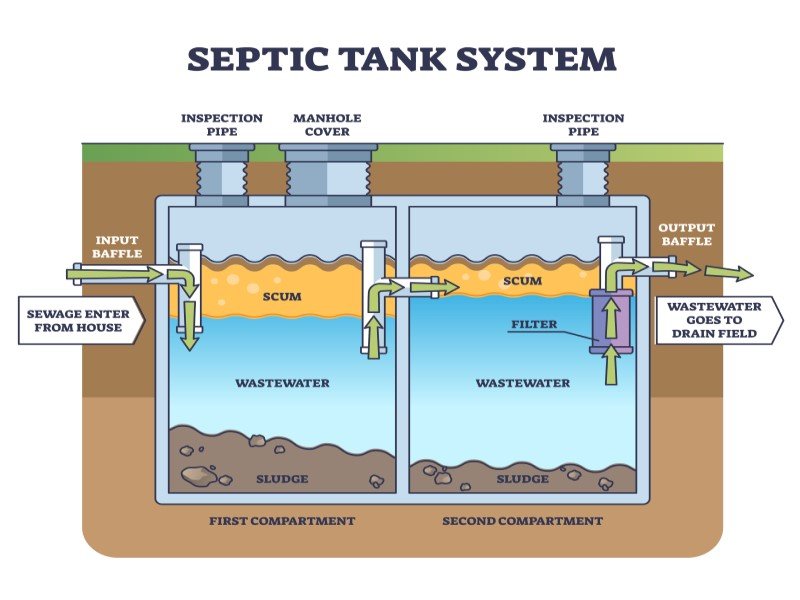
A dosing chamber (also called a pump chamber) is a specialized tank that gathers effluent from the main septic tank, then periodically dispenses it to the drain field in set volumes. The dosing pump—typically a submersible or diaphragm pump—controls this discharge. These are the main components:
| Component | Function |
|---|---|
| Pump Chamber | Stores effluent until a preset level is reached. |
| Float Switches | Detect effluent volume, activating or stopping the pump as needed. |
| Dosing Pump | Moves effluent through force-main and distribution laterals. |
| Alarm Controls | Alert the owner or technician about pump faults or high-liquid conditions. |
System Function and Operational Flow
After effluent receives initial treatment in the septic tank, it flows by gravity into the dosing chamber. Instead of an endless trickle, effluent accumulates until a float switch signals the pump to engage. The pump pushes a “dose” of effluent to the drain field or distribution network. This intermittent surge allows soil to rest between doses, maximizing aerobic microbial activity and minimizing clogging risks. It’s the preferred solution for engineered septic designs on restrictive or variable soils.
Visual System Breakdown
[IMAGE: component-diagram] Illustration showing septic tank, dosing chamber with pump and floats, and a pressure distribution drain field indicating batch delivery cycles.
Practical Applications and Real-World Scenarios
Use Case: Challenging Sites with Slow or Shallow Soils
In areas with heavy clay, shallow bedrock, or variable percolation rates, gravity septic systems struggle to distribute effluent evenly. A pump chamber introduces measured, pressurized doses—preventing waterlogging, promoting even dispersal, and extending drain field life.
Use Case: High Groundwater Table Sites
Where the water table is high, oversaturating soil is a serious risk. Dosing pumps deliver effluent in carefully spaced batches, reducing the likelihood of groundwater contamination and helping properties meet stringent environmental codes.
Industry Applications
- Commercial properties: Dosing pumps adapt to fluctuating wastewater volumes in hotels, restaurants, or schools, maintaining consistent treatment.
- Agricultural operations: Custom dosing ensures fields or irrigation drip lines aren’t overwhelmed, conforming to regulatory mandates and environmental stewardship.
Implementation Guide: Installing a Septic System with Pump Chamber
Step-by-Step Installation Process
- Site and soil evaluation – Assess soil capacity and system suitability for dosing chamber integration.
- Design the septic system – Select pump size, determine dose volumes and timing, and configure float switch levels.
- Install septic and pump chambers – Excavate and position each tank level, ensuring access for maintenance.
- Connect the dosing pump and float switches – Wire controls for precise operation and cycling.
- Test dosing cycles – Run test cycles to confirm dose matching and uniform field delivery.
- Set up alarm system – Install alarms to detect high-liquid or pump failure conditions.
- Final inspection and documentation – Validate installation per local health codes and provide operational manual to owner.
Tools and Resource List
- Pump chamber tanks, submersible or diaphragm dosing pumps
- Electrical wiring kits and float assemblies
- Excavation equipment
- Pressure and flow testing meters
- Pump operation diagnostic devices
Timeline
From design to operational testing, most installations take 2–4 weeks, subject to permitting and site complexity. Inspections should occur after installation, and continue with seasonal and annual follow-ups.
Integration and Optimization in Engineered Septic Systems
Connection with Engineered Septic System Designs
Engineered septic systems rely on dosing pump chambers to overcome site-specific challenges. These components enable accurate effluent delivery and regulatory compliance when gravity systems aren’t viable.
Synergy with Pressure Distribution Systems
Dosing chambers work in tandem with
pressure distribution septic systems—timing each batch for even, pulse-based field delivery, which increases soil infiltration and reduces premature clogging.
Optimization Tips for Efficiency and Longevity
- Set float switch levels to match actual soil percolation rates and field capacity.
- Clean pump intake screens and filters monthly or after heavy use.
- Log and monitor pump cycles to detect unusual activity that may signal clogs or leaks.
- Install high-level and pump-failure alarms to ensure rapid response to potential issues.
Troubleshooting Dosing Pumps and Chambers
Most Common Problems and Diagnoses
| Issue | Symptoms | Probable Causes |
|---|---|---|
| Pump Fails to Activate | No discharge when tank fills | Float switch stuck, pump motor failure, or electrical fault |
| Frequent/Irregular Dosing | Fast cycle frequency, inconsistent dosing | Float miscalibration, inflow leaks, or control panel error |
| Continuous Alarm Signals | Alarm panel remains active | High liquid level, blockage, or wiring issues |
[IMAGE: flowchart] Troubleshooting flowchart: trace symptoms to the float switch, electrical diagnostics, alarm resets, or call for professional help.
Step-by-Step Solutions
- Replace or reposition float switches for accurate pump activation.
- Repair or swap dosing pump if the motor fails or overheats.
- Check all panel fuses and wiring connections for integrity.
- Remove debris or solids from pump intakes to restore flow.
Persistent issues? Consult experienced professionals—see our Local Septic Pump Services for certified help on repairs and replacements.
Maintenance Schedule and Best Practices
Daily/Weekly
- Check alarm lights and listen for odd pump noises.
Monthly/Quarterly
- Test float switches by manually raising floats.
- Inspect and clean pump intake or filter screens for buildup.
Annual
- Have pump unit professionally serviced, including oiling (if required) and seal checks.
- Inspect and tighten all electrical connections and control panel terminals.
- Schedule a full system inspection and records update for health code compliance.
Frequently Asked Questions
What is a dosing chamber in a septic system? A dosing chamber is a special tank that collects and stores partially treated effluent before releasing it in measured doses with a pump. This process improves drain field absorption and system performance (EPA). How often should a septic dosing pump be inspected? At minimum, every pump and float switch should be inspected annually—more often if the site sees heavy use or variable loads (Onsite Installer). Can a dosing pump reduce drain field failure risk? Yes. By dispensing effluent in precisely measured, timed bursts, dosing pumps avoid overloading and soil saturation—two leading causes of early drain field failure (NESC). What types of pumps are used in dosing chambers? Submersible and diaphragm pumps dominate, as they can handle varying effluent volumes and small suspended solids. How does a system with a pump chamber differ from gravity flow? Gravity flow systems allow constant trickle; pump chambers store and deliver effluent in periodic “doses,” improving treatment, particularly on difficult sites. Which tasks prevent dosing pump failures? Test floats monthly, clean screens regularly, and visually inspect alarm panels and wiring connections often. When should I consider upgrading to a dosing pump system? If your property has restrictive or shallow soils, high water tables, or must comply with advanced local regulations, a dosing or engineered system is highly recommended. What alarms are installed with dosing pumps? Most systems include alarms for high liquid levels and pump operation failure, ensuring quick notification before system backup occurs.
Quick Recap/Conclusion
Key Takeaways:
- Septic system dosing pumps and chambers are game-changers for properties with challenging soils, high groundwater, or complex wastewater needs.
- They ensure controlled batch dosing, maximizing treatment and preventing system failure.
- Successful implementation relies on proper design, tested installation, and diligent, scheduled maintenance—as advocated by EPA and industry standards.
- For additional detail, see our Engineered Septic Systems Guide and Pressure Distribution Systems Overview.
Ready to protect your investment?
Download our complete Septic System Dosing Pump Maintenance Checklist for step-by-step inspections and maximized septic lifespan.
- U.S. Environmental Protection Agency (EPA):
Septic System Owner’s Guide - National Environmental Services Center (NESC):
Design and Operation of Dosing Systems - Onsite Installer Magazine:
Best Practices for Septic Dosing Pumps

Leave a Reply