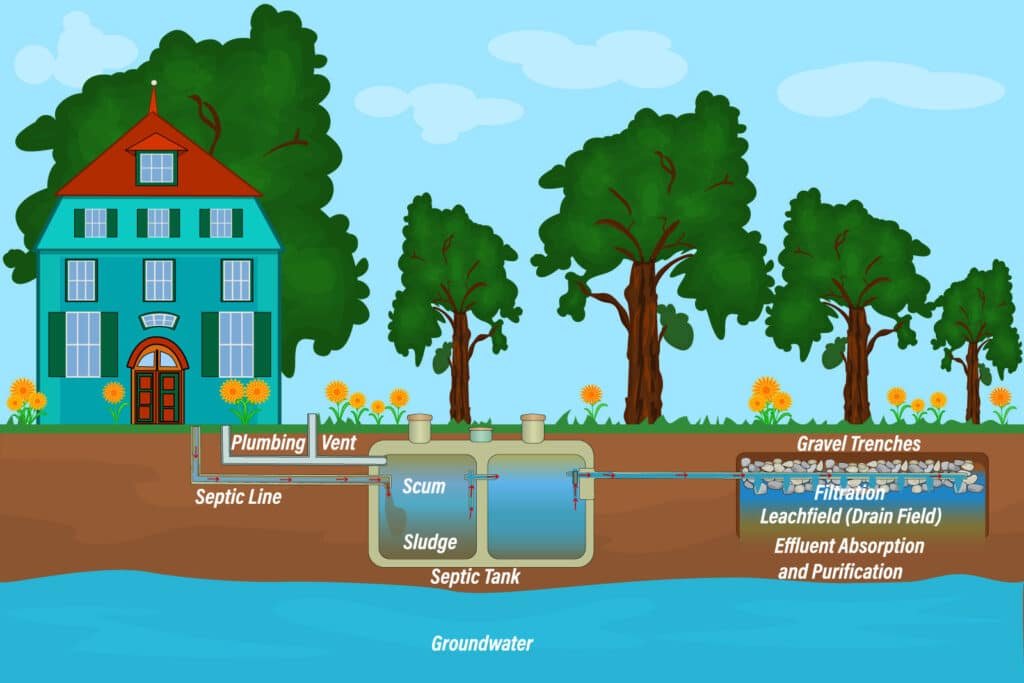
Quick Answer: If your septic system is gurgling, start by safely inspecting the system’s vent pipes for blockages—such as debris or nests—using appropriate protective gear. Clear any obstructions, run water through the system, and monitor for odors or slow drainage. If gurgling persists, or if you notice sewage backups, strong odors, or electrical alarms, stop work and contact a licensed septic technician immediately. Never attempt tank repairs yourself due to hazardous gases and bacteria. Always follow EPA guidelines and local codes for septic system safety.
- Gurgling noises signal potential septic vent blockages, tank overfill, or leaks.
- PPE is essential—exposure to gases and bacteria can cause serious harm.
- Flowchart-based diagnosis and routine maintenance prevent escalation and safeguard system integrity.
- Persistent symptoms or sewage backups require professional service to comply with health and safety regulations.
- Annual inspections and prompt repair protect septic longevity and reduce costly emergencies.
Table of Contents
Is your home suddenly echoing with gurgling noises from the drains or toilets? A noisy septic system is more than just disruptive—it’s a warning sign that demands immediate and systematic attention. Ignoring these sounds can lead to property damage, health hazards, or costly repairs. This guide offers a structured, safety-first approach for homeowners to diagnose, address, and prevent septic system gurgling using recommended best practices from the Environmental Protection Agency (EPA) and local health authorities.
Quick Symptom Index
| Symptom | Possible Causes | Jump Link |
|---|---|---|
| Gurgling noise in drains | Blocked septic system vent | Septic System Vent Issues |
| Slow drainage or backups | Full septic tank or clogged pipes | Performance Problems |
| Odors near septic tank | Vent blockage, damaged seals | Noise Issues |
| Bubbling toilet or sink gurgle | Improper venting or drain blockage | Septic System Vent Issues |
| Water pooling around drain field | Drain field saturation or failure | Leakage Problems |
Prepare for Diagnostics and Troubleshooting
Gather Essential Diagnostic Tools
- Screwdrivers and pliers (for accessing components)
- Plumbing auger/drain snake (for clearing clogs)
- Flashlight and mirror (for vent inspection)
- Handheld smoke test kits (to find leaks and blockages)
- Multimeter (for pump and alarm electrical checks)
Use Proper Safety Equipment
- Nitrile gloves and impact-resistant safety eyewear
- Respirator or mask (rated for hydrogen sulfide and methane)
- Waterproof boots and long-sleeve, disposable clothing
- Onsite first aid kit
Create a Safe Testing Environment
- Test on a dry day (avoid false highs from recent rain/saturation)
- Ventilate well to disperse hazardous gases
- Limit area access to adults only (no children or pets nearby)
Document Symptoms and Test Results
Use a simple log: date, symptom, location, tool readings (e.g., vent airflow), actions taken, and results. Documentation streamlines troubleshooting and helps when escalating to pros.
Diagnose and Resolve Performance Problems
Slow drainage may signal either a blocked pipe or a full septic tank—problems that, left unchecked, can damage your system and cause overflows. Follow these steps:
- Check for visible blockages at drain inlets/outlets.
- Use a plumbing auger to clear minor clogs.
- Verify inlet and outlet baffles are undamaged and properly seated.
- If drainage does not improve, schedule certified septic tank pumping per EPA recommendations (EPA Septic Care).
Diagnose and Fix Septic System Noise Issues
Gurgling and bubbling sounds typically point to air pressure issues caused by vent obstructions. Resolve noise issues by:
- Inspecting roof vents for debris or nesting animals (use a flashlight, wear gloves).
- Clearing visible obstructions carefully. See: DIY Septic Vent Cleaning Procedures.
- Testing vent airflow using a handheld smoke kit—smoke should move freely up and out.
- Repairing or replacing cracked or damaged vent pipes and caps to reestablish airflow.
- If noise persists, consult a licensed plumber to assess for hidden clogs or improper venting per Plumbing Manufacturers International (venting standards).
Address System Leakage Issues
Leaks at septic tanks, joints, or drain fields require prompt action, as they pose groundwater risks, violate local regulations, and could result in costly environmental remediation:
- Inspect seals and joints for visible cracks, wear, or evidence of seepage.
- Check component alignment and proper seating of baffles and lids.
- Repair or replace defective gaskets or pipe sections with approved septic-rated parts.
- Engage a professional for excavation or drain field repairs in accordance with local health department standards.
Diagnose and Repair Electrical/Failure Issues
Noises from pumps or alarm systems can indicate mechanical failure. To troubleshoot:
- Use a multimeter to test voltage at pump/alarm connections (see product manual for correct readings).
- Replace malfunctioning electrical components with OEM or certified parts.
- Restore system power and observe for resolution of symptoms.
- If unsure or if repairs require working in confined spaces, contact a certified wastewater technician.
Use Advanced Diagnostic Techniques
Multimeter and Electrical Testing
Test for voltage and continuity in pump and alarm circuits. Compare results to manufacturer standards for your model (e.g., typical float switch open/closed voltages).
Pressure and Smoke Testing for Leak Detection
Inject low-pressure air or use smoke testers in vent pipes. Watch for smoke escaping at seams or blockages—these pinpoint the source of airflow disruption. Refer to National Association of Wastewater Technicians troubleshooting (NAWT technical resources).
Leverage App-Based Diagnostics (Modern Systems)
Many modern septic systems offer digital apps displaying tank level, pump status, and alerts—consult your system’s manual for setup instructions.
Interpret Manufacturer Codes and Alerts
- Flashing or audible alarms could indicate vent blockages, pump failure, or tank overfill.
- Follow manufacturer codes in the user manual for precise troubleshooting.
Diagnostic Decision Trees and Flowcharts
Structured flowcharts speed up resolution and help you decide when escalation is needed.
Common Symptom Flowchart:
- Gurgling noise detected
- Inspect vent pipe for blocks → Clear debris if found
- Test drainage speed → If slow, check tank level
- Proceed to tank pumping or further vent clearing as indicated
Condition-Specific Flowchart:
- Slow drainage starts
- Check for pipe clogs
- Inspect venting
- Evaluate pump operation
- Repair or call professional as needed
Seasonal/Environmental Flowchart:
- Winter gurgling
- Inspect for frozen or snow-covered vents
- Insulate/clear vent pipes and restore airflow
- Repair or call a technician for persistent icy blockage
Replace and Repair Key Septic System Parts
Identify Common Replacement Parts
- Vent pipe sections and rain caps
- Seal gaskets and drain baffles
- Pump motors and float switches
Source Certified Replacement Parts
- Choose parts from certified septic or plumbing suppliers—confirm compatibility and regulatory compliance (NSF/ANSI Standard 46 for septic components).
- Avoid unmarked or generic parts that can jeopardize system safety.
Step-by-Step Replacement Procedure
- Turn off system power when working near electrical components.
- Safely remove damaged vent or component, using proper PPE.
- Install new part to manufacturer’s torque and fit specifications.
- Check all seals and joints for tightness and proper alignment.
Test System Function Post-Repair
- Run water through system, listening for persistent noise.
- Perform smoke test on vent to ensure unimpeded airflow.
- Confirm no standing water, odors, or slow drainage.
Escalate to Professional Help: Red Flags & Safe Procedures
Recognize Safety-Related Red Flags
- Intense sewage odor from house or yard
- Visible sewage backup or graywater leaks
- Repeated/rapid triggering of alarms
- Electrical issues in damp or confined locations
If you encounter any red flag, stop work immediately. According to EPA guidelines (EPA Septic Overview), only credentialed professionals should perform repairs involving raw sewage or electric components.
Know When to Call an Expert
- Repeated gurgling after attempted vent clearing
- Signs of structural failure (settling tanks/leach field pooling)
- Wiring or alarm faults beyond basic inspection
Prepare for Your Service Appointment
- Document all symptoms, attempted fixes, and tool findings
- Clear access to tank, vent, and drain field areas
- Share system maintenance history and recent logs with technician
Weigh Professional Intervention vs DIY Risks
While DIY diagnostic steps resolve minor blockages, delaying service in complex cases risks health, safety, and property value. Early professional intervention reduces total repair costs and ensures compliance with state/local health codes.
Create a Preventive Septic System Maintenance Plan
Integrate Maintenance to Prevent Gurgling Noises [Full Guide]
- Schedule annual septic system inspections and pumping
- Routinely inspect and clear vents and tank lids of debris or obstructions
- Monitor for early warning signs: slow drains, subtle odors, or bubbling sounds
Install Monitoring and Early Detection Devices
- Add tank level and vent airflow alarms for early problem alerts
- Consider app-integrated monitoring technologies
Follow Seasonal Checklists
- Before winter: insulate vent pipes and clear roof vents of snow/leaves
- After storms: reinspect vent and field components for blockages or flood impacts
See: Seasonal Plumbing Preparation Tips
Frequently Asked Questions
What causes a septic system gurgling noise?
Most commonly, a gurgling septic system results from blocked or inadequate venting, which disrupts air pressure balance in the plumbing. This can be due to debris, nests, or damaged vent pipes.
Can I fix septic system gurgling noise myself?
Yes, minor blockages from leaves or small debris can be cleared safely with proper tools and PPE. For severe blockages, repeated problems, or sewage backups, always hire a certified septic professional.
How often should septic system vents be inspected?
Vents should be checked at least once a year and after severe weather or storms. Proactive inspections help prevent obstructions and associated pressure problems.
Does septic system maintenance prevent gurgling noises?
Absolutely. Routine pumping, vent clearing, and inspection are crucial for pressure equalization and preventing solids buildup, as outlined by the EPA and local regulations.
How do I know if the septic vent is blocked?
Typical symptoms include persistent gurgling, slow drainage, unpleasant smells near vent outlets, or bubbling toilet water. Use smoke testing or airflow checks to confirm a blockage.
Is a noisy septic system dangerous?
Noise itself is rarely hazardous, but the root causes—blockages or leaks—can lead to improper waste handling and expose the household to health risks if unresolved.
When should vent pipes be replaced?
Replace vent pipes if they are cracked, permanently blocked, or corroded. Replacement is also needed if efforts to clear the blockages do not restore normal airflow.
Is it safe to pump my own septic tank?
No. Septic tank pumping must be performed by licensed professionals—it is illegal and unsafe in most regions due to risk of exposure to toxic gases and contamination. More info.
What are the dangers of ignoring a gurgling septic system?
Delaying action can lead to severe blockages, system overflows, groundwater contamination, and increased health risks. Early intervention preserves system integrity and avoids costly emergency repairs.
How can I find a certified septic technician?
Contact your local health department or search for professionals certified by the National Association of Wastewater Technicians (NAWT).
Are certain seasons worse for septic vent blockages?
Yes. Fall brings leaves, while winter may cause vent pipes to freeze or get blocked by snow, leading to more frequent gurgling issues. Seasonal inspections are critical.
How do I safely inspect my septic vent?
Wear PPE, use a sturdy ladder, examine the vent using a flashlight and mirror, and carefully remove visible debris. If unsure, consult a professional.
What does it cost to professionally clear a septic vent?
Professional cleaning or repair generally ranges from $150–$500, depending on system complexity and location.
Can monitoring devices help prevent septic issues?
Yes. Early warning systems for tank level and vent airflow can detect problems before major symptoms develop, saving money and reducing risk.
Does insurance cover septic repairs?
Some homeowner policies may cover sudden accidental damage, but routine maintenance and wear/tear are typically excluded. Verify your coverage details.
What standards apply for septic repair components?
All replacement parts should meet NSF/ANSI Standard 46 (or your state’s septic codes) for reliability and legal compliance.
Key Takeaways
Gurgling or noisy septic systems are reliable early warning signals of vent, tank, or pipe issues. Address them proactively by following a consistent, safety-focused troubleshooting protocol. Always use appropriate protective equipment and document your findings for effective communication with professionals if escalation is necessary.
- Safety first—never attempt hazardous repairs or enter a septic tank yourself.
- Simple blockages can often be cleared DIY, but persistent noise, odors, or backups require a certified technician.
- Routine maintenance, seasonal inspection, and monitoring devices are your best defenses against recurring septic problems and costly repairs.
For further guidance, refer to the Septic System Maintenance Guide and rely on EPA, local health codes, and credentialed technicians for all major interventions.
Internal Links
- Septic System Maintenance Guide
- How to Pump Your Septic Tank Safely
- Seasonal Plumbing Preparation Tips
- DIY Septic Vent Cleaning Procedures
External References
- EPA – Septic Systems Overview (2022)
- National Association of Wastewater Technicians – Technical Resources
- Plumbing Manufacturers International – Venting Guidelines
Ready to safeguard your home? Don’t wait for symptoms to escalate. Download our complete Septic System Maintenance Checklist or call a licensed technician for an inspection today!

Leave a Reply