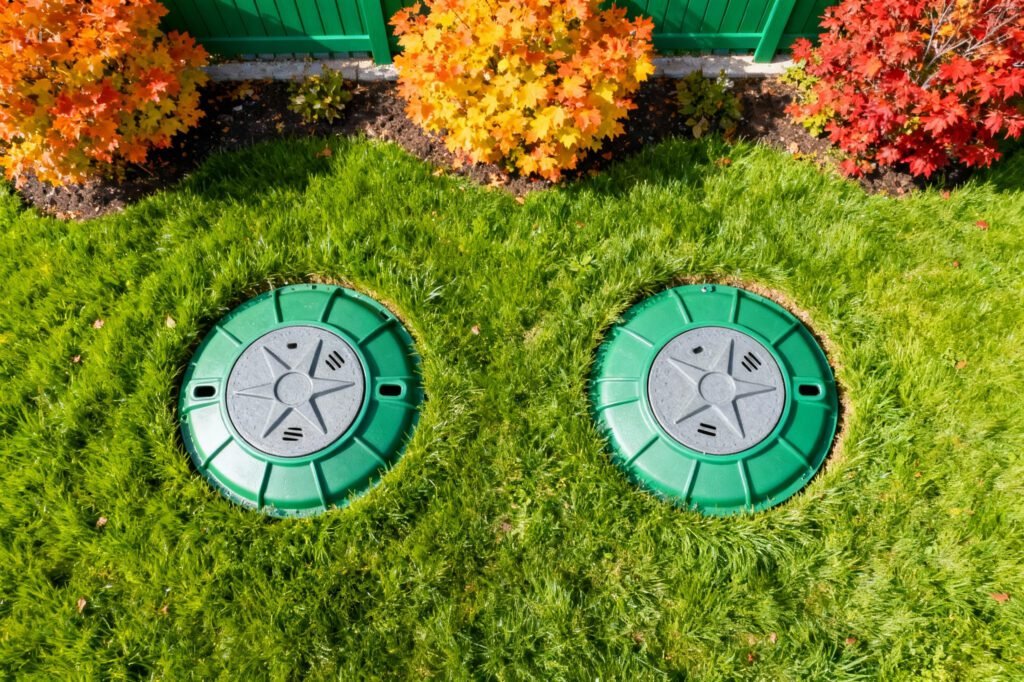
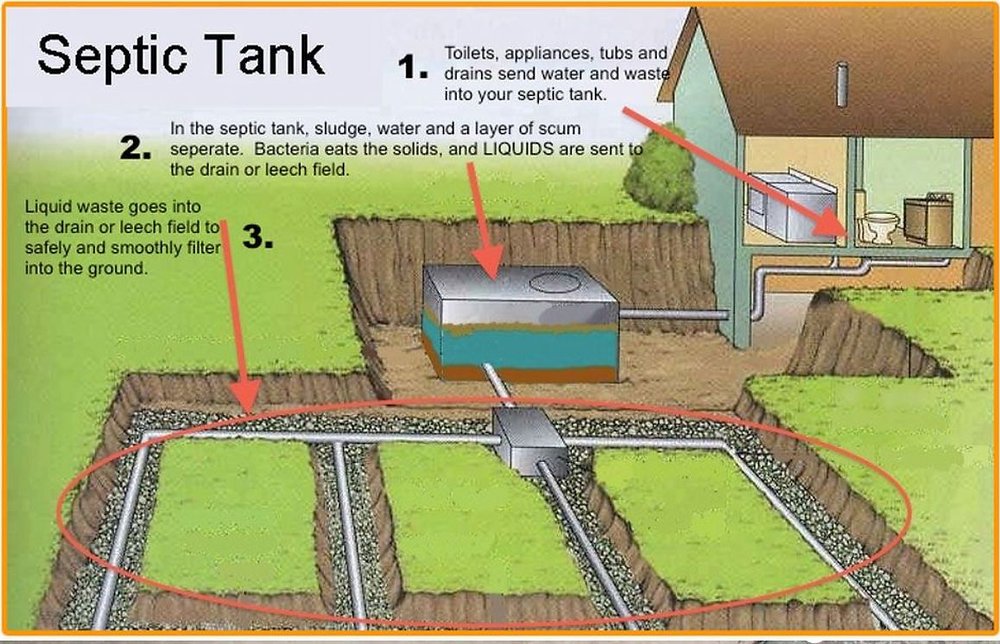
A septic system is a private, onsite wastewater treatment plant for homes and buildings not connected to a public sewer. It consists of a septic tank (which separates solids and begins digestion) and a drain field (which filters and disperses liquid into the soil). It uses natural bacterial processes to safely treat household wastewater, protecting your health, property value, and local groundwater.
Key Components & Functions:
- Septic Tank: Settles solids (sludge), floats scum, and holds wastewater for initial bacterial digestion.
- Drain Field (Leach Field): Disperses clarified liquid (effluent) into soil for final filtration and purification.
- Soil: Acts as the final, critical filter, removing pathogens and nutrients before water reaches groundwater.
- Natural Process: Relies on anaerobic bacteria in the tank and a biomat in the drain field to break down waste.
Table of Contents
Your Home’s Self-Contained Wastewater Solution
A septic system is an essential, engineered ecosystem that treats your household’s wastewater safely and effectively on your own property, making modern sanitation possible beyond the reach of municipal sewers. According to the U.S. Environmental Protection Agency (EPA), more than 60 million Americans rely on septic systems, and their proper function is vital for preventing waterborne diseases and protecting aquatic environments. This guide provides a comprehensive yet clear explanation of what a septic system is, how it’s classified, and why understanding it is a fundamental responsibility of homeownership. You will gain the knowledge needed to operate, maintain, and protect this critical infrastructure.
Prerequisites & Skill Level: This guide is for homeowners, new buyers, students, and anyone curious about home infrastructure. No prior knowledge is needed.
Time & Cost Context: A well-maintained system can last 20-40 years. The core maintenance task—pumping the tank—costs $300-$600 every 3-5 years. Ignorance or neglect can lead to system failure, with replacement costs ranging from $10,000 to $25,000+.
What is the Main Purpose of a Septic System?
The primary purpose of a septic system is to treat household wastewater onsite, rendering it safe to be absorbed into the ground without contaminating drinking water sources or the environment. It performs the same function as a municipal sewage treatment plant, but on a miniature, decentralized scale. The system protects public health by preventing the spread of pathogens and safeguards water quality by removing nutrients and organic matter before effluent rejoins the groundwater.
Bottom line: It transforms waste from your home into environmentally safe water through a combination of settling, bacterial digestion, and soil filtration.
How a Septic System Works: The 3-Stage Treatment Process
The treatment process is a elegant blend of simple physics and natural biology.
Stage 1: Separation & Digestion in the Septic Tank
- Collection: All wastewater from your home flows into a buried, watertight septic tank.
- Settling: Heavy solids sink to the bottom, forming sludge. Lighter fats, oils, and grease float to the top, forming scum.
- Clarification: The relatively clear liquid in the middle layer is called effluent.
- Digestion: Naturally occurring anaerobic bacteria slowly break down a portion of the solid waste.
Stage 2: Distribution to the Drain Field
The clarified effluent exits the tank (via a baffle or outlet filter) and flows to a distribution box, which evenly distributes it into a network of perforated pipes set in gravel trenches or proprietary chambers.
Stage 3: Filtration & Treatment in the Soil
This is the most critical purification stage:
- Dispersion: Effluent trickles from the pipes into the surrounding soil.
- Biomat Formation: A slimy, beneficial layer of bacteria and organic matter—the biomat—forms at the soil interface.
- Final Treatment: The biomat and soil act as living filters, trapping and digesting pathogens, viruses, and nutrients (like nitrogen).
- Clean Water Return: Purified water percolates down to recharge the groundwater table.
[IMAGE: Septic System Process Diagram]
Visual: Cross-section showing house, pipe to tank, tank with three distinct layers (Sludge, Effluent, Scum), pipe to distribution box, and drain field trenches. Arrows illustrate effluent flow through gravel, biomat, and soil into clean groundwater.
Types of Septic Systems: Which One Do You Have?
The type of system is determined by a professional soil evaluation and percolation test. This table explains the most common designs.
| System Type | How It Works & Key Difference | Best For / Typical Scenario | Homeowner Responsibility |
|---|---|---|---|
| Conventional Gravity System | Tank + subsurface gravel/pipe drain field. Relies on gravity for flow. | Deep, permeable soil with good drainage. Most common type. | Pump tank every 3-5 years, conserve water, protect drain field. |
| Chamber System | Tank + plastic chambers (no gravel) in trenches. Provides high storage volume. | Areas with high water tables or where gravel is expensive. | Same as conventional. Slightly easier to inspect. |
| Mound System | Tank + pump chamber + constructed sand mound above natural grade. | Shallow soil, high bedrock, or poor permeability. | Pump maintenance, monitor pump alarm, protect mound from compaction. |
| Aerobic Treatment Unit (ATU) | Tank + oxygen-injected treatment unit + smaller drain field. Produces highly treated effluent. | Poor soil, small lots, environmentally sensitive areas (near lakes). | High. Monitor alarms, frequent professional servicing (2-4x/year), electricity cost. |
| Drip Irrigation System | Advanced pretreatment + shallow network of drip tubing. | Sloping sites, shallow soil, areas requiring even dispersal. | Moderate-High. Filter cleaning, line flushing, pump maintenance. |
Current Consensus (2026): While conventional systems dominate, advanced and engineered systems are increasingly mandated to meet stricter environmental regulations, especially in nitrogen-sensitive watersheds and on challenging building sites.
Common Questions Answered
Q: What is the difference between a septic tank and a septic system?
A: The septic tank is just one component—the primary settling and digestion chamber. The septic system is the entire treatment plant, including the tank, the drain field (leach field), the distribution box, and all connecting pipes.
Q: How do I know if my house has a septic system or sewer?
A: Check your property records or closing documents for a system diagram. Look at your water bill; if there’s no “sewer charge,” you likely have a septic system. Visually, look for a large, undisturbed area in your yard, often with inspection pipes (white PVC caps) sticking out of the ground.
Q: How often does a septic system need to be pumped?
A: The universal guideline is every 3 to 5 years, but the exact frequency depends on tank size, household size, and water usage. An annual inspection of sludge and scum levels is the only way to determine the precise schedule for your home.
Q: What are the signs of a failing septic system?
A: In the yard: Soggy ground, standing water, or sewage odors over the drain field. In the house: Slow-draining fixtures, gurgling pipes, or sewage backups. These symptoms indicate the system is overloaded or the drain field is clogged.
Q: Can a septic system contaminate my drinking water well?
A: Yes, if it is failing, improperly sited, or poorly maintained. Contaminants like bacteria and nitrates can travel through groundwater. Health codes require minimum separation distances (often 50-100 feet) between wells and septic systems. Regular maintenance is your best defense.
Q: Is a septic system bad for the environment?
A: A well-designed, properly maintained septic system is an environmentally sound method of wastewater treatment. A failing or neglected system is a significant source of water pollution. Your stewardship makes the difference.
The Homeowner’s Role: 5 Essential Rules for System Health
Proactive Maintenance Guidelines from Experts (Based on 30+ Years Experience)
- Pump Based on Inspection, Not Just Time: Have a professional measure sludge/scum levels annually. Pump when sludge exceeds one-third of the tank’s depth.
- Conserve Water: This is the #1 daily action. Fix leaks, install low-flow fixtures, and spread out laundry loads to prevent hydraulic overload of the drain field.
- Mind What Goes Down the Drain: The Toilet is Not a Trash Can. Only flush human waste and toilet paper. Never pour grease, chemicals, or medications down any drain.
- Protect Your Drain Field: Never drive, park, or build structures over it. Plant only grass or shallow-rooted ground cover. Ensure roof and yard runoff drains away from the area.
- Keep Impeccable Records: Maintain a “Septic File” with the system diagram, all pumping/inspection reports, and repair receipts. This is crucial for troubleshooting and home sales.
The Most Important Upgrade: The Effluent Filter
Installing a simple effluent filter (often $100-$200) on your tank’s outlet pipe is the single best investment to protect your drain field. It catches solids that could otherwise clog and destroy it.
When to Call a Professional
Call a licensed septic professional for: any signs of failure, routine pumping/inspection, before purchasing a home with a septic system, or if you cannot locate your system components.
Embracing Your Role as System Steward
In summary, a septic system is a remarkable, passive treatment technology that relies on natural processes and informed homeowner care. By understanding its components and function, you transform from a passive user to an active steward of a system that protects your family’s health, your financial investment, and the local environment.
Final Synthesis: Decades of environmental data show that preventive maintenance is exponentially cheaper and more effective than crisis response. Viewing your septic system as a long-term partner in your property’s health—one that requires regular care and respect—is the key to ensuring it functions reliably for its full design life.
Ready to take the next step in responsible ownership? Download our Free Septic System Maintenance Checklist & Logbook to start your personalized care plan today.
Your Next Steps:
- Learn the Details: How Does a Septic System Work? A Deep Dive.
- Plan for Maintenance: Septic Tank Pumping: Cost, Schedule & How-To.
- Be Prepared for Problems: Septic System Failure: Signs, Causes & Solutions.

Leave a Reply