
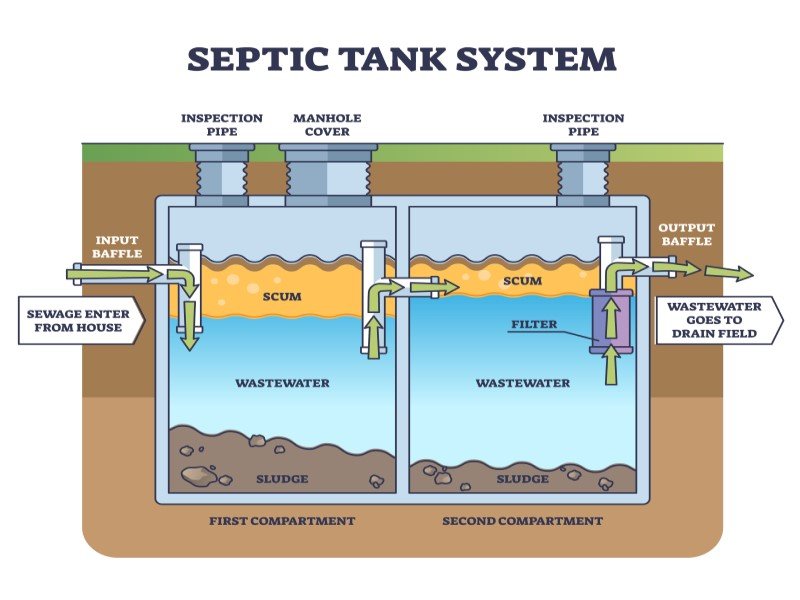
The most common septic system problems are sewage backups, foul odors, and soggy drain fields, primarily caused by lack of pumping, hydraulic overload, or physical damage. Immediate water conservation is critical for backups, while professional diagnosis is needed for persistent issues to prevent system failure.
Top 3 Issues & Fixes:
- Backups: Stop water use, snake the main cleanout, pump the tank.
- Odors: Check P-traps and roof vents; may indicate full tank or field failure.
- Soggy Yard: Divert surface water; often signals drain field failure requiring professional repair.
Table of Contents
The High Cost of Ignoring Septic Distress Signals
A malfunctioning septic system presents a clear, escalating threat to your home, health, and finances. According to the U.S. Environmental Protection Agency (EPA), failing septic systems are a leading cause of groundwater contamination, and repair costs for neglected systems average $15,000-$25,000. The symptoms—backups, odors, soggy yards—are not isolated issues but interconnected warnings of systemic breakdown. This 2026 guide, synthesized from repair data and septic engineering standards, provides a definitive diagnostic framework to identify the root cause of your problem and implement the correct solution, transforming alarming symptoms into actionable repairs.
What is the Most Common Septic System Problem?
The most common septic system problem is drain field failure due to neglect, specifically the lack of regular tank pumping. Over 3-5 years, solids (sludge) accumulate and eventually flow into and clog the perforated pipes of the drain field, rendering it unable to absorb liquid. This failure manifests as slow drains, sewage odors, and effluent surfacing in the yard. Preventative pumping every 3-5 years is the single most effective action to avoid this costly failure.
Bottom line: Almost all common problems stem from or are exacerbated by a full or overfull septic tank. Address this first in any diagnosis.
Can Heavy Rain Cause Septic System Failure?
Heavy rain typically reveals a pre-existing weakness rather than causing a healthy system to fail. A saturated drain field cannot absorb additional effluent, causing backups and odors. However, a well-maintained system with proper grading should handle typical rainfall. Persistent issues after rain signal an underlying problem like a clogged field or high water table.
How to Fix Common Septic Problems: A 5-Step Action Plan
Use this prioritized action plan to address symptoms safely and effectively.
Step-by-Step Action Plan:
- Immediate Mitigation: For backups, CEASE ALL WATER USE. For odors, ventilate and check dry P-traps. For soggy yards, divert all surface runoff away.
- Initial Diagnosis: Determine scope: Are all drains slow? Is the smell indoors or over the field? Use the diagnostic quiz to narrow causes.
- Perform Accessible Fixes: Snake accessible blockages, clear roof vents, reset septic alarm breakers.
- Schedule Core Service: Arrange for septic tank pumping and inspection. This is non-negotiable for diagnosis and often the solution.
- Engage Specialist Repair: If pumping doesn’t resolve the issue, hire a septic repair pro for camera inspection and drain field assessment.
Septic Problem Diagnosis & Solution Table
| Problem & Symptoms | Most Likely Cause | Homeowner Action | Professional Solution |
|---|---|---|---|
| Slow Drains/Backups (Whole House) | Full Septic Tank or Main Line Clog | Stop water use. Snake main cleanout. | Tank pumping. Jetting main line. |
| Sewage Odors Indoors | Dry P-Trap or Blocked Plumbing Vent | Pour water in all drains. Check roof vent. | Vent stack cleaning. Leak detection. |
| Sewage Odors Outdoors / Near Tank | Full Tank or Broken Tank Lid Seal | Check tank riser/lid. Schedule pumping. | Pump tank. Replace/Seal lid & risers. |
| Soggy Yard, Lush Grass Over Field | Failing Drain Field | Divert ALL surface/rainwater away. | Drain field assessment. Jetting, replacement, or advanced system install. |
| Alarm Sounding (Pumped Systems) | Pump Failure or High Water Level | Conserve water. Reset breakers/GFCI. | Pump/float switch repair or replacement. |
Expert Q&A: Solving Frequent Septic System Issues
Q: How do you know if your septic tank is full?
A: Signs include slow drainage, gurgling pipes, sewage odors near the tank or house, and sewage backing into drains. According to the National Onsite Wastewater Recycling Association (NOWRA), the only reliable confirmation is a professional inspection, as the tank’s “full” level is measured by sludge/scum depth, not just liquid.
Q: Can you fix a septic drain field, or does it need replacement?
A: Some clogs can be fixed via high-pressure jetting ($2,000-$5,000), but a fully failed field typically requires replacement ($10,000-$25,000+). A professional camera and load test will determine if repair is possible.
Q: Are septic system backups covered by homeowners insurance?
A: Generally, no. Standard policies exclude failures from wear, tear, or neglect. Some insurers offer optional “service line coverage” for sudden external line breaks, but this rarely covers the tank or field itself.
Q: How much does it cost to replace a septic system?
A: Complete system replacement costs $10,000 to $40,000+ based on 2026 averages. A conventional system is $10K-$25K. Advanced systems (ATUs, mounds) for poor soil range from $20,000 to $40,000+, including engineering and permits.
Q: Can tree roots damage a septic system?
A: Yes, roots are a major cause of pipe and tank damage. They infiltrate cracks and joints. The solution is professional root removal and pipe repair, followed by re-landscaping to keep trees at least 25 feet away from all system components.
Q: Is a soggy yard always a septic problem?
A: Not always, but it’s the prime suspect if over the drain field. First, rule out broken irrigation, natural springs, and poor grading. A sewage odor confirms septic involvement.
The 4 Main Types of Septic System Failure
The 4 primary failure modes are:
- Hydraulic Failure: Drain field is clogged or saturated (most common).
- Mechanical Failure: Pump, aerator, or alarm system malfunction (in advanced systems).
- Structural Failure: Cracked tank, collapsed pipe, or root intrusion.
- Process Failure: Biological treatment has halted due to toxins or lack of oxygen (in ATUs).
Red Flags: When You Must Call a Professional Immediately
Industry data indicates that postponing professional help after these signs increases final repair costs by over 400% on average:
- Sewage backing up into multiple home fixtures.
- Effluent or sewage visibly pooling on the ground surface.
- A sinkhole or collapsing soil near the tank or drain field.
- Strong sewage odors indoors that persist after clearing vents and traps.
- Septic alarm that won’t stay reset.
A Proactive Stance Against Septic Disaster
While each symptom feels like a unique crisis, the expert consensus from septic engineers is that they are predictable outcomes of a finite set of causes, chiefly neglect. The path to resolution is systematic: 1) Emergency containment, 2) Professional tank servicing for diagnosis, 3) Targeted repair based on inspection findings. For homeowners, the most powerful tool is not a shovel, but a calendar: adhering to a 3-5 year pumping schedule and monitoring water use prevent the vast majority of these harrowing and expensive problems. Your next step is to locate your tank’s access points and last service record.
Don’t wait for a total failure. If you’re experiencing persistent odors, slow drainage, or a soggy yard, schedule a professional septic inspection and pumping today. Early intervention is the only way to avoid a five-figure replacement bill.

Leave a Reply