How Does an Aerobic Septic System Work?
Quick Answer: An aerobic septic system, or Aerobic Treatment Unit (ATU), is an advanced wastewater system that uses oxygen (pumped by an aerator) to break down waste. Unlike conventional septic, it produces highly treated, clear effluent, making it suitable for poor soil, small lots, and environmentally sensitive areas. It requires electricity and regular professional maintenance.
Key Components & Process:
- Trash Tank: Separates solids.
- Aeration Chamber: Aerator pumps air, feeding oxygen-loving bacteria for efficient breakdown.
- Clarifier: Settles remaining solids.
- Disinfection: Chlorine or UV light often provides final treatment.
- Pump Chamber: Sends treated effluent to spray or drip field.
Table of Contents
The Advanced Wastewater Solution
According to environmental and public health engineers, the Aerobic Treatment Unit (ATU) represents a critical technological advancement in onsite wastewater treatment. Designed for properties where conventional septic system types fail—due to poor soil, high water tables, or proximity to protected waterways—an ATU functions as a miniaturized, active treatment plant. Understanding this system is essential because its superior performance comes with specific operational demands and costs that differ fundamentally from passive septic systems.
Aerobic vs. Conventional Septic: Key Differences
The core distinction lies in the use of oxygen and the resulting treatment quality.
| Feature | Conventional (Anaerobic) Septic System | Aerobic Septic System (ATU) |
|---|---|---|
| Bacteria Type | Anaerobic (thrives without oxygen). | Aerobic (requires oxygen). |
| Treatment Process | Passive settling & slow bacterial digestion. | Active aeration & rapid digestion. |
| Effluent Quality | Moderately treated, cloudy. | Highly treated, clearer, often disinfected. |
| Mechanical Parts | None (gravity-fed). | Aerator, pumps, control panel, alarm. |
| Maintenance | Pump tank every 3-5 years. | Quarterly professional service + pumping. |
| Site Adaptability | Requires good soil & deep water table. | Works in poor soil, high water table, small lots. |
| Avg. Installed Cost | $3,500 – $7,500. | $11,000 – $20,000+. |
Bottom Line: Choose an ATU when site conditions demand it or regulations require higher treatment. On a good site, a conventional system is simpler and more cost-effective.
Pros and Cons of an Aerobic Septic System
Advantages:
- Works on Problem Sites: Ideal for clay soil, high groundwater, small lots, and rocky areas.
- Superior Effluent Quality: Reduces pathogens and organic matter by 90-98%. Often meets standards for surface dispersal (spray irrigation).
- Reduces Odors: Aerobic digestion produces less foul-smelling gas than anaerobic processes.
- Environmental Protection: Allows safe development near lakes, rivers, and wells by minimizing pollution risk.
- Smaller Drainfield: The high-quality effluent can be dispersed via a smaller spray or drip field.
Disadvantages:
- High Upfront Cost: Significantly more expensive to purchase and install.
- Ongoing Operational Cost: Requires electricity (~$30-$60/month) and mandatory professional maintenance contracts.
- Mechanical Complexity: More parts (aerators, pumps, alarms) that can fail, requiring repairs.
- Homeowner Involvement: You must respond to septic system alarms promptly and conserve water diligently.
- Regular Maintenance: Neglect leads to rapid, costly system failure.
Step-by-Step: How an ATU Works
Understanding the stages clarifies why maintenance is critical.
The 5-Stage Treatment Process:
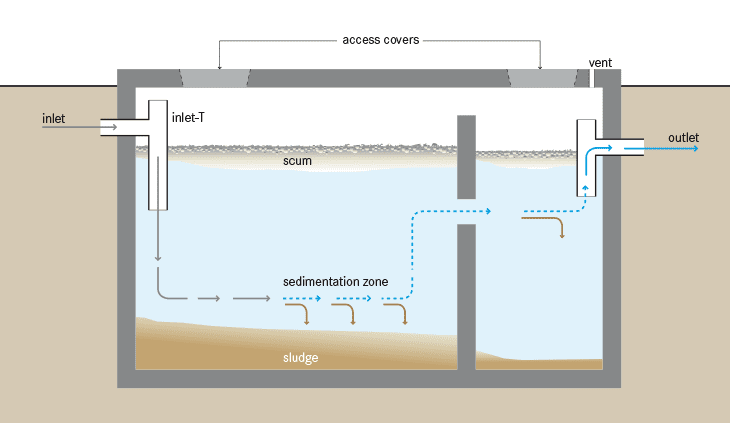
- Primary Treatment (Trash Tank): Wastewater enters, solids settle, scum floats. Similar to a conventional tank.
- Aeration (The “Aerobic” Heart): Liquid flows to the aeration chamber. An electric aerator pumps air in, creating an oxygen-rich environment where aerobic bacteria rapidly digest organic matter.
- Settling (Clarifier): Treated water moves to a quiet chamber where remaining tiny solids settle out as sludge.
- Disinfection (Optional but Common): Effluent may pass through a chlorine tablet chamber or UV light to kill remaining pathogens.
- Dispersal (Pump & Field): A pump sends the final, clear effluent to a spray field (sprinklers) or subsurface drip irrigation field for final soil absorption.
Why the Alarm Matters: The control panel monitors this process. If the aerator fails, water levels get too high, or a pump stops, the ATU alarm will sound. This is your early warning to prevent system backup or the release of untreated wastewater.
Aerobic Septic System Maintenance & Costs
Warning: An ATU is not a low-maintenance option. Adherence to a strict schedule is non-negotiable.
Required Maintenance Schedule:
- Quarterly (Every 3-4 Months): Professional servicing required. Includes: checking aerator function, cleaning filters, measuring sludge, testing effluent, inspecting spray heads, and verifying alarm operation.
- Annually: Full system inspection, electrical component check, and potential sludge pumping from the aeration chamber.
- As Needed (1-3 Years): Pumping of the primary trash tank based on sludge levels.
Typical Costs (2026):
- Professional Service Contract: $200-$400 per visit (x4 annually = $800-$1,600/year).
- Electricity: $30-$80/month for the aerator and pumps.
- Repairs: Aerator replacement: $800-$1,500. Pump replacement: $600-$1,200.
- Chlorine Tablets: ~$100/year (if system uses them).
Pro-Tip: Budget for $1,200 – $2,500+ per year for ongoing operational and maintenance costs, on top of the high installation price.
Frequently Asked Questions (FAQs)
Q: Is an aerobic septic system better than a conventional one?
A: “Better” is site-specific. It is necessary and superior for poor soil, small lots, or environmental sensitivity. It is unnecessarily complex and expensive for a property that supports a conventional system.
Q: What does it mean when the aerobic septic alarm goes off?
A: The ATU alarm signals a problem: often a power outage, pump failure, high water level, or aerator malfunction. Check your home’s circuit breaker first. If the alarm persists, reduce water use immediately and call your maintenance provider.
Q: Can you use a garbage disposal with an aerobic system?
A: Strongly discouraged. Garbage disposals drastically increase solids, overwhelming the system, leading to frequent clogs, more sludge, and higher maintenance costs. It’s a leading cause of ATU failure.
Q: How long does an aerobic septic system last?
A: With excellent, consistent maintenance, the mechanical components (aerator, pumps) may last 7-15 years before needing replacement. The tank and field can last 20-30+ years. Neglect can cause complete failure in under 5 years.
Q: Does the treated water smell?
A: Properly functioning ATU effluent should have a mild, inoffensive odor, often compared to rainwater or damp soil. Strong sewage odors indicate a problem, most commonly a failed aerator, requiring immediate service.
Q: Can I do the maintenance myself?
A: Critical maintenance must be done by a certified professional. Opening tanks involves electrical and biological hazards. Homeowners can monitor the control panel, check chlorine tablets, and practice water conservation.
Q: Why is my aerobic system so noisy?
A: Normal operation includes a constant low hum from the aerator and periodic pump clicks. Loud grinding, screeching, or incessant clicking indicates a failing pump, obstructed aerator, or electrical issue—call for service.
Is an Aerobic System Right for You?
Expert Consensus: An Aerobic Treatment Unit is a powerful, effective solution for specific, challenging properties. It is not a universal upgrade.
Your Decision Checklist:
✅ Your site fails a standard perc test (poor soil, high water table).
✅ Local regulations require advanced treatment (near water body, well).
✅ You are committed to a professional maintenance contract and its annual cost.
✅ You will respond promptly to alarms and practice strict water conservation.
✅ The higher upfront cost fits your budget for making your property buildable/livable.
If you checked these boxes, an ATU is the right solution. Your next step is to consult with a licensed septic designer and get multiple quotes from installers experienced with the specific ATU brands approved in your area.
Bottom Line: An aerobic septic system trades higher cost and homeowner engagement for the ability to treat wastewater safely on sites where no other option exists. Choose it out of necessity, not curiosity, and commit fully to its care.

Leave a Reply