Quick Answer: To protect your drinking water, ensure your septic system is installed at least 50-100 feet away from any well—exact setbacks depend on local regulations, soil conditions, and system design (per EPA and local health codes). Test well water for bacteria and nitrates at least once a year, maintain your septic system with regular inspections and pumping, and never attempt DIY septic pumping due to serious health hazards.
- Septic systems treat household wastewater and rely on soil filtration; wells provide groundwater for drinking.
- Regulations require a minimum setback distance (typically 50-100 feet) between septic systems and wells to protect water quality.
- Proper maintenance and water testing are essential to prevent and detect contamination.
- Designs and setback requirements vary based on soil, topography, and local codes.
- Both homeowners and professionals must stay informed about evolving standards from agencies like the EPA and local health departments.
Table of Contents
Are you relying on well water and an onsite septic system? Even a small mistake in system placement or maintenance can put your family’s health at risk. Understanding the relationship between septic systems and well water—and the safety distances required—can help you protect your drinking supply from invisible dangers like bacteria and nitrates. This guide demystifies how these systems work together, why regulations matter, and what steps you must follow to keep your water safe in 2026 and beyond.
Define Septic System and Well Water: Key Concepts and Regulations
Understand Septic System and Well Water Basics
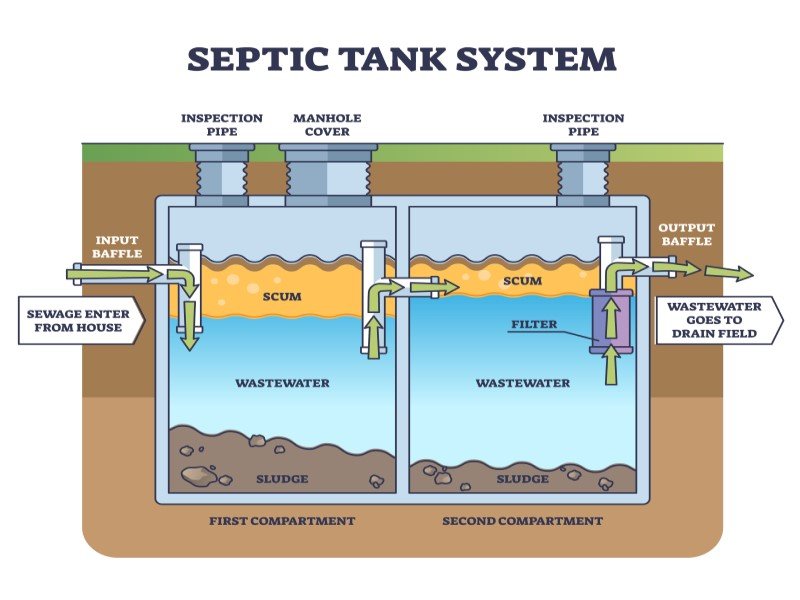
A septic system is an onsite wastewater treatment solution used in rural and some suburban areas where public sewers are unavailable. Wastewater flows from the home into a buried tank, where solids settle out and bacteria help break down the organic material. The clarified liquid, known as effluent, then disperses into the soil via a drain field, where further treatment occurs as water percolates through the ground.
Well water is groundwater sourced via a drilled or dug well. Private wells supply drinking water to homes not connected to municipal utilities. The integrity of your well water depends on both the well’s construction and any potential contamination sources nearby—including septic systems.
Clarify Essential Septic and Well Terminology
- Septic System Design: Engineered plan detailing tank, drain field, and their locations to optimize safe wastewater treatment and dispersal.
- Septic System Regulations: Codes governing proper installation, maintenance, and setbacks, established by local health departments and environmental protection agencies.
- Septic System Maintenance: Regular inspections, pumping, and repairs required to prevent overflow, leaks, or system failures.
- Setback Distance: The mandated minimum horizontal space between a septic system and a well, designed to reduce risk of contamination.
- Groundwater Contamination: The infiltration of harmful pathogens, nitrates, or chemicals into underground water from sources such as septic system leakage.
Track the Evolution of Septic and Well Water Protection (2026 Context)
Since the 19th century, septic systems have been a key solution for wastewater disposal in areas without sewer access. Early systems often lacked regulation, resulting in well contamination and disease outbreaks. In recent decades, agencies like the U.S. Environmental Protection Agency (EPA) have standardized septic design and installation practices, emphasizing setback distances and updated soil analysis. By 2026, modern guidelines increasingly factor in pathogen transport models and regional hydrogeology, delivering more precise and protective standards. Regular testing and ongoing maintenance are now central pillars for safeguarding private well users.
Explain How Septic System and Well Water Systems Work Together
Follow the Elements of Septic and Well Interaction
Septic systems treat wastewater through a combination of gravity-based settling and bacterial digestion. Water from your sinks, showers, and toilets flows into the tank, where solids separate and are decomposed anaerobically. Liquid effluent moves into the drain field and percolates through unsaturated soil layers, which filter out remaining contaminants before water migrates toward the groundwater table. A properly located well, set upslope or at an adequate distance, draws groundwater away from potential septic influence. If a septic system is installed too close or is malfunctioning, this natural filtering process may be bypassed, leading pollutants directly to your water supply.
Visualize the Process Flow
Description: A diagram should depict waste entering the septic tank, progressing through the tank (with solid and liquid separation), then flowing into a drain field, filtering down through soil layers, and showing a properly distanced well extracting clean groundwater. Clear “setback” zones between septic and well locations are highlighted.
Review Inputs, Processes, and Outputs
| Type | Details |
|---|---|
| Inputs | Household wastewater (organic material, pathogens, nutrients such as nitrogen) |
| Processes | Solid-liquid separation in septic tank, bacterial digestion (anaerobic), soil filtration and pathogen die-off as effluent moves through subsurface |
| Outputs | Treated effluent (meant to be below regulatory limits for pathogens/nutrients), protected groundwater, potable well water if setbacks are met |
Identify Septic and Well System Components and Variations
Name and Describe Main Parts
- Septic Tank: Watertight vessel that receives household sewage and provides time for solids to settle and break down.
- Drain Field (Leach Field): Network of perforated pipes or chambers buried in soil, evenly dispersing effluent for final treatment.
- Soil: Acts as a biofilter, trapping and destroying pathogens and chemicals as water moves toward groundwater.
- Well: Drilled or dug structure reaching into an aquifer, providing groundwater for domestic use.
Differentiate Common System Configurations
| System Type | Best For | Special Considerations |
|---|---|---|
| Conventional Gravity | Typical soils and slopes | Requires percolation-friendly soil |
| Pressure Distribution | Uneven or challenging terrain | Even effluent dispersal in tricky sites |
| Mound System | High water tables/shallow soils | Raised drain field offers safe setbacks |
| Aerobic Treatment Unit | Areas needing extra treatment | Higher maintenance and power use |
Address Industry-Specific System Variations
- Agricultural septic systems: Designed for wash water, animal waste, or larger flows.
- Commercial systems: Higher capacity, may require advanced filtration or disinfection.
- Challenging settings: (e.g., coastal, fractured bedrock) Must follow enhanced setback protocols and possibly use engineered barriers.
List Benefits, Safety Applications, and Impact on Water Safety
Summarize Advantages and Public Health Value
- Onsite wastewater treatment minimizes need for public sewer infrastructure, saving costs in rural/small communities.
- Properly engineered and maintained systems protect aquifers from pathogens and chemical contamination.
- Enforcing setback distances (per EPA and local code) is crucial for preventing waterborne disease outbreaks.
- Supports sustainable rural living, so long as maintenance and testing are prioritized.
Relate to Real-World and Professional Applications
- Residential homes relying on private wells and septic systems
- Farms and homesteads integrating both systems
- Remote cabins and vacation homes away from municipal utilities
- Sites for environmental or academic monitoring of drinking water safety
Highlight Who Benefits and Why
- Homeowners: Understand system interaction, ensure code compliance, protect loved ones’ health.
- Regulators/inspectors: Enforce standards to prevent wider community disease outbreaks.
- Installers/drillers: Apply best design practices and up-to-date knowledge for safe installations.
Address Limitations and Key Safety Considerations
Outline System Drawbacks and Risks
- Failures from inadequate maintenance, improper siting, or soil issues can lead to effluent bypassing filtration, contaminating wells.
- Soil saturation, drain field clogging, or high groundwater tables increase failure risk.
- Standard septic does not remove all chemicals (e.g., some pharmaceuticals, solvents).
Identify When Alternatives Are Preferable
- Areas with shallow water tables, highly permeable soils, or fractured bedrock should consider advanced engineered systems or municipal sewers.
- Children, elderly, and immune-compromised residents require extra precautions.
See our in-depth comparison of septic and centralized sewer systems.
Dispel Common Septic and Well Myths
- Myth: “Well water cannot be affected if I maintain my septic system.”
Fact: Maintenance matters, but improper siting or local soils may still allow contamination. - Myth: “Deep wells are immune to septic issues.”
Fact: Depth can help, but not protect against all contamination pathways. - Myth: “Regulations are consistent everywhere.”
Fact: Codes and guidance vary widely. Always check up-to-date local standards.
Frequently Asked Questions (FAQ)
What is the minimum safe distance between a septic system and a well?
Most health codes require a minimum horizontal setback of 50 to 100 feet, depending on local soil and site conditions. Always confirm specific regulations with your local health department and follow current EPA recommendations to ensure adequate protection.
How often should I test my well water if I have a septic system?
Test your well for bacteria (such as coliforms) and nitrates at least once per year. Consider more frequent testing if you notice changes in water taste, color, odor, or after flooding or nearby septic repairs.
Can septic system failures affect my well water quality?
Yes. A failing septic system can discharge untreated sewage, which may migrate into the groundwater and cause pathogenic or chemical contamination of your well.
What maintenance does a septic system require?
Schedule inspections every 1-3 years and have your septic tank pumped every 3-5 years, as recommended by your local authority or the EPA.
Are there regulations governing septic system placement near wells?
Yes. All U.S. states and most municipalities have specific requirements for septic setback distances and construction standards to protect public health and groundwater, enforced by local permitting offices and health departments.
How can I protect my well from septic system contamination?
Ensure required setbacks are observed, perform septic maintenance, seal wells correctly, and test water quality annually. Protect wellheads from runoff and avoid hazardous waste disposal in sinks or toilets.
What contaminants from septic systems pose the greatest risk to well water?
Pathogenic microbes (bacteria, viruses) and nitrates are the most common and dangerous, both linked to serious health effects if ingested through drinking water.
Is it safe to drink well water near a septic system?
Provided minimum setbacks are maintained, the system is well-maintained, and water quality is monitored and treated as needed, well water can be safe to drink. Always test after major plumbing or septic work.
Can I install a septic system and a well on the same property?
Yes, but placement must meet or exceed state and local setback codes. Have a professional design your system and seek local permits before installation.
What should I do if my well water tests positive for contamination?
Stop using the water for drinking or cooking, contact your health department, have your septic system inspected, and consider temporary water disinfection until the source is resolved.
Recommended Internal Resources
- Septic System Design Best Practices
- Septic System Maintenance Checklist for Homeowners
- Comparing Septic Systems and Municipal Sewer: Pros and Cons
- Understanding Nitrate Contamination in Private Wells
- Local Septic System Regulations and Permitting Guide
Authoritative External Resources
- U.S. EPA – Onsite Wastewater Treatment (Septic) Systems
- CDC – Private Well Safety
- National Ground Water Association – Well Water and Septic Systems
Quick Recap: Essential Steps for Septic and Well Water Safety
- Always follow setback distances (50-100 feet or local requirement) when siting septic and well systems.
- Test your well annually for bacteria and nitrates—even if there are no symptoms or changes in water.
- Schedule septic system inspections/pumping per agency recommendations.
- Never attempt septic tank cleaning or pumping yourself; hire licensed professionals and comply with state and local laws.
- Stay updated with the latest EPA, state, and local codes (EPA Septic Regulations, CDC Well Safety Guide).
Key Takeaway
The intersection of septic system functionality and well water safety is no place to cut corners. Adhering to recommended setbacks, consistent system maintenance, and regular water testing remain the pillars of safe rural living—protecting your family’s health and ensuring clean water for years to come. Regulations continue to evolve, so always consult current EPA and local guidance before installation or modification of any system components.
Protect your drinking water: Know the required setbacks for your property, follow all local and EPA guidelines, and schedule well testing every year for bacteria and nitrates. Have questions or need professional help? Contact your local health department or a certified installer today!

Leave a Reply