
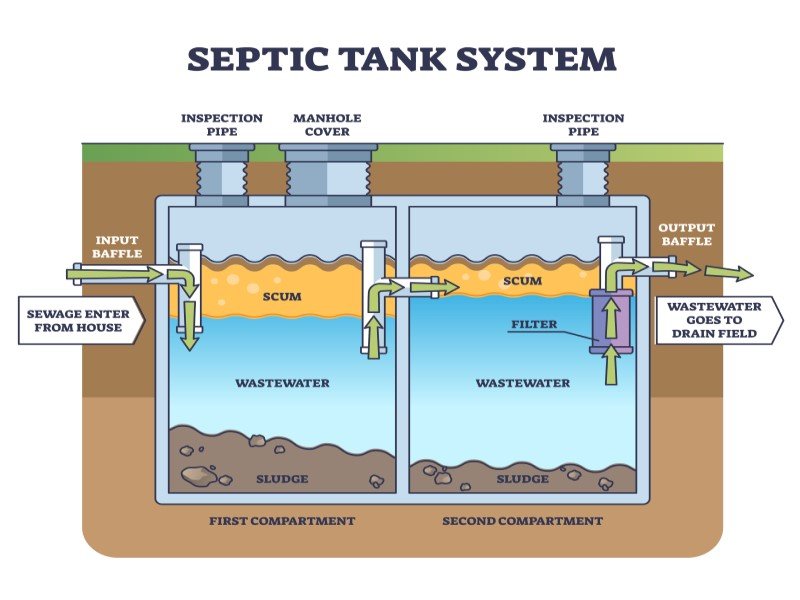
Quick Answer: If your septic system alarm (often indicated by a red light or audible sound) activates, it means a high water or malfunction condition has been detected—usually in aerobic or pumped systems. Reduce water usage, check for pump or power issues, and contact a licensed septic professional promptly. Never ignore the alarm to prevent sewage backups and costly repairs. Scheduled testing and maintenance are critical for proper operation (see EPA Septic Systems Overview, 2024).
- Septic system alarms warn homeowners of abnormal water or sewage levels.
- Red lights or beeping signals call for immediate investigation to prevent system failure.
- Found in aerobic and pumped septic systems reliant on mechanical components.
- Prompt action protects from sewage backups, environmental hazards, and repair costs.
- Regular alarm testing recommended monthly or per manufacturer guidelines.
Table of Contents
Has your septic alarm suddenly gone off—flashing a red light or sounding a loud beep? This critical warning can be the difference between quick, affordable maintenance and a costly, hazardous cleanup. Understanding how septic system alarms work, what their signals mean, and how to respond can save your home’s plumbing and your peace of mind.
Understand the Septic System Alarm: What It Is and How It Protects You
Recognize the Core Function
A septic system alarm is an electrical alert device that notifies homeowners of abnormally high water or sewage levels in the septic tank or drain field. Typically installed in aerobic or pumped systems, the alarm’s job is to trigger an alert—often a red light and/or buzzer—before overflow, backup, or system failure can occur. This allows for swift intervention to prevent severe plumbing or environmental problems.
Essential Septic Alarm Terminology
- Septic System Alarm: Electrical device that signals abnormal waste or water levels, often with a red light and audible tone.
- Septic System High Water Alarm: Alerts specifically triggered when liquid exceeds safe levels.
- Aerobic System: Waste decomposition system using oxygen and typically electric pumps/alarms (see EPA, 2024).
- Pumped System: Uses a mechanical pump to transfer wastewater, monitored by an alarm system.
- Alarm Control Panel: Receives sensor data and activates alerts per preset limits or faults.
Development and Modern Context (2026 Update)
Septic alarms have evolved from simple float-switch lights to complex, multi-sensor systems offering wireless and remote diagnostics. Growing use in homes, businesses, and farms—especially those with aerobic or pumped tanks—has driven standardization. By 2026, commonly available alarms include user-friendly displays and fail codes, enabling faster, informed responses that align with EPA recommendations.
How a Septic System Alarm Works: Step-by-Step Mechanism Breakdown
Fundamental Operation
Septic system alarms monitor liquid levels via float switches or pressure sensors within tanks or pump chambers. When wastewater rises above (or sinks below) set thresholds, the sensor triggers the control panel, which activates the alarm. For reliable performance, proper electrical supply and precision-calibrated sensors are required.
Process Flow Overview
1. Sensor detects abnormal water level
2. Electrical signal sent to control panel
3. Alarm activates (red light/beep)
4. Homeowner notified, corrective action taken
| Stage | Description | Result/Output |
|---|---|---|
| Sensor Input | Measures water, waste, or pump status | Continuous feedback to panel |
| Control Panel Analysis | Filters data for abnormal readings & interprets | Triggers alarm if necessary |
| Alarm Output | Red light/audible sound, possibly remote alert | Homeowner must respond |
Explore Septic Alarm Components and Variations
Key System Parts and Functions
- Level Sensors (Float/Pressure): Detect abnormal wastewater or sludge levels
- Alarm Control Panel: Processes sensor signals, activates alerts
- Visual Indicators: Red light for abnormal condition
- Audible Alerts: Buzzers/sirens for audible warnings
- Power Supply: Typically main household power, sometimes with battery backup
Main Septic Alarm Model Types
- Single-Float Systems: One sensor, monitors high water only
- Multi-Level Systems: Monitors both high and low levels, sometimes pump status
- Digital/Smart Alarms: Feature digital readouts, codes, or remote app notifications
- Comprehensive Combo Units: Signal pump failure, power loss, and high water levels in one panel
Industry-Specific Configurations
| Type | Main Features | Best For |
|---|---|---|
| Residential Alarms | Compact, simple indicators, easy monitoring | Homes with aerobic or pumped septic tanks |
| Commercial/Industrial Systems | Multiple sensors, digital integration, remote management | Institutions, large or multi-tenant facilities |
| Agricultural Alarms | Heavy-duty, robust against high input/variable loads | Farms, large-scale systems |
Weigh the Benefits and Real-World Value of Septic Alarms
Why Alarms Are Essential
- Early Malfunction Warning: Prompt interventions minimize risk of sewage overflow, EPA fines, and health problems (see CDC Septic Systems & Health, 2024).
- Reduced Repair Costs: Alerts before issues escalate into expensive failures.
- Continuous Peace of Mind: System is monitored, even when “out of sight, out of mind.”
- Supports Preventative Maintenance: Integral to maintenance schedules and compliance (see NAWT guidelines).
Real-World Applications
- Residential: Avoids messy, costly backups; supports routine septic care
[INTERNAL_LINK: Septic System Maintenance Schedules: Best Practices for Homeowners] - Commercial: Meets health standards, keeps facilities running
- Public Buildings: Warns staff before plumbing fails, prevents disruptions
- Agricultural Use: Protects high-volume systems, reduces environmental risk
Who Gains the Greatest Advantage?
- Homeowners with aerobic/pumped systems: Most susceptible to pump or sensor failure
- Facility managers: Avoid health/hygiene code violations and system downtime
- Agricultural operators: Early warnings protect against large-scale contamination and EPA penalties
Acknowledge Septic Alarm Limitations and Special Cases
Recognize Main Constraints
- Dependent on reliable sensor function and power continuity
- May issue false alarms due to sensor fouling or wiring issues
- Alarms do not correct system issues—only notify that service is needed
- Battery backups are necessary for areas with frequent power outages
Choose Alternatives When Appropriate
- Gravity-fed systems often need only routine manual inspections
- Remote/off-grid properties may use manual fluid checks or visual drain field monitoring
- Robust maintenance can sometimes replace alarms in low-risk systems
[INTERNAL_LINK: Alternative Septic Monitoring Technologies: A Comprehensive Comparison]
Clear Up Common Myths
- Myth: Alarms are only needed for failed systems.
Fact: They’re designed for early intervention—before failure or overflow occurs. - Myth: An alarm means catastrophic breakdown.
Fact: Many alarms signal minor, correctable problems, like minor pump issues. - Myth: Only high water triggers alarms.
Fact: Alarms can indicate pump failure, power loss, or faulty sensors.
Frequently Asked Questions
Why is my septic system alarm going off?
Your alarm most often signals a high water level or pump malfunction in your septic tank or chamber. Causes include blocked pipes, failed pumps, or electrical issues. Address the alarm quickly to prevent backups.
What do different alarm patterns (lights or beeps) mean?
A solid red light often means a sustained high fluid level. Intermittent beeping typically signals repeating or escalating problems (such as pump or power failure). Always confirm with your manufacturer’s manual for specifics.
Can I safely reset my septic alarm?
Many control panels allow manual reset, but only do so after identifying and fixing the underlying cause. Resetting without resolving the root issue can worsen problems or mask emergencies.
How often should I test my septic system alarm?
Test your alarm monthly or per your manufacturer’s instructions. Routine functional checks ensure the system detects issues, and sensors or batteries stay in working order.
What should I do immediately if the alarm activates?
1. Identify whether it’s a sound or light alarm.
2. Reduce all water use in the home.
3. Check the tank/pump for visible issues if safe.
4. Contact a licensed septic professional if uncertain or unable to resolve the issue.
Are septic alarms powered by batteries or electricity?
Most are connected to household electrical power, with a backup battery for outages. Regularly check batteries to ensure uninterrupted alarm function.
Can alarms actually prevent septic failures?
They provide early warning signs only. They do not replace essential pumping or inspections—proper septic care requires both alarms and regular, professional maintenance.
What are signs of a faulty alarm sensor?
If your alarm sounds without system problems, fails to activate during overflow, or produces erratic patterns, sensor malfunction may be the cause. Schedule a professional evaluation immediately.
Is there a difference between a high water alarm and a regular septic alarm?
Yes. High water alarms are designed to signal when tank levels are too high. Other alarms can also notify of pump malfunctions or power issues depending on alarm configuration.
Key Takeaways
- Never ignore your septic system alarm: It prevents costly, hazardous plumbing emergencies.
- Respond promptly—reduce water use and call a septic expert when unsure.
- Test alarms monthly, confirm backup batteries, and follow a regular septic maintenance schedule.
- Knowledge of your alarm’s signals is critical for protecting your home and meeting environmental standards (see EPA, CDC, and NAWT references).
Explore more septic care resources:
Pumped Septic Systems: How They Work and Maintenance Tips
Aerobic Septic System Repair and Troubleshooting Guide
Septic System Maintenance Schedules: Best Practices for Homeowners
Alternative Septic Monitoring Technologies: A Comprehensive Comparison
External Resources & Industry Guidelines
- Environmental Protection Agency (EPA): Septic Systems Overview
- National Association of Wastewater Technicians (NAWT)
- CDC: Septic Systems and Your Health
Act quickly if your septic alarm activates! Consult a licensed septic system professional to diagnose and address issues before they escalate. Stay protected with regular maintenance—and bookmark this guide for future emergencies.

Leave a Reply