Quick Answer: A septic system with a pump uses mechanical equipment to move wastewater when gravity flow isn’t possible—such as when your home is below the drain field or on flat terrain. These systems require annual professional maintenance, proper use of the right pump type (effluent or grinder), and compliance with codes such as those from the EPA and local health departments. Never attempt pump installation or major repairs yourself; hire a licensed specialist to avoid safety and legal issues.
- Septic systems with pumps enable wastewater disposal where gravity systems cannot function.
- Key pump types: effluent pumps for liquids, grinder pumps for solids.
- Common in homes below the drain field and on challenging terrain.
- Regular annual maintenance and careful use are essential to reliability.
- Compliance with EPA and local guidelines is required.
Table of Contents
Are you building on land where water just won’t drain downhill, or renovating a home that sits below the level of its leach field? Septic systems with pumps are the solution modern engineers rely on when gravity – the backbone of traditional septic design – simply isn’t enough. But what are your options, how do these systems work, and what does it really take to keep them running smoothly and legally? Whether you’re a homeowner, contractor, or real estate professional, here’s what you should know—explained in practical terms, with regulatory clarity.
Define Septic System with Pump: Core Concept and Key Terms
A septic system with pump is an onsite wastewater treatment setup that uses a mechanical pump to move sewage or effluent from your home either into the septic tank or from the tank to the drain field. Unlike traditional gravity (sloped) systems, these designs are necessary for properties where wastewater can’t flow naturally due to the land’s elevation or topography.
Break Down of Key Terminology
| Term | What It Means |
|---|---|
| Septic System Lift Station | Pumps clarified water (effluent) uphill or across flat land to reach the drain field. No solids are processed here. |
| Septic System Grinder Pump | Macerates solids and pumps the resulting slurry, especially when wastewater travel includes uphill or long horizontal runs. |
| Effluent Pump | Only moves clarified liquid out of the tank, leaving solids behind for further treatment. |
| Drain Field (Leach Field) | Final destination for treated effluent, which is distributed for natural filtration in soil. |
Historical Development and 2026 Context
Early septic systems relied solely on gravity, but as suburban and rural development increased, topography and lot layouts often prevented gravity-only flow. By the mid-2020s, pump-assisted septic solutions became mainstream, driven by compliance with more stringent EPA and state codes, tighter land use, and the growing need for reliable wastewater management across diverse terrains.
How a Pumped Septic System Works: Step by Step
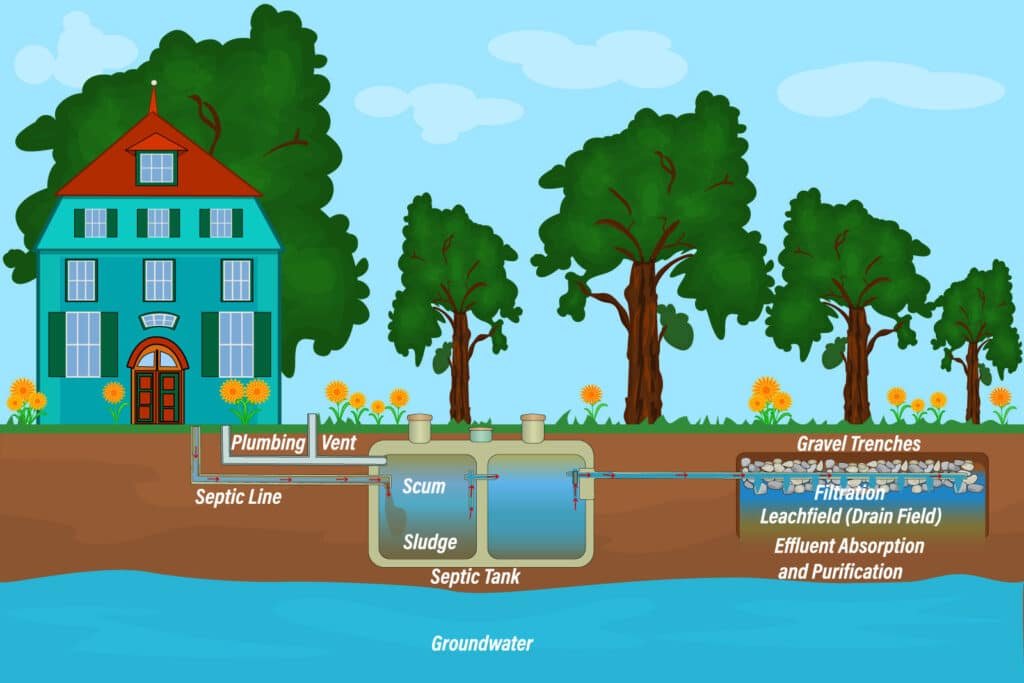
A septic system with a pump handles wastewater by first allowing solids and liquids to separate in a septic tank. When the effluent rises to a set level in a pump chamber (or lift station), a float switch triggers the pump. The pump then moves either the clarified liquid (effluent) or a ground-up slurry (with a grinder pump) through pressurized pipes to the drain field or further treatment units. This mechanical boost ensures proper treatment and dispersal, even when gravity can’t do the job.
Process Overview
- Household wastewater flows into the septic tank.
- Solids settle; partial biological digestion occurs.
- Liquid moves into the pump chamber/lift station.
- Pump activates when liquid reaches a certain level.
- Effluent or slurry is pumped—under pressure—to the drain field or next treatment unit.
- Final dispersal occurs in the soil, completing natural filtration.
| Input | Process | Output |
|---|---|---|
| Household wastewater | Separation, digestion, and mechanical pumping | Effluent released to environment (per EPA guidelines) |
Explain System Components and Common Variations
Major Parts and Functions
| Component | Primary Function |
|---|---|
| Septic Tank | Receives all waste; solids settle for basic treatment. |
| Pump Chamber/Lift Station | Holds effluent or sewage before pumping; triggers mechanical operation. |
| Effluent or Grinder Pump | Moves wastewater when needed; type depends on waste load and system design. |
| Control Panel | Includes alarms, automatic cycling, and manual overrides. (Per code, alarms are required—see EPA Septic System guidelines.) |
| Pressure/Discharge Pipes | Move water to the drain field or further treatment with assured flow rate. |
Key Variations and Models
- Effluent Pump Systems: Pump only clear liquid, ideal for standard household loads.
- Grinder Pump Systems: Grind solids for pumping uphill or long distances.
- Lift Stations: Intermediate holding and pumping to bridge multiple elevation changes.
- Alternating/Redundant Pumps: Used in large homes or commercial facilities to prevent single-point failure.
Residential vs. Commercial Setups
- Residential: Compact, fits typical home water use. May only require effluent pumping or a small grinder if site challenges demand it.
- Commercial/Institutional: Higher-capacity pumps, robust alarms, and alternating circuits built for frequent, high-volume operation (see National Small Flows Clearinghouse, 2024).
- Specialty Installations: Solar-powered pumps for off-grid locations or remote agricultural sites, per state energy/environmental codes.
Identify Where Pumped Septic Systems Offer Value
Main Advantages
- Enables septic systems on flat or downhill lots.
- Expands where homes and buildings can be safely constructed.
- Improves wastewater management in difficult soils or near water bodies by allowing advanced treatment units.
- Decreases the risk of treatment failure compared to forcing gravity systems on unsuitable sites.
Frequent Applications
- Homes at lower elevation than their leach field.
- Rural developments not served by municipal sewer.
- Seasonal or mobile homes where gravity placement is impractical.
- Commercial lots generating higher wastewater flow or sited on difficult land.
Who Should Choose These Systems?
- Property owners on land where gravity flow is impossible or unreliable.
- Sites constrained by soil type, water table, or proximity to protected environments (EPA, 2022 standards).
- Engineers and maintenance professionals who must specify reliable wastewater solutions for non-standard lots.
List Limitations, Risks, and When Gravity Systems Are Better
Considerations and Drawbacks
- Pumps rely on electricity; outages halt wastewater treatment.
- More maintenance needed: annual inspection, part replacement, and periodic professional upkeep required (EPA, 2024 update).
- Grinder pumps prone to clogs if plastics, wipes, or grease enter the drain.
- Install and repair costs are higher than basic gravity systems.
When a Gravity Septic System Is Better
If your site has sufficient elevation difference and permeable soil, a traditional gravity-based septic system is simpler, cheaper, and needs less professional maintenance. Always consult with a local licensed installer or environmental health official for system selection.
Clarify Common Myths
- Myth: Pumped septic systems are unreliable.
Fact: Modern systems, installed and maintained per code, are highly reliable (EPA, 2024). Neglect and improper use cause most failures. - Myth: Grinder pumps clog more than other types.
Fact: Grinder pumps reduce clogs by macerating waste; blockages result from misuse (like flushing wipes or pouring grease). - Myth: All septic pumps work the same.
Fact: Effluent pumps and grinder pumps perform distinct roles; always use the manufacturer-recommended type for your setup.
Frequently Asked Questions About Septic Systems with Pumps
What is the difference between a septic system lift station and a grinder pump?
A lift station pumps clarified effluent (liquid) from the septic tank uphill or over flat ground to the drain field, with no solids processing. A grinder pump macerates raw sewage (including solids) into a slurry before pumping, most often used when sewage must move uphill or across a long horizontal distance.
When is a septic system with pump necessary?
A septic pump is needed when your property’s elevation or distance from the drain field means gravity alone can’t move wastewater. Examples include homes below the drain field or on flat or hilly terrain where natural flow won’t work.
How often should a septic system pump be maintained?
Annual maintenance is recommended, but more frequent service may be needed for grinder pumps or systems with heavy use. Follow manufacturer and EPA maintenance guidelines.
Can a grinder pump handle all types of household waste?
No. Grinder pumps are designed for typical household sewage; avoid flushing non-biodegradable items, grease, or large foreign objects to prevent damage and costly repairs.
What are signs that a septic system pump needs repair?
Warning signs include frequent cycling or running, loud noises, alarms on the control panel, slow drains, sewage odors, or visible wet spots near the drain field. Call a licensed professional if any of these occur.
How long do septic system pumps typically last?
Most quality effluent and grinder pumps last 7–15 years with proper use and annual service. Poor installation or misuse can shorten lifespan.
Are septic system pumps expensive to repair or replace?
Repairs typically range from $300–$800, while replacements can exceed $1,000—costs vary by pump type, labor, and location. Professional preventive maintenance minimizes expensive failures.
Is it safe to install a grinder pump yourself?
No. Grinder and effluent pump installation involves hazardous electrical wiring and must meet local plumbing and building codes. Always use a licensed contractor. Unpermitted installation is illegal in many localities (EPA, 2024).
Do septic system pumps use a lot of electricity?
Generally, no. These pumps operate intermittently for short periods, resulting in low overall energy use for most households.
How does maintenance differ between effluent and grinder pumps?
Effluent pumps require cleaning of screens and float checks. Grinder pumps demand stricter waste discipline and periodic inspection of blades/motors. Always refer to your manufacturer manual and follow EPA guidelines.
Key Takeaways
Septic systems with pumps are essential for properties where gravity flow can’t ensure safe, code-compliant wastewater management. By understanding how different pumps work, when they’re needed, and how to maintain them, you protect your property’s value, the environment, and your household’s health. Always follow EPA and local standards, schedule professional annual service, and consult your system’s manual for best practices. Investing in the right pump and maintaining it properly saves you money and headaches down the line.
Helpful Resources
- U.S. Environmental Protection Agency: Septic Systems Overview
- National Small Flows Clearinghouse: Grinder and Lift Station Pump FAQs
- Water Environment Federation: Septic System Fundamentals
Explore More on Septic Systems
- Comparison Between Gravity and Pumped Septic Systems
- Guide to Septic System Repair: Troubleshooting and Solutions
- How to Choose the Right Septic Pump for Your Home
- Septic System Maintenance Checklist for Homeowners
Need help upgrading or maintaining your septic system with a pump?
Contact a licensed septic contractor today for a professional evaluation—or book your annual inspection to ensure reliable operation and full code compliance.

Leave a Reply