Quick Answer: The septic system distribution box (D-box) is a key component that evenly distributes wastewater from the septic tank to leach field lines. A malfunctioning D-box can cause uneven saturated areas or premature system failure. To locate it, check property plans or probe 10–20 feet from the tank, then carefully excavate for inspection. Maintain annually and consult a licensed professional for major repairs—per EPA and local health code guidelines.
- The distribution box ensures balanced wastewater flow into the leach field.
- Common problems: tilting, clogging, structural damage, and overflows.
- Proper location and leveling are critical for system health.
- Annual inspection and cleaning prevent expensive repairs.
- If buried or damaged, professional service is strongly recommended.
Table of Contents
Does your yard have wet spots or are some drains slow? You may have an issue with your septic system distribution box—a part many homeowners overlook. The D-box is small but mighty, ensuring your entire leach field receives balanced wastewater flow. Left unchecked, D-box problems can lead to costly system repairs, uneven lawn moisture, or even sewage backups. In this guide, we’ll show you how the distribution box works, how to spot trouble early, and exactly what steps to take to locate, inspect, and maintain this essential septic system component.
Examine the Septic System Distribution Box and Its Components
What Is a Septic System Distribution Box?
The septic system distribution box is usually a concrete, plastic, or fiberglass chamber installed between the septic tank and leach field. Its primary job: receive clarified effluent from the tank and channel it evenly into multiple perforated pipes that feed the leach field trenches. Each D-box includes:
- Main inlet pipe from the septic tank
- Multiple outlet pipes to leach field lines
- Internal baffles/dividers to balance flow
For optimal distribution, the box must be level and structurally intact, so that each outlet receives a similar volume of effluent.
How the Distribution Box Fits into a Conventional Septic System
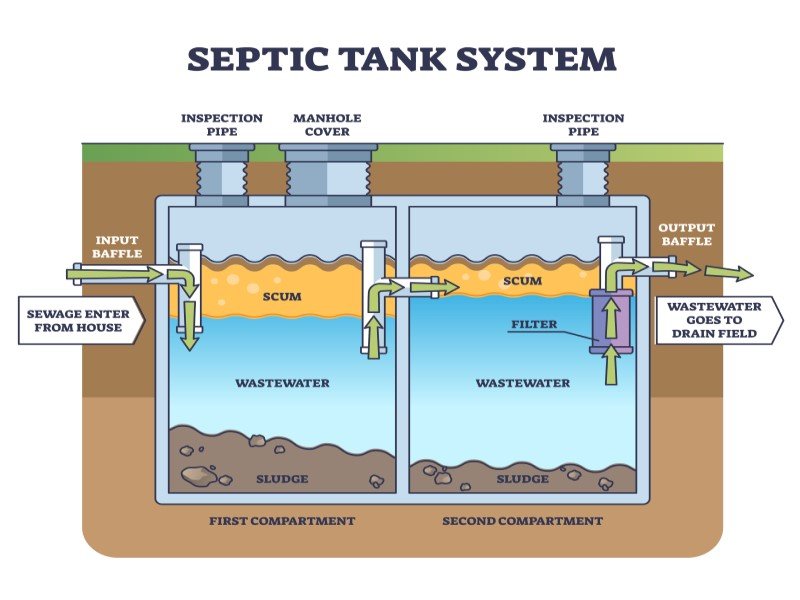
After household wastewater passes through the septic tank—where solids settle—it flows into the distribution box. The D-box’s role is to direct this effluent into several leach field trench lines. This prevents overloading any single area, supporting even soil absorption and healthy aerobic bacterial activity. Balanced flow is essential for septic system longevity; a malfunctioning D-box can result in saturated soil, leach field failure, and environmental hazards.
Recognize Distribution Box Issues in Real-World Scenarios
Scenario 1: Uneven Wet Spots in Your Yard
Are certain parts of your leach field soggy or unusually green? Such patterns often mean the D-box is tilted, clogged, or damaged, so wastewater pools in one area. Uneven flow is a top cause of leach field saturation and costly replacement.
Scenario 2: Slow Draining Fixtures and Odors from the Drain Field
If sinks, showers, or toilets drain slowly—paired with foul odors outdoors—it likely signals a distribution box problem (blockage or damage), which disrupts proper flow and may cause backups.
Commercial and Multifamily Applications
Larger septic systems (for commercial buildings or apartments) use more complex D-boxes to manage increased flow and more trench lines. For these, regular professional inspection and maintenance are critical to avoid system failures and downtime.
Follow the Step-by-Step Guide: Locating and Inspecting Your Distribution Box
- Locate the Distribution Box
- Consult property as-built drawings or local health department records.
- If unavailable, use a soil probe or metal detector 10–20 feet from the septic tank toward the leach field lines.
- Carefully Excavate
- Dig with hand tools at the suspected D-box site. Avoid damaging pipes or the box itself.
- Check Level and Integrity
- Place a carpenter’s level on top of the box. Inspect for cracks or holes.
- Inspect for Blockages
- Shine a flashlight inside. Use a mirror for viewing. Look for roots, debris, or sludge buildup in inlets and outlets.
- Remove Clogs and Repair Damage
- Clear blockages with a plumber’s snake or water jet. Patch small cracks with septic-safe concrete or sealant.
- Re-level and Backfill
- Reposition or level the D-box as needed, then carefully backfill with soil.
- Monitor System Performance
- Over the next several weeks, check the leach field for even moisture and note any new wet spots. Schedule a professional inspection if problems persist.
| Tool/Resource | Purpose |
|---|---|
| Soil probe/metal detector | Locate buried D-box |
| Shovel, digging tools | Careful excavation |
| Carpenter’s level | Check box level |
| Flashlight, mirror | Internal inspection |
| Pipe cleaning tools (snake/high-pressure jet) | Remove internal clogs |
| Concrete/sealant | Minor repairs |
| Project Stage | Timeline |
|---|---|
| Locate and excavate | Day 1 |
| Inspect and clean/repair | Day 1–2 |
| Backfill site | Day 3 |
| Post-service monitoring | Weeks 1–4 |
Connect Distribution Box Insights to Overall Septic Health
Link to Septic System Inspection and Maintenance
Routine D-box checks are a critical part of annual septic inspections, helping homeowners identify small issues before they threaten the entire drain field. According to the EPA’s Septic System Owners’ Guide (2022), D-box problems are a leading cause of uneven drain field performance.
Relation to Septic System Repair Techniques
Recognizing D-box faults empowers homeowners to choose the right septic system repair solutions. Severely damaged boxes, for example, will require replacement per code and best practice, as noted in NOWRA resources.
Optimization Tips: Boost Septic Distribution Box Efficiency
- Install and confirm the box remains perfectly level.
- Keep root-heavy plants and trees away from the D-box area.
- Prohibit heavy vehicles/equipment from crossing the septic field.
- Schedule tank cleaning every 3–5 years (per local regulations and EPA guidelines) to reduce solids entering the D-box.
Troubleshoot Common Septic Distribution Box Problems
| Problem | Symptoms | Recommended Solution |
|---|---|---|
| Tilted/shifted box | Wet spots, uneven field, soggy areas | Re-level or replace D-box and confirm proper orientation |
| Blockage from solids/roots | Slow drainage, backups, odors | Mechanically remove roots/debris, restore flow |
| Cracked/damaged box | Effluent leakage, dampness above D-box site | Patch minor cracks (if accessible) or fully replace D-box |
| Overflow/backup | Sewage smell, slow plumbing system | Increase pumping frequency, inspect for upstream tank issues |
When to Contact a Licensed Septic Professional
If your distribution box is deeply buried, extensively cracked, or if clogs reappear soon after cleaning, hire a licensed specialist for septic system repair and pumping (as required by local and EPA standards).
Establish an Effective Maintenance Schedule
Daily/Weekly Practices
- Scan your yard for fresh wet spots, odors, or changes in lushness above the leach field area.
- Do not flush grease, sanitary items, or chemicals—these can harm the bacterial balance and clog pipes.
Monthly/Quarterly Checks
- Visually inspect the ground and any exposed septic system covers.
- Watch for changes in drainage or odors, especially after heavy rainfall.
Annual Professional Inspection
- Schedule a thorough septic system inspection—including D-box evaluation—every 1–2 years (per EPA and local guidelines).
- Pump the septic tank every 3–5 years to prevent solids buildup from entering the D-box.
Key Takeaways
The septic system distribution box is your leach field’s gatekeeper. Even a small tilt or minor clog can cause major drain field damage. Through annual inspection, scheduled cleaning, and prompt repairs, you can protect your property from uneven yard saturation, expensive failures, and environmental risks. If you notice persistent drainage problems or suspicious wet spots, don’t delay—have your distribution box professionally inspected.
For practical, step-by-step help, visit our Septic System Inspection and Maintenance or Septic System Repair Guide for deeper guidance.
Download our free checklist: “Septic System Distribution Box Inspection and Maintenance” to keep your system running efficiently.
Frequently Asked Questions About Distribution Boxes
What is the purpose of a septic system distribution box?
The distribution box receives wastewater from the septic tank and channels it evenly into the leach field trenches, ensuring balanced absorption and preventing localized soil saturation. (EPA Septic Systems Owner’s Guide, 2022)
How can I locate my buried septic system distribution box?
Consult property records or as-built diagrams; if unavailable, use a soil probe or metal detector to test ground 10-20 feet from the septic tank toward leach field lines, then excavate cautiously.
What causes a distribution box to tilt or clog?
Ground settling, heavy vehicle or livestock traffic, root intrusion, and lack of tank pumping can cause the box to shift or pipes to clog. Keeping heavy objects and deep rooting plants away from the drain field prevents most problems. (NOWRA, 2020)
How often should the distribution box be inspected?
At least annually during scheduled septic inspections, or immediately if signs of uneven wetness or slow drainage appear. Annual reviews are recommended by EPA and many state health agencies.
Can I repair a cracked distribution box myself?
Surface or minor cracks can be patched using septic-rated concrete if accessible. However, significant damage or deep installation requires a licensed professional for replacement, due to code requirements.
What signs indicate a failing distribution box?
Watch for: soggy/leachy areas above the drain field, slow plumbing fixtures, outdoor odors, or sewage backups. These almost always signal D-box or distribution line issues.
How does a clogged distribution box affect the septic system?
Clogs prevent proper wastewater flow, causing overloading and rapid soil saturation in part of the leach field—which risks entire system failure or environmental contamination.
When should I call a professional for septic system repair?
Contact a licensed septic professional if the distribution box is more than 12-18 inches deep, damaged, or if do-it-yourself cleaning does not resolve issues. In many locations, code requires licensed contractors for structural repairs.
Resources for Further Reading
- EPA: Septic Systems Owner’s Guide
- National Onsite Wastewater Recycling Association (NOWRA)
- University Extension Onsite Wastewater Treatment Publications
Proactive maintenance saves money and prevents septic disasters. Download your free checklist now and explore related guides for expert help on every aspect of septic system health!

Leave a Reply