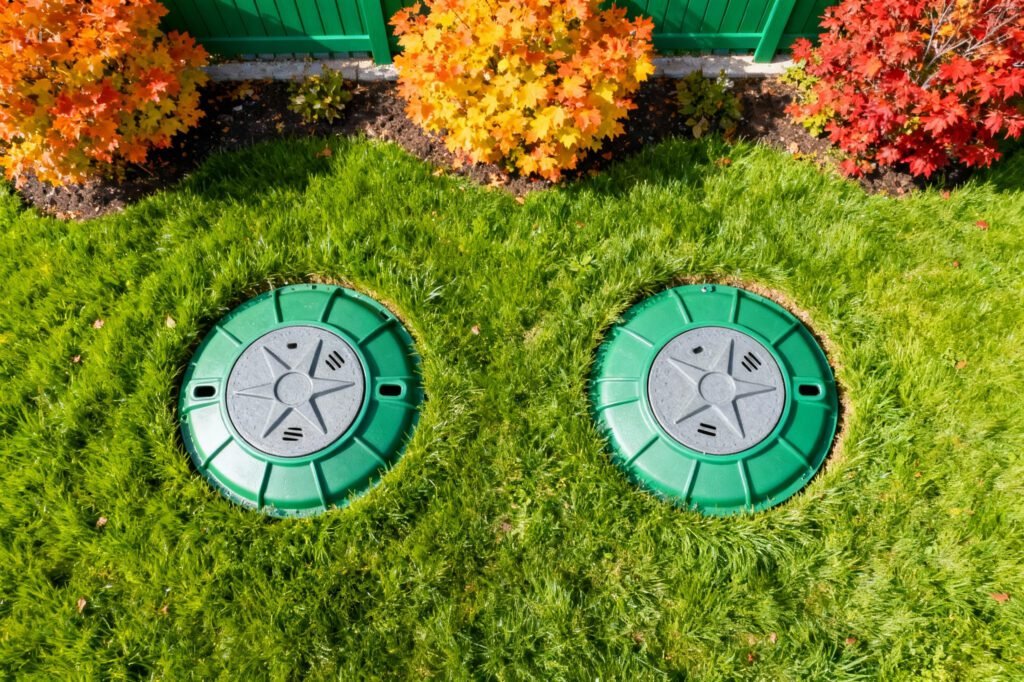
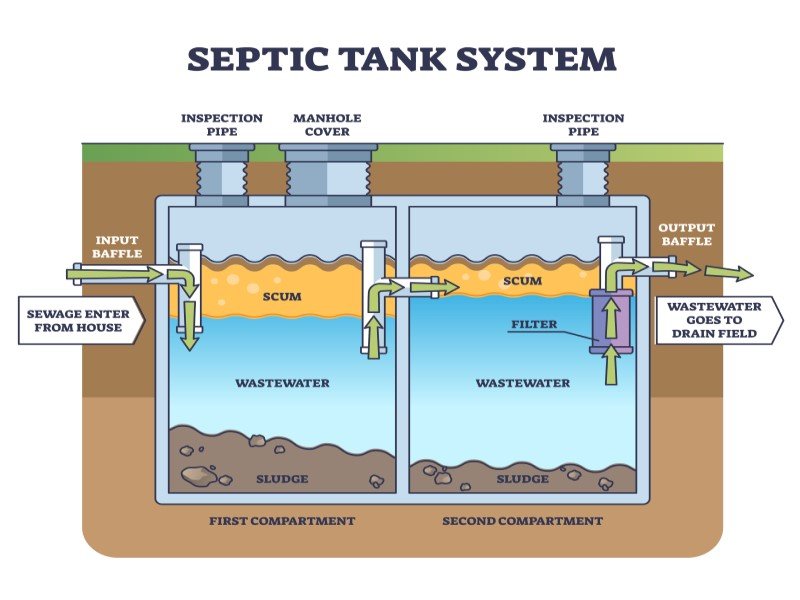
Aerobic septic system chlorine tablets disinfect treated wastewater before it reaches your drain field or sprinklers. Always use NSF-certified, slow-dissolve tablets made specifically for aerobic treatment units (ATUs) — never pool tablets. Add them monthly, test chlorine residuals weekly at first, and keep levels between 0.5–2.0 mg/L. This guide covers everything: choosing the right tablet, adding it safely, testing your levels, fixing odors, and keeping your entire system running year-round.
After reading this guide, you’ll know exactly which tablets to buy, how and when to add them, how to interpret your test results, and how to diagnose the most common aerobic septic system problems — including odors — before they become expensive repairs.
Quick Reference: What Every Homeowner Needs to Know
- Only use NSF-certified, slow-dissolve chlorine tablets labeled specifically for aerobic septic systems or ATUs. Pool tablets and generic tablets can destroy your system’s beneficial bacteria and may violate EPA regulations.
- Target chlorine residual: 0.5–2.0 mg/L (same as 0.5–2.0 ppm). Test weekly for the first month, then every two weeks once your system’s consumption is established.
- Refill your chlorinator monthly for most systems — but let your test results, not the calendar, be your final guide.
- Rotten egg smell = aerator problem. Chemical smell = too much chlorine. Sewage smell outside = possible leak. Each odor points to a different fix.
- Never ignore a septic system alarm. It means something is wrong — aerator failure, high water level, or sensor fault. Address it the same day.
- Annual professional inspection is non-negotiable for aerobic systems. ATUs have more moving parts than conventional septic systems and need expert review at least once a year.
- Routine DIY maintenance costs roughly $50–$100 per year in chlorine tablets and supplies — a fraction of what a service call or system repair costs.
Table of Contents
Do You Need Chlorine Tablets for Your Aerobic System?
Not every aerobic system uses chlorine tablets. Before buying anything, confirm what your specific unit requires.
Systems That Require Chlorination
Most aerobic treatment units (ATUs) are designed to disinfect effluent before it disperses — either through subsurface drip lines or surface sprinkler heads. For these systems, a chlorinator chamber is built into the unit and chlorine tablets are a required part of operation.
If your ATU discharges to a surface spray field or any area where humans or animals might contact the effluent, chlorination is almost certainly required by your state or county health department. Skipping it isn’t just a maintenance lapse — it can be a regulatory violation.
Systems Where Chlorination Is Optional
Some ATUs use UV disinfection instead of chemical treatment. Others discharge only to a subsurface drain field where the soil provides additional treatment, and local regulations may not require chlorination at that stage.
If you’re unsure, don’t guess. Check your system’s owner’s manual first.
How to Check Your Specific System
- Locate your system’s model number (usually on a label on the tank lid or control panel).
- Download or find your owner’s manual — most manufacturers post them online.
- Look for a section on “disinfection” or “chlorinator.”
- If you still can’t confirm, call your county health department. They have records of your system’s installation permit and required maintenance standards.
Selecting the Right Chlorine Tablets
NSF Certification Explained — What It Means for You
NSF International is an independent organization that tests and certifies products used in water and wastewater treatment. When a chlorine tablet carries NSF/ANSI Standard 60 certification for wastewater use, it means the formula, dissolution rate, and chemical concentration have been independently verified as safe and effective for ATU disinfection.
This matters for two reasons. First, it protects your system — the tablet’s chlorine release rate is calibrated to disinfect without overwhelming your aerobic bacteria. Second, it protects you legally. Many states require NSF-certified products for permitted ATU systems. Using a non-certified product can void your system warranty and create compliance problems.
Key point: NSF certification is your primary buying criterion. If the label doesn’t say NSF-certified for wastewater or septic use, put it back.
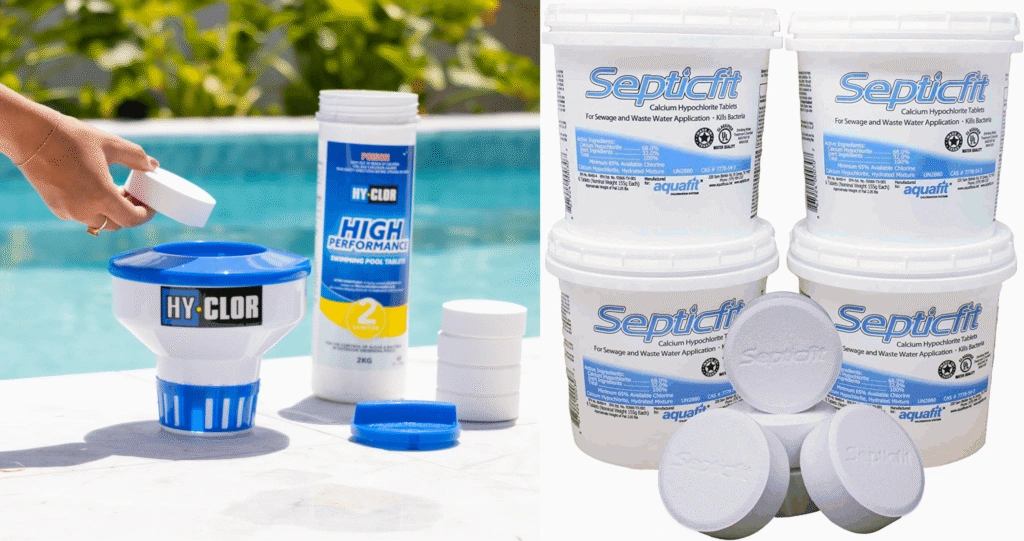
Septic Tablets vs. Pool Tablets — Side by Side
| Feature | NSF-Certified Septic Tablets | Pool Chlorine Tablets | Why It Matters |
|---|---|---|---|
| Active ingredient | Trichloro-s-triazinetrione or sodium dichloro (septic-safe stabilizers) | Calcium hypochlorite or trichloro (high concentration, wrong stabilizers) | Pool chemistry overwhelms ATU bacteria |
| Available chlorine | Moderate — 60–90% controlled release | High — often 90%+ fast release | Spikes above 3 ppm harm aerobic microbes |
| NSF certification | Yes — NSF/ANSI Standard 60 | No | Required for regulatory compliance |
| Dissolution rate | Slow, controlled | Fast, aggressive | Slow release maintains stable residual |
| Impact on aerobic bacteria | Minimal at correct dosing | Harmful — documented bacteria kill-off | Bacteria are what make your ATU work |
| Impact on ATU components | Often includes corrosion inhibitors | No protection | Protects pumps and sensors |
| Cost | Moderate (~$30 per 5 lb) | Low | Higher price reflects protective formulation |
| Where sold | Septic supply stores, ATU manufacturers, authorized online retailers | Pool supply stores, hardware stores, big-box retailers | Easy to accidentally grab the wrong product |
Bottom line on pool tablets: Even in an emergency, pool chlorine tablets are not a safe substitute. They release chlorine too fast, at too high a concentration, and with chemical stabilizers that are not designed for wastewater. One or two additions won’t necessarily destroy your system, but it’s not worth the risk — and it may violate your county’s regulations.
Where to Buy Certified Tablets — And Where to Avoid
Buy from:
- Your ATU manufacturer’s authorized dealer
- Licensed septic supply stores
- Reputable online retailers that specialize in septic products (verify NSF certification before ordering)
Avoid:
- Pool supply stores (even if tablets look similar)
- General hardware or big-box stores unless you can confirm NSF wastewater certification on the label
- Generic marketplace listings without certification documentation
What the Price Difference Actually Gets You
NSF-certified septic tablets typically cost 20–30% more than pool tablets. Over a year, that difference is usually $10–$20.
Compare that to what improper chlorination can cost: emergency service calls run $150–$500. Aerator replacement can cost $500–$1,500. Drain field repairs start at several thousand dollars. The certified tablet is not an expense — it’s cheap insurance.
Safety First: Before You Handle Any Chlorine Tablets
Read this section once and keep it in mind every time you work on your system.
Personal protective equipment — always wear:
- Chemical-resistant rubber gloves
- Safety goggles (not just glasses — goggles)
- Respirator mask if working in an enclosed or poorly ventilated area
Before you start:
- Disconnect electrical power to the chlorinator and aerator before servicing any component
- Ensure dry footing — never work near the tank in wet or slippery conditions
- Keep children and pets away from the work area
- Work in good lighting — use a flashlight for internal components
- Never mix chlorine tablets with other chemicals
- In case of skin or eye contact, rinse immediately with large amounts of clean water for at least 15 minutes and seek medical attention if irritation persists
Confined space warning: Never enter a septic tank. The gases produced inside — primarily hydrogen sulfide and methane — can cause unconsciousness and death within seconds. You should never need to enter the tank for routine chlorine tablet maintenance. If someone tells you they need to go inside for a routine task, that’s a red flag.
After handling tablets: Wash your hands thoroughly. Store unused tablets in their original sealed container in a cool, dry location, away from heat sources and other chemicals.
Step-by-Step: How to Add Chlorine Tablets to Your Aerobic Septic System
Tools You’ll Need
- NSF-certified, slow-dissolve chlorine tablets (correct size for your chlorinator — usually 1″ or 3″)
- Chemical-resistant gloves and safety goggles
- Flashlight
- Clean bucket or stable surface for staging materials
- System owner’s manual (for dosing reference)
Locating Your Chlorinator
The chlorinator — also called the tablet feeder or disinfection chamber — is typically located adjacent to the aerator or at the disinfection stage of your ATU. It’s usually a separate compartment with its own access lid, distinct from the main tank access.
If you can’t locate it, consult your owner’s manual or look for a cylindrical housing near the tank that has a removable lid. On many systems, it’s color-coded or labeled.
Tablet Addition Procedure
- Put on your gloves and goggles before touching any component.
- Power off the chlorinator at the control panel before opening the chamber.
- Open the chlorinator access lid carefully, keeping it clear of dirt and debris.
- Remove any remaining tablets or residue. Partially dissolved tablets that are crumbling or discolored should be removed. Leftover sludge or sediment can be rinsed out with clean water only — no soap or cleaners.
- Add the correct number of tablets based on your manufacturer’s dosing guide. For most residential systems, this is 2–4 tablets of the 3″ size, but your manual is the authority. Do not estimate or guess.
- Secure the lid and restore power to the chlorinator.
- Log the date, number of tablets added, and any observations in your maintenance record. This takes 30 seconds and becomes invaluable for troubleshooting later.
Adjusting the Feed Rate
Many chlorinators have an adjustable feed rate — a dial or timer that controls how much chlorine contacts the effluent stream. If your weekly chlorine tests show levels consistently above 2.0 mg/L, reduce the feed rate. If they’re consistently below 0.5 mg/L and tablets are present, increase it.
Always adjust in small increments and re-test after 48 hours before adjusting again. If you can’t get levels into range through feed rate adjustment, the aerator may be contributing to the problem — see the troubleshooting section.
Testing Your Chlorine Levels — Don’t Skip This
Testing is what separates homeowners who catch problems early from those who face expensive repairs. Tablets going in doesn’t mean chlorine levels are right — you need to verify.
Target Chlorine Residual: 0.5–2.0 mg/L Explained
A note on units: mg/L and ppm (parts per million) are the same measurement. 1 mg/L = 1 ppm. You may see either unit on test kits or system documentation.
The target range of 0.5–2.0 mg/L represents the zone where effluent is disinfected without harming the aerobic bacteria that make your ATU work. Some system manufacturers specify up to 3 ppm — always follow your system’s specific guidance if it differs from this general range.
Contradiction resolved: Earlier sources listed 1–3 ppm as the target. This is within a safe range for many systems, but the more precise standard supported by NSF testing is 0.5–2.0 mg/L. If your manufacturer specifies 1–3 ppm, that guidance takes precedence for your specific unit.
Testing Methods: Strips vs. Digital Meters
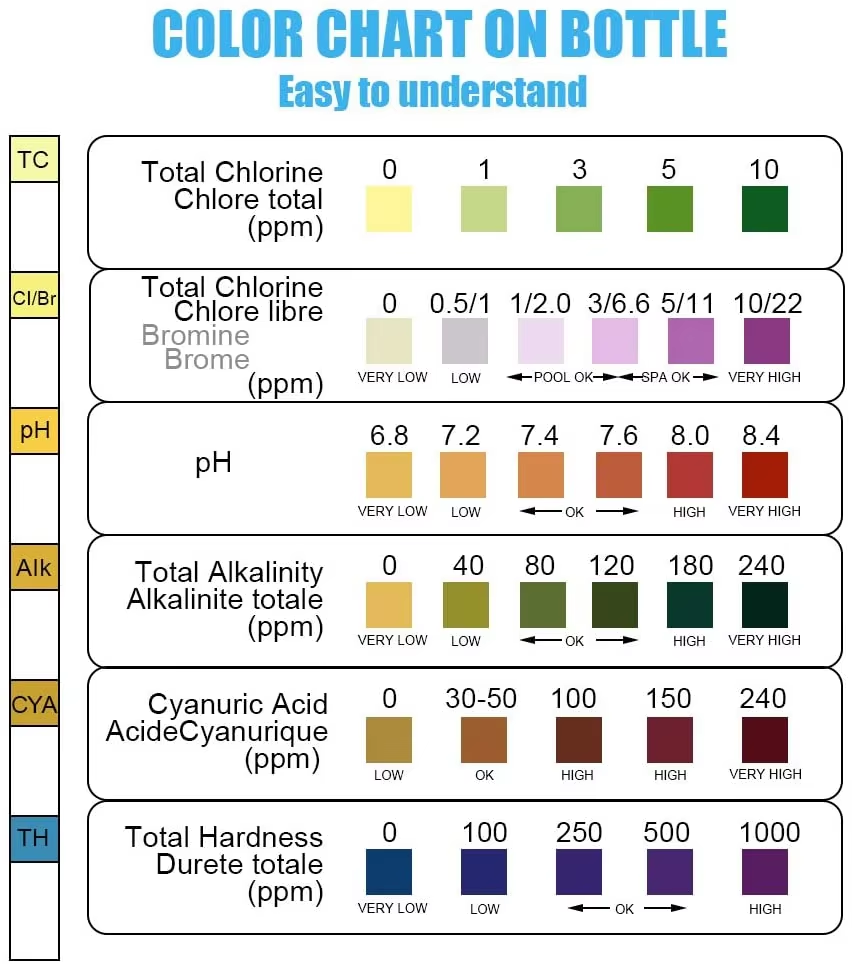
Test strips are inexpensive ($10–$20 for a pack), easy to use, and accurate enough for routine monitoring. Dip the strip in effluent at the chlorinator outlet, compare the color to the chart, and record the result. They work well for regular monitoring.
Digital chlorine meters ($30–$100) give precise numerical readings and remove the subjectivity of color comparison. If your system needs careful monitoring — for example, after a repair or during initial setup — a digital meter is worth the investment.
How Often to Test — Weekly Schedule Template
| Week | Action |
|---|---|
| Week 1 (after adding tablets) | Test every 2–3 days |
| Weeks 2–4 | Test weekly |
| After baseline established | Test every 2 weeks |
| After any system repair or change | Return to weekly for 4 weeks |
What Your Test Results Mean — Action Table
| Test Result | What It Means | Action Required |
|---|---|---|
| Below 0.2 mg/L | Under-dosing, empty chlorinator, or aerator issue | Add tablets immediately; check aerator is running; inspect for clogs |
| 0.2–0.5 mg/L | Low — marginal disinfection | Increase tablets or feed rate; test again in 48 hours |
| 0.5–2.0 mg/L | Optimal range | Continue current schedule |
| 2.0–3.0 mg/L | Slightly high — monitor | Reduce tablets slightly; test again in 48 hours |
| Above 3.0 mg/L | Over-dosing — risk to aerobic bacteria | Reduce tablets immediately; check feed rate; test daily until resolved |
| Inconsistent results | System instability | Check aerator, chlorinator function, and household water usage changes |
Troubleshooting: Why Does My Aerobic Septic System Smell?
Aerobic systems should be largely odor-free when operating correctly. A smell is your system telling you something is wrong. The type of odor usually points directly to the cause.
Odor Identification Table
| Odor Type | Likely Cause | Immediate Action | Long-Term Fix |
|---|---|---|---|
| Rotten egg / sulfur | Aerator failure, low oxygen — anaerobic bacteria producing hydrogen sulfide | Check aerator is running; test dissolved oxygen | Repair or replace aerator; restore oxygen levels |
| Strong chemical / bleach | Chlorine overdose or malfunctioning chlorinator | Test chlorine level; reduce tablets or feed rate | Calibrate feed rate; inspect chlorinator for malfunction |
| Sewage smell near tank | Leak in tank, seals, or piping | Inspect visually for wet spots or surfacing effluent | Seal cracks with epoxy; replace gaskets; call pro if tank is cracked |
| Sewage smell at sprinkler heads | Inadequate treatment before dispersal | Check aerator and chlorine level simultaneously | Address root cause; ensure aerator and chlorinator are both functioning |
| Musty or earthy smell | Normal level of biological activity | No action if mild and intermittent | Increase inspection frequency |
| Odor after heavy rain | High water table or system flooding | Reduce water use temporarily | Consult a professional about drainage improvements |
Rotten Egg (Sulfur) Smell → Aerator Problems
A rotten egg odor is hydrogen sulfide — the gas produced when wastewater is treated by anaerobic (oxygen-free) bacteria instead of the aerobic bacteria your ATU depends on. This almost always means your aerator has failed or is performing poorly.
Diagnose it:
- Listen for the aerator — you should hear a steady hum or feel vibration
- Use a multimeter to check for voltage at the aerator motor terminals
- Visually inspect the intake screen for blockages
- If you have a dissolved oxygen test kit, the target is 2–4 mg/L in the treatment chamber
Fix it:
- Clear any debris from the intake screen
- Check and reset the circuit breaker
- If the motor has power but isn’t running, or runs but produces poor oxygenation, it needs replacement
- Aerators typically last several years; a noisy pump is often the first sign of bearing wear
Chemical/Chlorine Smell → Tablet Issues
A sharp chemical or bleach odor usually means chlorine levels are too high. This can happen when:
- Too many tablets were added at once
- The feed rate is set too high
- Household water usage dropped significantly (less dilution)
- The chlorinator malfunctioned and released excess tablets
Test your chlorine level immediately. If it’s above 3.0 mg/L, reduce your tablet count and feed rate. The smell should resolve within 24–48 hours of correcting the dosing.
Sewage Smell Outside → Leaks or Venting Problems
Surface sewage odors that aren’t tied to the chlorinator area suggest one of two things: a physical leak from the tank or piping, or a venting issue that’s pushing odors through unexpected pathways.
For suspected leaks:
- Inspect the area around the tank and drain field for wet spots, unusually green grass, or surfacing effluent
- Conduct a leak detection dye test — add dye to your toilets and observe whether it appears in unexpected locations
- For pressure testing, contact a professional — this involves equipment most homeowners don’t have
If active sewage is surfacing: Stop using water in the home immediately and call a licensed septic professional the same day. This is a health and regulatory emergency.
Alarm Is On — What to Do First
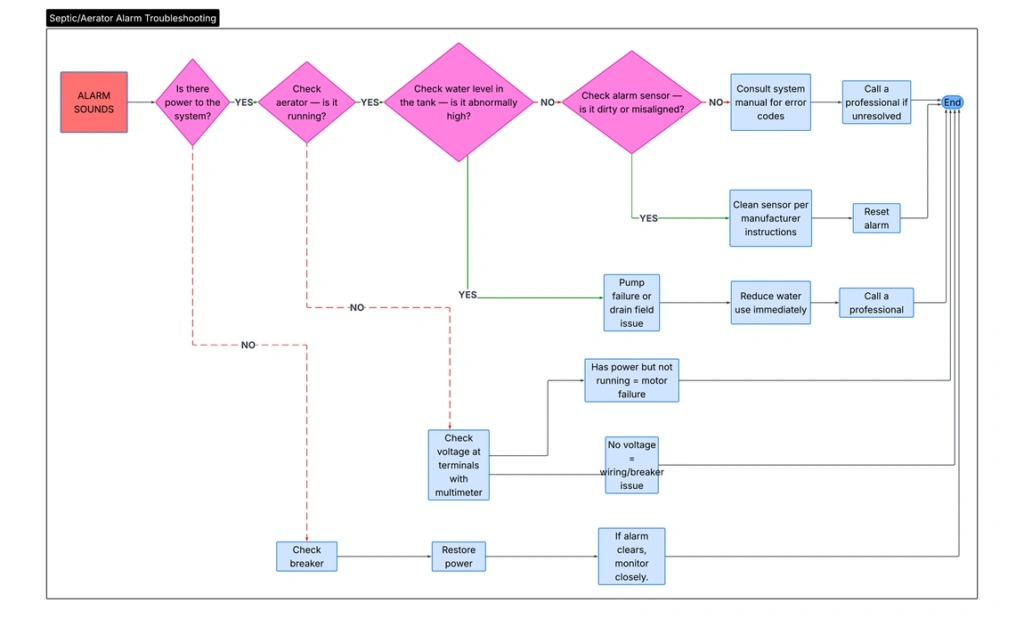
Never ignore a septic system alarm and reset it without identifying the cause. The alarm exists to prevent sewage backup and system damage — masking it without fixing the underlying problem always makes things worse.
Beyond Chlorine: Complete Aerobic System Maintenance Schedule
Chlorine tablets are one part of a broader maintenance routine. An aerobic system has more moving parts than a conventional septic system — aerator, pump, control panel, sprinkler heads, diffusers — and each one needs attention.
Daily/Weekly Visual Checks — 5 Minutes
Do these every week. They take less time than making coffee and catch most problems before they escalate.
- Walk the drain field or spray area — no wet spots, pooling, or unusual odors
- Check the alarm panel — no active fault lights
- Listen for the aerator — steady hum, no unusual rattling or silence
- Inspect tank lids and covers — secure, no damage
- Note any slow drains inside the home — early sign of system stress
Monthly Maintenance Tasks — 30 Minutes
- Refill chlorine tablets per your test results and manufacturer guidance
- Test chlorine residual and record results
- Inspect and clean sprinkler heads — clear debris, check rotation, replace cracked heads
- Check effluent filter at tank outlet — clean if needed
- Verify alarm panel shows no fault codes
- Review maintenance log for trends
Quarterly Deep Cleaning — 1 to 2 Hours
- Remove and clean diffuser ports — soak in water/chlorine solution for 15 minutes, scrub gently, rinse thoroughly
- Inspect aerator motor and shaft for corrosion or debris
- Check and clean chlorinator chamber — rinse with clean water only, no soaps
- Inspect aerator air intake filters for clogs
- Test alarm system activation — follow manufacturer’s test procedure
- Check all visible electrical connections for wear or corrosion
- Inspect all accessible pipe connections for leaks
- Test dissolved oxygen level in treatment chamber — target 2–4 mg/L
Seasonal note: Before winter, insulate any exposed tank components and lines in cold climates. Cold temperatures reduce aerator efficiency and slow chlorine dissolution — you may need to adjust tablet dosing and check the system more frequently. If lines can freeze, address that with your installer or a professional before temperatures drop.
Annual Professional Inspection — When and Why
An annual professional inspection is not optional for aerobic systems — it’s typically required by your county health department as a condition of your system’s operating permit.
A qualified technician will:
- Test all electrical components and sensors
- Inspect internal tank baffles and components you can’t safely access yourself
- Verify effluent quality meets local discharge standards
- Check the drain field or spray system for signs of stress
- Identify wear on mechanical components before they fail
Budget $100–$300 for an annual inspection. It’s the most cost-effective maintenance you can do.
When to Call a Professional — And When to DIY
Safe DIY Repairs
These tasks are appropriate for informed homeowners:
- Adding chlorine tablets
- Cleaning sprinkler heads and diffusers
- Replacing sprinkler heads
- Testing chlorine residual and dissolved oxygen
- Cleaning the chlorinator chamber
- Resetting the alarm panel after identifying and resolving the cause
- Replacing aerator air intake filters
Red Flags That Require a Licensed Technician
Call a professional immediately if:
- Sewage is surfacing in your yard
- The alarm won’t reset after basic troubleshooting
- You smell burning near the electrical panel or control box
- The aerator has power but won’t run
- You see sparks or tripped breakers
- Tank lids are damaged, cracked, or compromised
- Chlorine levels won’t stabilize despite correct dosing
- You’re unsure whether a repair involves confined space entry — it almost certainly requires a professional
Never attempt:
- Entering the septic tank
- Working on live electrical components in or near the tank
- Repairing a cracked tank yourself without professional assessment
- Replacing major components (aerator motors, control panels) without verifying compatibility and proper electrical lockout procedures
What to Expect to Pay
| Service | Typical Cost Range |
|---|---|
| Annual inspection | $100 – $300 |
| Aerator replacement | $500 – $1,500 |
| Emergency service call | $150 – $500 |
| Sprinkler head replacement | $50 – $150 per head |
| Control panel/sensor repair | $200 – $600 |
| Full system repair or replacement | $5,000 – $20,000+ |
Routine DIY maintenance: $50 – $100 per year. The math strongly favors staying on top of the basics.
Frequently Asked Questions
Can I use pool chlorine tablets in an emergency? No — not even once if you can avoid it. Pool chlorine tablets, typically calcium hypochlorite-based, release chlorine at concentrations and speeds that can harm the aerobic bacteria your ATU depends on. They also contain chemical stabilizers not designed for wastewater treatment. If you’re out of certified tablets, reduce water use, order certified tablets on rush delivery, and contact your septic provider. Do not substitute pool tablets.
What happens if I forget to add tablets for two months? Your system will continue operating, but without disinfection. Effluent reaching your spray field or drain field will not be properly treated, creating a potential health hazard and possible regulatory violation. Add tablets as soon as you realize the lapse. Test chlorine levels daily for the first week after resuming to verify levels return to the target range.
How long do chlorine tablets last in storage? Stored correctly — in a sealed container, in a cool, dry location away from heat and other chemicals — NSF-certified septic chlorine tablets retain full potency for at least 12 months. After six months of proper storage in field testing, tablets showed no loss of effectiveness. Don’t buy more than a year’s supply at once; fresh tablets perform more consistently.
Will chlorine tablets harm my drain field or spray area? At correct dosing (0.5–2.0 mg/L residual), properly formulated septic chlorine tablets should not harm a healthy drain field or the soil biology around a spray field. Overdosing — above 3 ppm consistently — can negatively affect soil microbes over time. This is another reason why regular testing matters: it keeps you in the safe zone.
My system doesn’t have a chlorinator — do I need one? Not necessarily, but check your system documentation and local health department regulations. If your ATU discharges to surface spray heads, chlorination is almost always required. If you don’t have a chlorinator and believe you need one, don’t attempt to add one yourself — contact your system manufacturer or a licensed installer.
Can cold weather affect chlorine tablet performance? Yes. Cold temperatures slow the dissolution rate of chlorine tablets, which can reduce the amount of chlorine entering the effluent stream. In colder months, you may need to add tablets more frequently or switch to tablets with a faster dissolution rate suited for lower temperatures. Also check your aerator for reduced efficiency in cold weather, which can cause odor problems even if chlorine levels appear normal.
How do I know if my aerator is failing? Early signs include: unusual noise (grinding, rattling, or high-pitched whine), inconsistent operation, reduced dissolved oxygen readings (below 2 mg/L in the treatment chamber), and — eventually — the rotten egg odor that signals anaerobic conditions. A multimeter check of voltage and amperage at the motor terminals can confirm whether the motor is receiving power and drawing current within normal range. If it has power but isn’t performing, it likely needs replacement.
Are there chlorine-free alternatives for disinfection? Yes. Some ATUs use UV (ultraviolet) disinfection instead of chemical treatment. UV systems disinfect effluent by exposing it to ultraviolet light, which deactivates pathogens without chemicals. They require their own maintenance (UV bulb replacement, quartz sleeve cleaning) and cost more upfront. Whether you can switch from chlorine to UV depends entirely on your system’s design and your local health department’s approved treatment methods. This is not a DIY conversion.
What type of chlorine tablets should I use? Use only slow-dissolve tablets certified to NSF/ANSI Standard 60 for wastewater or septic system use. The active ingredient is typically trichloro-s-triazinetrione or sodium dichloro-s-triazinetrione — both are appropriate. Available chlorine concentration should be in the 60–90% range for septic-specific tablets. When in doubt, buy directly from your ATU manufacturer’s authorized supplier.
What happens if the chlorinator runs empty? Disinfection stops. Effluent leaving the tank and entering your spray field or drain field will not be properly treated. This is a health hazard and a regulatory violation in most jurisdictions. Check your chlorinator at every monthly maintenance visit, and keep a small backup supply of tablets on hand so you’re never caught empty.
Can I overdose my system with chlorine tablets? Yes. Chlorine levels consistently above 3.0 mg/L harm the aerobic bacteria responsible for treatment, essentially converting your ATU back toward anaerobic conditions. This creates odors, reduces treatment quality, and over time can damage system components. Always verify with testing — don’t assume more is better.
Is a professional inspection really necessary every year? For most aerobic systems, yes — both for system health and regulatory compliance. Many county health departments require documented annual inspections as part of the ATU operating permit. Beyond compliance, an aerobic system has electrical components, pumps, sensors, and mechanical parts that benefit from professional assessment annually. Think of it like a furnace inspection — you could skip it for years, but you’d rather not find out the hard way what you missed.
What documentation should I keep? Maintain a log that includes: date of each maintenance task, chlorine test results, tablet quantities added, any alarm activations and how they were resolved, part replacements, and professional service records. This log is useful for troubleshooting, required for some county compliance programs, and valuable if you ever sell the property.
Resources & References
- NSF International — Standard 40 and Standard 60: nsf.org — Certifications for aerobic treatment units and wastewater treatment chemicals
- U.S. Environmental Protection Agency — Septic Systems: epa.gov/septic — Homeowner guidance, maintenance recommendations, and regulatory overview
- National Onsite Wastewater Recycling Association (NOWRA): nowra.org — Industry standards and professional resources for ATU maintenance
- CDC — Septic System Safety: cdc.gov — Health guidance related to septic system use and maintenance
- Your State/County Health Department: Search “[your county] septic system regulations” — Your local authority is the final word on required system types, maintenance schedules, and compliance requirements
Suggested internal links:
- How Aerobic Septic Systems Work (foundational overview)
- Aerator Replacement: Step-by-Step Guide
- Septic System Alarm Troubleshooting
- Seasonal Septic Maintenance Checklist
About This Guide
This guide consolidates expert recommendations from multiple technical sources covering aerobic septic system maintenance, chlorine tablet selection, odor troubleshooting, and ATU care. It was reviewed for factual accuracy and updated as of April 2026.
Disclaimer: Septic system requirements vary significantly by state, county, and system manufacturer. This guide provides general best-practice information for homeowners and is not a substitute for your system’s owner’s manual, your local health department’s regulations, or the advice of a licensed septic professional. Always verify requirements with your local authority having jurisdiction before making changes to your system.
Editor’s Note: This guide consolidates and updates information from multiple sources. It was reviewed for accuracy as of April 2026. Chlorine tablet formulations and NSF standards change periodically — verify with your system manufacturer and local health department before purchasing or changing products.

Leave a Reply